

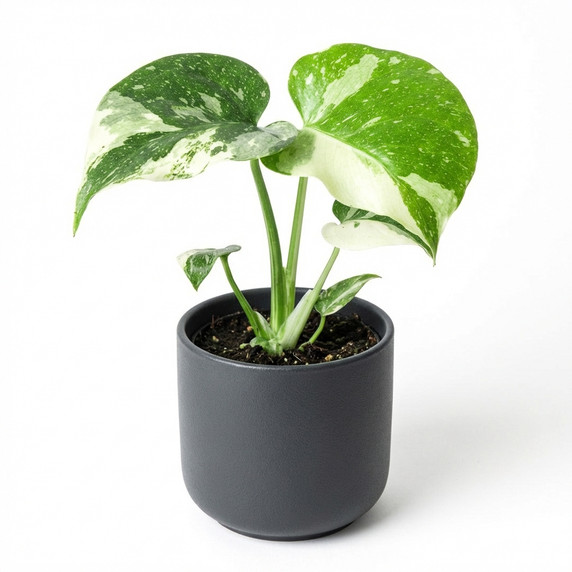


Bring home a true statement plant: Monstera 'Thai Constellation'. Its creamy, starry variegation turns every leaf into living artwork—perfect for modern homes, studios, and office desks. With bright filtered light and a well-draining aroid mix, this collector favorite rewards you with stunning new growth you’ll want to photograph every time.
Common Name: Monstera 'Thai Constellation'
Botanical Name: Monstera deliciosa 'Thai Constellation'
Plant Variant: Thai Constellation
Plant Color: Multicolor
Plant Country: —
Plant Code / SKU: PLT-0296
Arabic Name: يوفوربيا
Stems: Not available
Family: Araceae
Order: Alismatales
Family: Araceae
Genus: Monstera
Species: Monstera deliciosa
Cultivar: 'Thai Constellation'
Monstera deliciosa is native to the tropical rainforests of southern Mexico and Central America. The 'Thai Constellation' cultivar was developed via tissue culture as a stable variegated sport and introduced by growers in the Netherlands in 2017. Today it is widely cultivated in nurseries and homes across North America, Europe, and Asia as a prized ornamental houseplant.
Leaves: Large, glossy, fenestrated and split; cream-white marbled variegation contrasting dark green.
Stems: Thick, climbing with aerial roots; carry variegated leaves.
Texture: Leathery and firm, with a smooth surface.
Growth habit: Vining/climbing when supported; can be trained on moss poles.
Indoors: Typically 1.5–2.5 m (5–8 ft) tall with support; spread up to 1.5 m (5 ft).
Leaf length: Mature leaves 60–90 cm (24–36 in).
Growth rate: Moderate to fast in optimal conditions; slower than non-variegated forms due to reduced chlorophyll.
Bright, indirect light is ideal; tolerates some morning or late afternoon sun. Direct midday sun can scorch variegated portions. Insufficient light will reduce variegation and slow growth.
Allow the top 3–5 cm (1–2 in) of soil to dry before watering thoroughly. Reduce frequency in winter. Avoid waterlogging to prevent root rot; ensure excess water drains freely.
Use a well-draining aroid mix composed of peat moss or coco coir, orchid bark, perlite, and a small amount of compost. pH preference: slightly acidic to neutral (5.5–7.0). Repot every 1–2 years or when rootbound.
Temperature: 18–30 °C (65–85 °F); keep above 15 °C (59 °F).
Humidity: Prefers high humidity (60–80%); low humidity may cause brown leaf margins. Use pebble trays or humidifiers in dry indoor air.
Feed with a balanced, water-soluble houseplant fertilizer (e.g., 10-10-10 or 20-20-20) at half strength every 4–6 weeks during the growing season (spring and summer). Suspend feeding in fall and winter.
Care Level: Moderate. Prune to control size and encourage fuller growth. Wipe leaves occasionally to remove dust. Provide a sturdy support (moss pole or trellis) for climbing habit.
Propagation: Stem cuttings with at least one node and aerial root can be rooted in water or directly in moist mix. Maintain warm, humid conditions for best success. Tissue culture is used commercially for mass propagation.
Pests: Susceptible to spider mites, mealybugs, scale, and thrips. Diseases: root rot from overwatering; leaf spot in high humidity with poor air circulation. Nutrient deficiencies can cause yellowing leaves.
Ornamental focal point in interiors with striking variegation. Improves indoor air quality by filtering airborne toxins. Popular for photography and modern décor in homes, offices, and studios.
All parts contain insoluble calcium oxalate crystals; toxic if ingested by pets or humans. May cause irritation, burning, or swelling of mouth, lips, and throat. Handle with care and keep out of reach of children and animals.
Bring home a true statement plant: Monstera 'Thai Constellation'. Its creamy, starry variegation turns every leaf into living artwork—perfect for modern homes, studios, and office desks. With bright filtered light and a well-draining aroid mix, this collector favorite rewards you with stunning new growth you’ll want to photograph every time.
Common Name: Monstera 'Thai Constellation'
Botanical Name: Monstera deliciosa 'Thai Constellation'
Plant Variant: Thai Constellation
Plant Color: Multicolor
Plant Country: —
Plant Code / SKU: PLT-0296
Arabic Name: يوفوربيا
Stems: Not available
Family: Araceae
Order: Alismatales
Family: Araceae
Genus: Monstera
Species: Monstera deliciosa
Cultivar: 'Thai Constellation'
Monstera deliciosa is native to the tropical rainforests of southern Mexico and Central America. The 'Thai Constellation' cultivar was developed via tissue culture as a stable variegated sport and introduced by growers in the Netherlands in 2017. Today it is widely cultivated in nurseries and homes across North America, Europe, and Asia as a prized ornamental houseplant.
Leaves: Large, glossy, fenestrated and split; cream-white marbled variegation contrasting dark green.
Stems: Thick, climbing with aerial roots; carry variegated leaves.
Texture: Leathery and firm, with a smooth surface.
Growth habit: Vining/climbing when supported; can be trained on moss poles.
Indoors: Typically 1.5–2.5 m (5–8 ft) tall with support; spread up to 1.5 m (5 ft).
Leaf length: Mature leaves 60–90 cm (24–36 in).
Growth rate: Moderate to fast in optimal conditions; slower than non-variegated forms due to reduced chlorophyll.
Bright, indirect light is ideal; tolerates some morning or late afternoon sun. Direct midday sun can scorch variegated portions. Insufficient light will reduce variegation and slow growth.
Allow the top 3–5 cm (1–2 in) of soil to dry before watering thoroughly. Reduce frequency in winter. Avoid waterlogging to prevent root rot; ensure excess water drains freely.
Use a well-draining aroid mix composed of peat moss or coco coir, orchid bark, perlite, and a small amount of compost. pH preference: slightly acidic to neutral (5.5–7.0). Repot every 1–2 years or when rootbound.
Temperature: 18–30 °C (65–85 °F); keep above 15 °C (59 °F).
Humidity: Prefers high humidity (60–80%); low humidity may cause brown leaf margins. Use pebble trays or humidifiers in dry indoor air.
Feed with a balanced, water-soluble houseplant fertilizer (e.g., 10-10-10 or 20-20-20) at half strength every 4–6 weeks during the growing season (spring and summer). Suspend feeding in fall and winter.
Care Level: Moderate. Prune to control size and encourage fuller growth. Wipe leaves occasionally to remove dust. Provide a sturdy support (moss pole or trellis) for climbing habit.
Propagation: Stem cuttings with at least one node and aerial root can be rooted in water or directly in moist mix. Maintain warm, humid conditions for best success. Tissue culture is used commercially for mass propagation.
Pests: Susceptible to spider mites, mealybugs, scale, and thrips. Diseases: root rot from overwatering; leaf spot in high humidity with poor air circulation. Nutrient deficiencies can cause yellowing leaves.
Ornamental focal point in interiors with striking variegation. Improves indoor air quality by filtering airborne toxins. Popular for photography and modern décor in homes, offices, and studios.
All parts contain insoluble calcium oxalate crystals; toxic if ingested by pets or humans. May cause irritation, burning, or swelling of mouth, lips, and throat. Handle with care and keep out of reach of children and animals.

Take 20% off your first order
Enter the code below at checkout to get 20% off your first order