


New


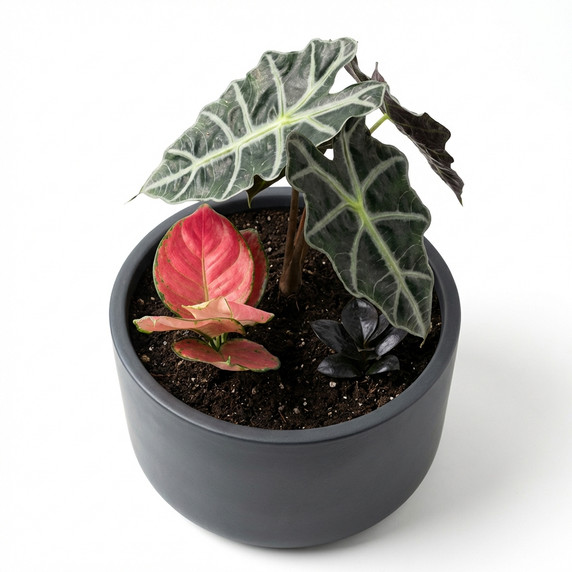
Turn any corner into a designer space with Alocasia Amazonica. Its sculptural, high-contrast leaves deliver instant impact—perfect for modern homes, receptions, and meeting rooms. Give it bright indirect light, warm temperatures, and a little humidity, and it will reward you with bold, upright foliage that looks like living artwork. (Keep out of reach of pets and children.)
Common Name: Alocasia Amazonica
Botanical Name: Alocasia × amazonica
Former Name: Not available
Plant Type: Foliage houseplant
Plant Code / SKU: PLT-0460
Alternative Names:
ألوكاسيا
African Mask Plant
Amazonica
Order: Alismatales
Family: Araceae
Genus: Alocasia
Alocasia × amazonica is a man-made hybrid, believed to be a cross between Alocasia sanderiana and possibly Alocasia watsoniana. It does not occur in the wild. Cultivated globally as an ornamental houseplant, it thrives in tropical and subtropical regions and is popular indoors in temperate climates.
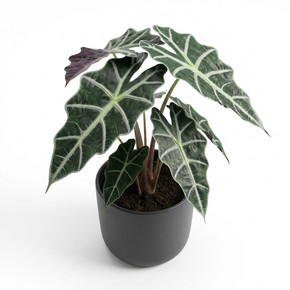
Leaves: Arrowhead-shaped, dark green with striking white to pale green veins, glossy surface, held erect.
Petioles: Thick, green with pale mottling.
Growth Habit: Clumping, upright.
Flowers: Rarely bloom indoors; inflorescences typical of Araceae, greenish spathes.
Height (indoors): 60–150 cm (2–5 ft)
Spread: 30–60 cm (1–2 ft)
Leaf Length: 20–50 cm (8–20 in)
Bright, indirect light; avoid direct sun to prevent leaf scorch. Tolerates medium light but growth may slow.
Keep soil consistently moist but not waterlogged. Water when the top 2–3 cm of soil feels dry. Reduce frequency in winter. Ensure excess water drains freely.
Use a well-draining mix: peat moss or coco coir combined with perlite, coarse sand, and orchid bark. Repot every 1–2 years to refresh soil and divide rhizomes as needed.
Optimal temperature: 18–26 °C (65–80 °F); avoid below 15 °C (60 °F).
Humidity: High (60–80%); use a humidity tray, humidifier, or regular misting.
Apply a balanced, water-soluble fertilizer (e.g., 20-20-20) at half strength every 4–6 weeks during spring and summer. Do not fertilize in winter dormancy.
Moderate care: sensitive to overwatering, low humidity, and pests. Wipe leaves regularly to remove dust and inspect for signs of stress.
Propagate by dividing rhizomes during repotting. Separate offsets with healthy roots and replant in fresh mix. Seed propagation is rare and seeds rarely available.
Pests: Spider mites, aphids, mealybugs.
Diseases: Root rot from overwatering; leaf spot from fungal pathogens.
Symptoms: Yellowing leaves, drooping, brown leaf tips.
Remedies: Improve drainage, adjust watering schedule, treat pests with insecticidal soap or neem oil.
Primarily used as an ornamental accent plant for homes, offices, and reception areas. Its striking foliage enhances modern interior décor and contributes to general air purification.
All parts contain calcium oxalate crystals and are toxic if ingested, causing oral irritation, swelling, drooling, and vomiting. Keep out of reach of children and pets. Wear gloves when handling to avoid skin irritation.
Turn any corner into a designer space with Alocasia Amazonica. Its sculptural, high-contrast leaves deliver instant impact—perfect for modern homes, receptions, and meeting rooms. Give it bright indirect light, warm temperatures, and a little humidity, and it will reward you with bold, upright foliage that looks like living artwork. (Keep out of reach of pets and children.)
Common Name: Alocasia Amazonica
Botanical Name: Alocasia × amazonica
Former Name: Not available
Plant Type: Foliage houseplant
Plant Code / SKU: PLT-0460
Alternative Names:
ألوكاسيا
African Mask Plant
Amazonica
Order: Alismatales
Family: Araceae
Genus: Alocasia
Alocasia × amazonica is a man-made hybrid, believed to be a cross between Alocasia sanderiana and possibly Alocasia watsoniana. It does not occur in the wild. Cultivated globally as an ornamental houseplant, it thrives in tropical and subtropical regions and is popular indoors in temperate climates.
Leaves: Arrowhead-shaped, dark green with striking white to pale green veins, glossy surface, held erect.
Petioles: Thick, green with pale mottling.
Growth Habit: Clumping, upright.
Flowers: Rarely bloom indoors; inflorescences typical of Araceae, greenish spathes.
Height (indoors): 60–150 cm (2–5 ft)
Spread: 30–60 cm (1–2 ft)
Leaf Length: 20–50 cm (8–20 in)
Bright, indirect light; avoid direct sun to prevent leaf scorch. Tolerates medium light but growth may slow.
Keep soil consistently moist but not waterlogged. Water when the top 2–3 cm of soil feels dry. Reduce frequency in winter. Ensure excess water drains freely.
Use a well-draining mix: peat moss or coco coir combined with perlite, coarse sand, and orchid bark. Repot every 1–2 years to refresh soil and divide rhizomes as needed.
Optimal temperature: 18–26 °C (65–80 °F); avoid below 15 °C (60 °F).
Humidity: High (60–80%); use a humidity tray, humidifier, or regular misting.
Apply a balanced, water-soluble fertilizer (e.g., 20-20-20) at half strength every 4–6 weeks during spring and summer. Do not fertilize in winter dormancy.
Moderate care: sensitive to overwatering, low humidity, and pests. Wipe leaves regularly to remove dust and inspect for signs of stress.
Propagate by dividing rhizomes during repotting. Separate offsets with healthy roots and replant in fresh mix. Seed propagation is rare and seeds rarely available.
Pests: Spider mites, aphids, mealybugs.
Diseases: Root rot from overwatering; leaf spot from fungal pathogens.
Symptoms: Yellowing leaves, drooping, brown leaf tips.
Remedies: Improve drainage, adjust watering schedule, treat pests with insecticidal soap or neem oil.
Primarily used as an ornamental accent plant for homes, offices, and reception areas. Its striking foliage enhances modern interior décor and contributes to general air purification.
All parts contain calcium oxalate crystals and are toxic if ingested, causing oral irritation, swelling, drooling, and vomiting. Keep out of reach of children and pets. Wear gloves when handling to avoid skin irritation.





Take 20% off your first order
Enter the code below at checkout to get 20% off your first order