

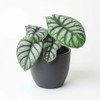


Bring home a living piece of designer décor. Alocasia Silver Dragon delivers a striking metallic-silver look with dramatic veining in a compact footprint—perfect for desktops, shelves, and reception areas. If you love rare foliage plants, this is the statement Alocasia that instantly upgrades any space.
Common Name: Alocasia Silver Dragon
Botanical Name: Alocasia baginda ‘Silver Dragon’
Former Name: Not available
Plant Type: Foliage houseplant (Aroid)
Plant Code / SKU: PLT-0235
Alternative Names:
Silver Dragon
ألوكاسيا
Order: Alismatales
Family: Araceae
Genus: Alocasia
Species: Alocasia baginda
Native to the tropical rainforests of Borneo, Malaysia (particularly Sarawak).
Cultivar selected and propagated from wild A. baginda populations.
Distributed globally through specialty nurseries and houseplant collectors.
Leaf Shape: Arrowhead to ovate with pronounced lobes.
Leaf Color: Metallic silver surface with dark green to charcoal veins.
Texture: Thick, leathery, slightly puckered (“dragon-scale”) surface.
Stems: Upright, stout petioles emerging from a creeping rhizome, green to burgundy-tinged.
Mature Height: 30–45 cm (12–18 in) indoors.
Mature Spread: 25–35 cm (10–14 in).
Leaf Size: 15–20 cm (6–8 in) long, 10–15 cm (4–6 in) wide.
Growth Habit: Clumping, compact; slow to moderate growth rate.
Prefers bright, indirect light.
Avoid direct midday sun to prevent leaf scorch.
Tolerates lower light but with reduced leaf coloration and slower growth.
Keep soil consistently evenly moist but not waterlogged.
Allow the top 2–3 cm (1 in) of soil to dry slightly before watering.
Reduce frequency in cooler months; never let the plant sit in standing water.
Use a well-draining aroid mix: peat or coco coir, perlite, orchid bark, and a small amount of activated charcoal.
pH preference: slightly acidic to neutral (5.5–6.5).
Repot every 1–2 years or when rootbound, in spring.
Optimal Temperature: 18–27 °C (65–80 °F).
Minimum Temperature: 15 °C (59 °F); avoid cold drafts.
Humidity: High (60–80%); benefits from regular misting or a humidifier.
Feed with a balanced, water-soluble fertilizer (e.g., 20-20-20) at half strength.
Apply every 4–6 weeks during the growing season (spring–summer).
Suspend feeding in autumn and winter when growth slows.
Care Level: Moderate; requires stable humidity and moisture.
Pruning: Remove yellow or damaged leaves at the base.
Dust leaves occasionally to maintain photosynthesis and showy appearance.
Growth via creeping rhizomes; forms new shoots (pups) adjacent to parent plant.
Propagate by division: separate rhizome sections with at least one healthy shoot and root cluster.
Best done during active growth (spring–early summer).
Overwatering: root rot, yellowing leaves.
Underwatering: crispy leaf edges, drooping.
Pests: spider mites, mealybugs, aphids; inspect undersides of leaves.
Leaf Browning: low humidity or direct sun exposure.
Highly ornamental: statement foliage for homes and offices.
Compact habit suits desktops, shelves, reception areas.
May contribute to improved indoor air quality by filtering pollutants.
Contains calcium oxalate crystals; toxic if ingested.
May cause oral irritation, drooling, vomiting in pets and humans.
Use gloves when handling to avoid skin irritation.
Bring home a living piece of designer décor. Alocasia Silver Dragon delivers a striking metallic-silver look with dramatic veining in a compact footprint—perfect for desktops, shelves, and reception areas. If you love rare foliage plants, this is the statement Alocasia that instantly upgrades any space.
Common Name: Alocasia Silver Dragon
Botanical Name: Alocasia baginda ‘Silver Dragon’
Former Name: Not available
Plant Type: Foliage houseplant (Aroid)
Plant Code / SKU: PLT-0235
Alternative Names:
Silver Dragon
ألوكاسيا
Order: Alismatales
Family: Araceae
Genus: Alocasia
Species: Alocasia baginda
Native to the tropical rainforests of Borneo, Malaysia (particularly Sarawak).
Cultivar selected and propagated from wild A. baginda populations.
Distributed globally through specialty nurseries and houseplant collectors.
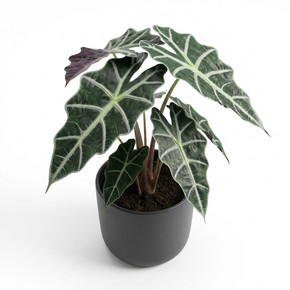
Leaf Shape: Arrowhead to ovate with pronounced lobes.
Leaf Color: Metallic silver surface with dark green to charcoal veins.
Texture: Thick, leathery, slightly puckered (“dragon-scale”) surface.
Stems: Upright, stout petioles emerging from a creeping rhizome, green to burgundy-tinged.
Mature Height: 30–45 cm (12–18 in) indoors.
Mature Spread: 25–35 cm (10–14 in).
Leaf Size: 15–20 cm (6–8 in) long, 10–15 cm (4–6 in) wide.
Growth Habit: Clumping, compact; slow to moderate growth rate.
Prefers bright, indirect light.
Avoid direct midday sun to prevent leaf scorch.
Tolerates lower light but with reduced leaf coloration and slower growth.
Keep soil consistently evenly moist but not waterlogged.
Allow the top 2–3 cm (1 in) of soil to dry slightly before watering.
Reduce frequency in cooler months; never let the plant sit in standing water.
Use a well-draining aroid mix: peat or coco coir, perlite, orchid bark, and a small amount of activated charcoal.
pH preference: slightly acidic to neutral (5.5–6.5).
Repot every 1–2 years or when rootbound, in spring.
Optimal Temperature: 18–27 °C (65–80 °F).
Minimum Temperature: 15 °C (59 °F); avoid cold drafts.
Humidity: High (60–80%); benefits from regular misting or a humidifier.
Feed with a balanced, water-soluble fertilizer (e.g., 20-20-20) at half strength.
Apply every 4–6 weeks during the growing season (spring–summer).
Suspend feeding in autumn and winter when growth slows.
Care Level: Moderate; requires stable humidity and moisture.
Pruning: Remove yellow or damaged leaves at the base.
Dust leaves occasionally to maintain photosynthesis and showy appearance.
Growth via creeping rhizomes; forms new shoots (pups) adjacent to parent plant.
Propagate by division: separate rhizome sections with at least one healthy shoot and root cluster.
Best done during active growth (spring–early summer).
Overwatering: root rot, yellowing leaves.
Underwatering: crispy leaf edges, drooping.
Pests: spider mites, mealybugs, aphids; inspect undersides of leaves.
Leaf Browning: low humidity or direct sun exposure.
Highly ornamental: statement foliage for homes and offices.
Compact habit suits desktops, shelves, reception areas.
May contribute to improved indoor air quality by filtering pollutants.
Contains calcium oxalate crystals; toxic if ingested.
May cause oral irritation, drooling, vomiting in pets and humans.
Use gloves when handling to avoid skin irritation.



Take 20% off your first order
Enter the code below at checkout to get 20% off your first order