


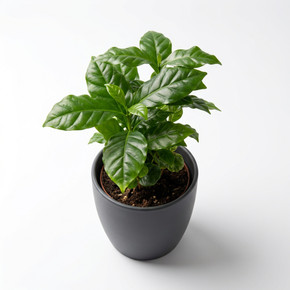




Bring home a living coffee tree. The Arabica Coffee Plant delivers rich, glossy foliage and—under bright, warm conditions—can reward you with fragrant flowers and decorative coffee cherries. Perfect for bright interiors, receptions, and plant lovers who want something truly different. Fresh, tropical, and gift-ready—this is a statement plant with a story.
Common Name: Coffee Plant, Arabica Coffee
Botanical Name: Coffea arabica
Arabic Name: شجرة البن
Variant: Standard
Color: Natural
Family: Rubiaceae
Stems: 1
Coffea arabica belongs to the Rubiaceae family, commonly known as the coffee, madder, or bedstraw family. It is the primary species of the Coffea genus used for commercial coffee production, accounting for about 60% of global production.
The Arabica coffee plant is native to the southwestern highlands of Ethiopia. It has since been distributed and cultivated extensively in tropical regions around the world, including Latin America, Southeast Asia, and other parts of Africa.
This plant features dark green, glossy, elliptical leaves with distinctively wavy margins. When mature, it produces small, star-shaped white flowers that carry a sweet, jasmine-like fragrance. These flowers eventually give way to small green fruits known as "cherries," which turn a deep red or purple when ripe.
As an indoor plant, it is typically kept pruned to a height of 3 to 6 feet (0.9 to 1.8 meters). In its natural habitat or when grown outdoors in ideal conditions, it can grow into a large shrub or small tree reaching 15 to 30 feet in height.
Coffea arabica thrives in bright, indirect light. While it enjoys a few hours of soft morning sun, direct afternoon sunlight can scorch the leaves. It is well-suited for spots near east or north-facing windows.
The plant prefers consistently moist soil but should never sit in standing water. Water when the top inch of the soil feels dry to the touch. During winter, watering frequency should be reduced slightly as the plant's growth slows.
Use a rich, peat-based potting mix with excellent drainage. A slightly acidic soil pH (between 6.0 and 6.5) is ideal for optimal growth.
The ideal temperature range is between 65°F and 80°F (18°C–27°C). Coffee plants require high humidity levels (50% or higher). In dry indoor environments, frequent misting or the use of a humidifier is highly recommended to prevent leaf browning.
During the active growing season (spring and summer), feed the plant every two weeks with a balanced liquid fertilizer diluted to half strength. Use a fertilizer designed for acid-loving plants for best results.
Care Level: Moderate. While it is relatively easy to grow, it requires consistency in watering and humidity. Regular pruning helps maintain a bushy shape and manages its size for indoor spaces.
Coffee plants have a moderate growth rate. They can be propagated from fresh seeds (though they lose viability quickly) or through stem cuttings, although cuttings can be challenging to root without consistent heat and humidity.
Common issues include brown leaf tips due to low humidity or dry soil. It can also be susceptible to common houseplant pests such as mealybugs, scale, and spider mites if the air is too dry.
Primarily used as an ornamental foliage plant, it also serves as an excellent air purifier. Under ideal indoor conditions, it can produce edible coffee beans, though a significant harvest requires several years of growth and proper pollination.
The leaves and stems of the coffee plant are considered toxic to cats, dogs, and horses if ingested due to the caffeine content. While the fruit (cherry) is generally safe, the raw beans and plant parts should be kept away from pets.
Bring home a living coffee tree. The Arabica Coffee Plant delivers rich, glossy foliage and—under bright, warm conditions—can reward you with fragrant flowers and decorative coffee cherries. Perfect for bright interiors, receptions, and plant lovers who want something truly different. Fresh, tropical, and gift-ready—this is a statement plant with a story.
Common Name: Coffee Plant, Arabica Coffee
Botanical Name: Coffea arabica
Arabic Name: شجرة البن
Variant: Standard
Color: Natural
Family: Rubiaceae
Stems: 1
Coffea arabica belongs to the Rubiaceae family, commonly known as the coffee, madder, or bedstraw family. It is the primary species of the Coffea genus used for commercial coffee production, accounting for about 60% of global production.
The Arabica coffee plant is native to the southwestern highlands of Ethiopia. It has since been distributed and cultivated extensively in tropical regions around the world, including Latin America, Southeast Asia, and other parts of Africa.
This plant features dark green, glossy, elliptical leaves with distinctively wavy margins. When mature, it produces small, star-shaped white flowers that carry a sweet, jasmine-like fragrance. These flowers eventually give way to small green fruits known as "cherries," which turn a deep red or purple when ripe.
As an indoor plant, it is typically kept pruned to a height of 3 to 6 feet (0.9 to 1.8 meters). In its natural habitat or when grown outdoors in ideal conditions, it can grow into a large shrub or small tree reaching 15 to 30 feet in height.
Coffea arabica thrives in bright, indirect light. While it enjoys a few hours of soft morning sun, direct afternoon sunlight can scorch the leaves. It is well-suited for spots near east or north-facing windows.
The plant prefers consistently moist soil but should never sit in standing water. Water when the top inch of the soil feels dry to the touch. During winter, watering frequency should be reduced slightly as the plant's growth slows.
Use a rich, peat-based potting mix with excellent drainage. A slightly acidic soil pH (between 6.0 and 6.5) is ideal for optimal growth.
The ideal temperature range is between 65°F and 80°F (18°C–27°C). Coffee plants require high humidity levels (50% or higher). In dry indoor environments, frequent misting or the use of a humidifier is highly recommended to prevent leaf browning.
During the active growing season (spring and summer), feed the plant every two weeks with a balanced liquid fertilizer diluted to half strength. Use a fertilizer designed for acid-loving plants for best results.
Care Level: Moderate. While it is relatively easy to grow, it requires consistency in watering and humidity. Regular pruning helps maintain a bushy shape and manages its size for indoor spaces.
Coffee plants have a moderate growth rate. They can be propagated from fresh seeds (though they lose viability quickly) or through stem cuttings, although cuttings can be challenging to root without consistent heat and humidity.
Common issues include brown leaf tips due to low humidity or dry soil. It can also be susceptible to common houseplant pests such as mealybugs, scale, and spider mites if the air is too dry.
Primarily used as an ornamental foliage plant, it also serves as an excellent air purifier. Under ideal indoor conditions, it can produce edible coffee beans, though a significant harvest requires several years of growth and proper pollination.
The leaves and stems of the coffee plant are considered toxic to cats, dogs, and horses if ingested due to the caffeine content. While the fruit (cherry) is generally safe, the raw beans and plant parts should be kept away from pets.


Take 20% off your first order
Enter the code below at checkout to get 20% off your first order