


Aspleniaceae
Asplenium nidus
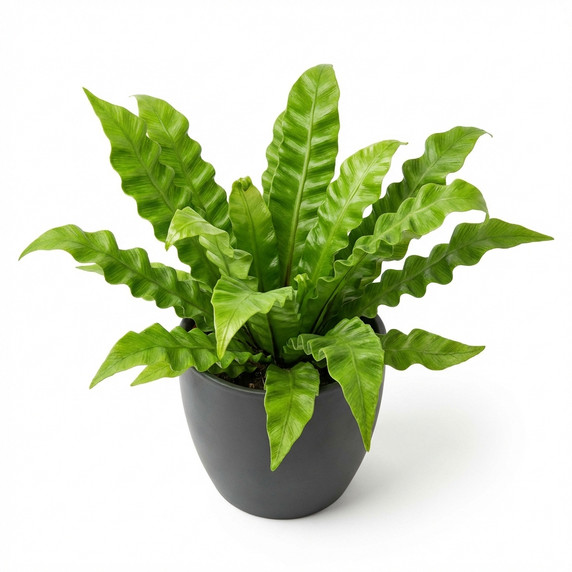
Bring a tropical, designer look to your space with the Bird’s Nest Fern. Its vibrant wavy fronds unfurl from a stunning central rosette, instantly elevating corners, consoles, and reception areas. Easy to enjoy in medium indirect light with consistent moisture and humidity, it’s a pet-safe choice for modern homes and offices seeking fresh, living greenery.
1. Basic Identification
Common Name: Bird’s Nest Fern
Botanical Name: Asplenium nidus
Former Name: Not available
Plant Type: Fern (Houseplant)
Plant Code / SKU: PLT-0425
Alternative Names:
لسان الطير
2. Taxonomy & Classification
Order: Polypodiales
Family: Aspleniaceae
Genus: Asplenium
3. Origin & Distribution
Native to tropical regions of Asia, Eastern Australia, Eastern Africa and various Pacific islands, often found as an epiphyte on tree trunks in rainforest understories.
Widely cultivated as an ornamental houseplant worldwide.
4. Visual Characteristics
Fronds: Simple, undivided, bright green, glossy, forming a central rosette with wavy or undulating margins.
New fronds emerge tightly coiled and gradually unfurl.
Rhizome: Short, thick, and vertical, anchoring the plant.
5. Size & Dimensions
Typical indoor height: 30–60 cm (12–24 in)
Spread: 30–90 cm (12–36 in), depending on age and container size.
6. Light Requirements
Prefers bright, indirect light; avoid direct sun which can scorch fronds.
Tolerates low to medium light but exhibits slower growth and smaller fronds.
7. Watering Needs
Keep soil consistently moist but not waterlogged; water when the top 2–3 cm (1 in) of soil begins to dry.
Avoid letting plant sit in standing water; reduce watering slightly in cooler months.
8. Soil & Potting
Use a rich, well-draining potting mix high in organic matter (peat, compost, orchid bark).
Ideal soil pH: slightly acidic, around 5.5–6.5.
Ensure pot has drainage holes.
9. Temperature & Humidity
Optimal temperature: 18–27 °C (65–80 °F); minimum 15 °C (60 °F); avoid drafts and sudden temperature drops.
Requires high humidity (60% or higher); benefit from regular misting, pebble tray, or humidifier.
10. Fertilization
Feed monthly during spring and summer with a balanced, water-soluble fertilizer at half recommended strength.
Do not fertilize in winter when growth slows.
11. Maintenance & Care Level
Care level: Moderate; requires attention to humidity and moisture levels.
Remove any dead or yellowing fronds; clean fronds to remove dust.
Repot every 1–2 years in fresh soil to maintain vigor.
12. Growth & Propagation
Growth habit: Slow to moderate, forming a central vase-like rosette.
Propagation by division during repotting: gently separate offsets or sections of the rhizome.
Spore propagation possible but less common in cultivation.
13. Common Problems
Browning or crisping frond tips: often due to low humidity, underwatering, or fluoride salts.
Yellowing fronds: overwatering or poor drainage.
Pests: mealybugs, scale; treat with insecticidal soap or neem oil.
Root rot if kept excessively wet.
14. Benefits & Uses
Ornamental: adds tropical texture and greenery to indoor and shaded outdoor spaces.
Improves indoor air quality by increasing humidity and filtering air.
Pet-safe, making it suitable for homes with animals.
15. Toxicity & Safety
Non-toxic to cats, dogs, and humans; safe for households with pets and children.
No known significant health risks; handle gently to avoid frond damage.
Asplenium nidus
Bring a tropical, designer look to your space with the Bird’s Nest Fern. Its vibrant wavy fronds unfurl from a stunning central rosette, instantly elevating corners, consoles, and reception areas. Easy to enjoy in medium indirect light with consistent moisture and humidity, it’s a pet-safe choice for modern homes and offices seeking fresh, living greenery.
1. Basic Identification
Common Name: Bird’s Nest Fern
Botanical Name: Asplenium nidus
Former Name: Not available
Plant Type: Fern (Houseplant)
Plant Code / SKU: PLT-0425
Alternative Names:
لسان الطير
2. Taxonomy & Classification
Order: Polypodiales
Family: Aspleniaceae
Genus: Asplenium
3. Origin & Distribution
Native to tropical regions of Asia, Eastern Australia, Eastern Africa and various Pacific islands, often found as an epiphyte on tree trunks in rainforest understories.
Widely cultivated as an ornamental houseplant worldwide.
4. Visual Characteristics
Fronds: Simple, undivided, bright green, glossy, forming a central rosette with wavy or undulating margins.
New fronds emerge tightly coiled and gradually unfurl.
Rhizome: Short, thick, and vertical, anchoring the plant.
5. Size & Dimensions
Typical indoor height: 30–60 cm (12–24 in)
Spread: 30–90 cm (12–36 in), depending on age and container size.
6. Light Requirements
Prefers bright, indirect light; avoid direct sun which can scorch fronds.
Tolerates low to medium light but exhibits slower growth and smaller fronds.
7. Watering Needs
Keep soil consistently moist but not waterlogged; water when the top 2–3 cm (1 in) of soil begins to dry.
Avoid letting plant sit in standing water; reduce watering slightly in cooler months.
8. Soil & Potting
Use a rich, well-draining potting mix high in organic matter (peat, compost, orchid bark).
Ideal soil pH: slightly acidic, around 5.5–6.5.
Ensure pot has drainage holes.
9. Temperature & Humidity
Optimal temperature: 18–27 °C (65–80 °F); minimum 15 °C (60 °F); avoid drafts and sudden temperature drops.
Requires high humidity (60% or higher); benefit from regular misting, pebble tray, or humidifier.
10. Fertilization
Feed monthly during spring and summer with a balanced, water-soluble fertilizer at half recommended strength.
Do not fertilize in winter when growth slows.
11. Maintenance & Care Level
Care level: Moderate; requires attention to humidity and moisture levels.
Remove any dead or yellowing fronds; clean fronds to remove dust.
Repot every 1–2 years in fresh soil to maintain vigor.
12. Growth & Propagation
Growth habit: Slow to moderate, forming a central vase-like rosette.
Propagation by division during repotting: gently separate offsets or sections of the rhizome.
Spore propagation possible but less common in cultivation.
13. Common Problems
Browning or crisping frond tips: often due to low humidity, underwatering, or fluoride salts.
Yellowing fronds: overwatering or poor drainage.
Pests: mealybugs, scale; treat with insecticidal soap or neem oil.
Root rot if kept excessively wet.
14. Benefits & Uses
Ornamental: adds tropical texture and greenery to indoor and shaded outdoor spaces.
Improves indoor air quality by increasing humidity and filtering air.
Pet-safe, making it suitable for homes with animals.
15. Toxicity & Safety
Non-toxic to cats, dogs, and humans; safe for households with pets and children.
No known significant health risks; handle gently to avoid frond damage.