

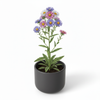



Add a galaxy of color to your outdoor space with the enchanting Aster! Known for its star-shaped, daisy-like flowers, this hardy perennial delivers a stunning display from late summer into autumn. Perfect for pots, borders, and balconies, the Aster is a low-maintenance powerhouse that attracts bees and butterflies, bringing your garden to life. Whether you're a seasoned gardener or just starting, the Aster's resilient nature and vibrant blooms make it a foolproof choice for lasting beauty.
Common Name: Aster, Italian Aster
Botanical Name: Aster amellus
Arabic Name: استر
Plant Variant: Standard
Color: Multicolor
Country of Origin: Netherlands
Kingdom: Plantae
Order: Asterales
Family: Asteraceae
Genus: Aster
Native to central and southern Europe and parts of Western Asia. It is widely cultivated across the globe as an ornamental perennial.
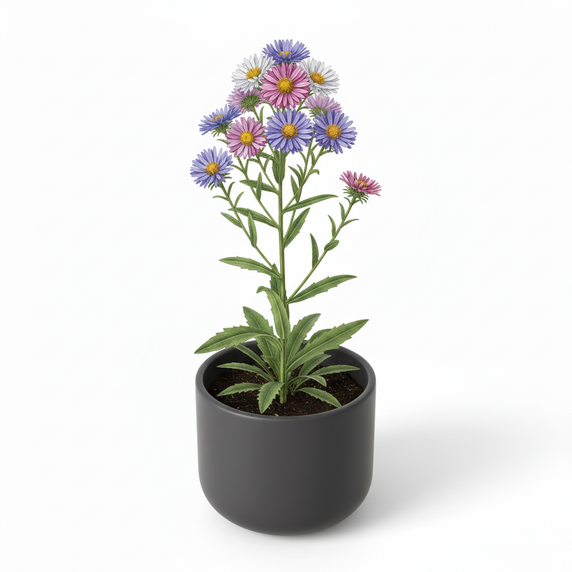
Aster amellus features daisy-like flowers with distinctive star-shaped ray florets usually in shades of purple, blue, or lavender, surrounding a bright yellow central disc. The foliage consists of rough, hairy, lance-shaped green leaves.
This species typically reaches a height of 30 to 60 cm (12-24 inches) and has a spread of approximately 45 cm (18 inches), forming a neat, mounded clump.
Prefers full sun for optimal flowering. It can tolerate partial shade, but too much shade may reduce the number of blooms and lead to a less compact growth habit.
Water regularly to maintain even moisture during the first growing season. Once established, it is moderately drought-tolerant but prefers consistent moisture, especially during dry spells in summer.
Thrives in well-drained, fertile soil. It specifically prefers alkaline to neutral soil and does not perform well in overly acidic conditions.
Highly hardy and cold-tolerant (USDA Zones 5-8). It prefers moderate humidity levels and benefits from good air circulation to keep the foliage healthy.
Apply a balanced, slow-release fertilizer in early spring as new growth appears. Avoid excessive nitrogen, which can promote foliage growth at the expense of flowers.
Easy to care for. Deadheading spent blooms will encourage a longer flowering period and maintain a tidy appearance. Cut back the stems to the base after the plant has finished flowering in late autumn.
It is a clumping perennial. Propagation is best achieved by dividing the root ball in early spring every 3-4 years to maintain vigor. It can also be grown from seeds.
Generally pest-resistant, but can be susceptible to powdery mildew if the air circulation is poor. Slugs and snails may occasionally target young growth.
Excellent for attracting pollinators such as bees and butterflies. Its late-season bloom makes it vital for autumn garden interest. Used frequently in borders, rock gardens, and as a durable cut flower.
Non-toxic to humans, dogs, and cats. It is considered a safe addition to family gardens and pet-friendly landscapes.
Add a galaxy of color to your outdoor space with the enchanting Aster! Known for its star-shaped, daisy-like flowers, this hardy perennial delivers a stunning display from late summer into autumn. Perfect for pots, borders, and balconies, the Aster is a low-maintenance powerhouse that attracts bees and butterflies, bringing your garden to life. Whether you're a seasoned gardener or just starting, the Aster's resilient nature and vibrant blooms make it a foolproof choice for lasting beauty.
Common Name: Aster, Italian Aster
Botanical Name: Aster amellus
Arabic Name: استر
Plant Variant: Standard
Color: Multicolor
Country of Origin: Netherlands
Kingdom: Plantae
Order: Asterales
Family: Asteraceae
Genus: Aster
Native to central and southern Europe and parts of Western Asia. It is widely cultivated across the globe as an ornamental perennial.
Aster amellus features daisy-like flowers with distinctive star-shaped ray florets usually in shades of purple, blue, or lavender, surrounding a bright yellow central disc. The foliage consists of rough, hairy, lance-shaped green leaves.
This species typically reaches a height of 30 to 60 cm (12-24 inches) and has a spread of approximately 45 cm (18 inches), forming a neat, mounded clump.
Prefers full sun for optimal flowering. It can tolerate partial shade, but too much shade may reduce the number of blooms and lead to a less compact growth habit.
Water regularly to maintain even moisture during the first growing season. Once established, it is moderately drought-tolerant but prefers consistent moisture, especially during dry spells in summer.
Thrives in well-drained, fertile soil. It specifically prefers alkaline to neutral soil and does not perform well in overly acidic conditions.
Highly hardy and cold-tolerant (USDA Zones 5-8). It prefers moderate humidity levels and benefits from good air circulation to keep the foliage healthy.
Apply a balanced, slow-release fertilizer in early spring as new growth appears. Avoid excessive nitrogen, which can promote foliage growth at the expense of flowers.
Easy to care for. Deadheading spent blooms will encourage a longer flowering period and maintain a tidy appearance. Cut back the stems to the base after the plant has finished flowering in late autumn.
It is a clumping perennial. Propagation is best achieved by dividing the root ball in early spring every 3-4 years to maintain vigor. It can also be grown from seeds.
Generally pest-resistant, but can be susceptible to powdery mildew if the air circulation is poor. Slugs and snails may occasionally target young growth.
Excellent for attracting pollinators such as bees and butterflies. Its late-season bloom makes it vital for autumn garden interest. Used frequently in borders, rock gardens, and as a durable cut flower.
Non-toxic to humans, dogs, and cats. It is considered a safe addition to family gardens and pet-friendly landscapes.
Take 20% off your first order
Enter the code below at checkout to get 20% off your first order