


Best Indoor Plants for Apartments with Limited Light in Saudi Arabia Homes
Posted by Mozher Experts on 24.02.26
The Reality of Indoor Gardening in Saudi Arabia
Choosing the right indoor plant in Saudi Arabia is less about the outdoor heat and more about the indoor climate we create to escape it. The primary challenge is not sunlight, but the constant, dry air from our air conditioning units. These systems are essential for comfort but create an environment with very low humidity, which is stressful for many popular tropical plants that thrive in moisture. This dry air, combined with the inevitable accumulation of fine dust, can block a plant's pores and hinder its ability to photosynthesize. The best house plants for our region are not those that can survive the heat, but those that can tolerate the artificial desert we live in indoors. Success depends on selecting species that are resilient to low humidity, inconsistent watering, and varying light conditions typical of a modern Saudi home or office. The goal is to find plants that see our air-conditioned spaces as a stable refuge rather than a source of stress.
Top House Plants That Tolerate Dry, Air-Conditioned Environments
For a plant to thrive inside a Saudi home, it must be exceptionally resilient. A few species consistently outperform others in these specific conditions. These plants are selected for their toughness, low maintenance needs, and ability to withstand the challenges of dry air and filtered light. They are ideal starting points for anyone looking to add greenery without constant worry.
Sansevieria trifasciata (Snake Plant)
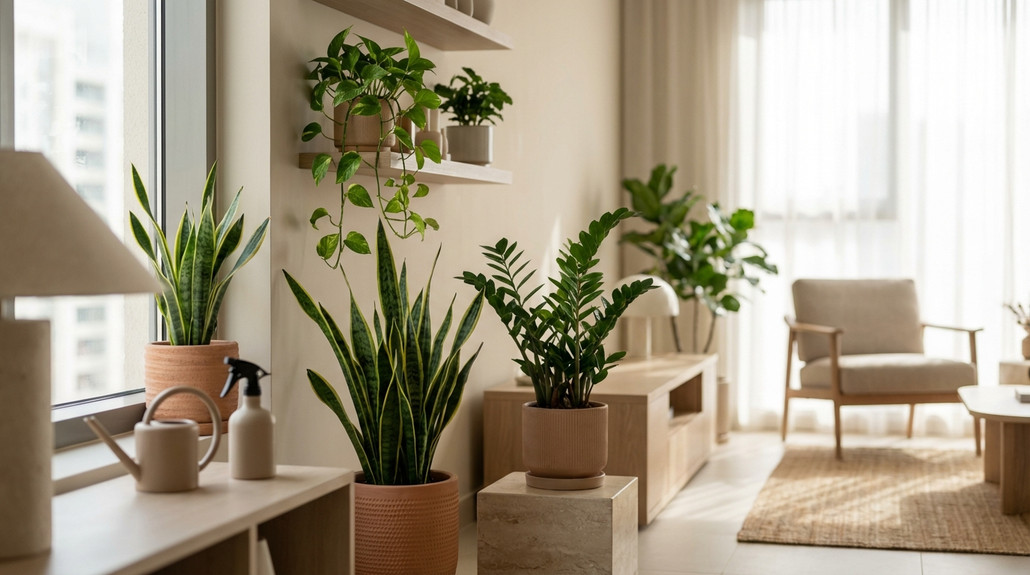
The Snake Plant is arguably the most durable indoor plant available. Its thick, waxy leaves are excellent at storing water, making it extremely tolerant of drought. You can forget to water it for weeks, and it will show no signs of distress. It is completely unfazed by the low humidity produced by air conditioning. Furthermore, it adapts to nearly any light level, from dim corners to bright, indirect sunlight. Its vertical growth habit makes it suitable for tight spaces, and it is known for its air-purifying qualities, removing toxins from the air. This plant demands very little and offers significant aesthetic and functional benefits in return.
Zamioculcas zamiifolia (ZZ Plant)
The ZZ Plant is another champion of neglect. It grows from large, water-storing rhizomes beneath the soil, which act as a reserve during dry periods. This makes it one of the best house plants for busy individuals or frequent travelers. Its glossy, dark green leaves look perpetually healthy, even with minimal care. The ZZ Plant is perfectly content in low-light conditions and is not bothered by the dry air from an AC unit. Overwatering is its only real enemy. By allowing the soil to dry out completely between waterings, you provide it with the exact conditions it needs to flourish.
Epipremnum aureum (Pothos)
Often called Devil's Ivy, Pothos is a versatile and communicative plant. Its trailing vines can be trained to climb or left to hang from shelves and baskets. While it appreciates slightly more humidity than a Snake or ZZ Plant, it is remarkably adaptable and will tolerate the average dry room. Its key advantage is that it clearly shows when it needs water; the leaves will begin to droop slightly, removing the guesswork. It thrives in a wide spectrum of light conditions, from medium to bright indirect, and grows relatively quickly, offering a rewarding experience for new plant owners.
Assessing Your Home's Unique Light Conditions
Understanding the light in your home is the most critical step after choosing a plant. In Saudi Arabia, sunlight coming through a window is far more intense than in other parts of the world. What might be considered "medium light" elsewhere could be "bright indirect light" here. Take time to observe your space. A south-facing window will receive intense, direct light that can scorch the leaves of most indoor plants. An east-facing window provides gentle morning sun, while a west-facing one gets harsh afternoon sun. North-facing windows offer the most consistent, gentle light throughout the day, making them ideal for many species. Look for spots that receive bright light but are shielded from the sun's direct rays, perhaps a few feet back from a window or filtered by a sheer curtain. Correctly assessing the light in your home prevents the common mistake of placing a plant in a location that is too intense for it to handle, leading to burnt leaves and stress.
Matching the Ideal Plant to a Specific Room
Once you understand your home's light, you can place plants strategically for both their health and your home's aesthetic. Different rooms present different opportunities and challenges. The key is to select a plant whose needs align perfectly with the environment you can provide.
Living Rooms and Entryways
These high-traffic areas often have larger windows but variable light throughout the day. A Snake Plant or ZZ Plant makes an excellent choice here. Their strong, structural forms create a welcoming statement, and their tolerance for a range of conditions means they won't suffer if a spot becomes shady in the afternoon. They are robust enough to handle the occasional bump and require minimal upkeep, always looking presentable for guests.
Bedrooms and Offices
These spaces benefit from plants that are both calming and low-maintenance. A Pothos on a shelf or a small Spider Plant are excellent suitable plants for your desk or bedside table. They add a touch of life without demanding constant attention during a busy workday. Since these rooms often have curtains drawn for privacy, plants that do well in medium or filtered light are the most practical choices. Their presence can contribute to a more focused and tranquil environment.
Hallways and Dim Corners
Every home has corners or corridors that receive very little natural light. These spots can feel empty, but most plants will not survive there. This is where the Cast Iron Plant (Aspidistra elatior) excels. It is the definitive choice for truly low-light environments. Its deep green, elegant leaves can brighten a dark space, and it is exceptionally tolerant of neglect, dry air, and dust, living up to its name of being nearly indestructible.
Adapting Care Routines for the Local Indoor Climate
Successful indoor gardening in our region requires adjusting standard plant care advice to fit our unique environment. The most common mistake is adhering to a rigid watering schedule. The dry air from the AC will often make the top layer of soil feel dry to the touch, but the root ball below may still be saturated. This leads to overwatering, the number one cause of indoor plant failure. Instead of watering on a set day, always check the soil first. Insert your finger two inches deep; if it feels dry, it is time to water. For larger pots, a moisture meter can provide a more accurate reading. Another critical task is managing dust. A fine layer of dust settles on everything, including plant leaves. This film can block light and clog the pores plants use for respiration. Gently wipe the leaves with a soft, damp cloth every few weeks to keep them clean and healthy. This simple step not only improves the plant's appearance but also significantly boosts its ability to thrive. Following these climate-specific practices is central to developing a consistent plant care routine that works.
Plants to Avoid for Beginners in This Climate
While many plants are beautiful, some are simply not suited for the typical indoor environment in Saudi Arabia and often lead to frustration. Understanding which ones to avoid can save you time and disappointment.
Calathea and Maranta (Prayer Plants)
These plants are famous for their stunning, patterned foliage. However, they are native to tropical rainforest floors and demand extremely high humidity—the exact opposite of a room cooled by an AC. In our dry indoor air, their delicate leaves quickly develop brown, crispy edges and will steadily decline, no matter how carefully you water them.
Ferns
Most common ferns, like the Boston Fern or the delicate Maidenhair Fern, share the same requirement for high humidity and consistently moist soil. They cannot tolerate the drying effect of air conditioning and will rapidly turn brown and shed their leaves in such an environment. They are best reserved for enclosed terrariums or bathrooms with higher ambient moisture.
Fiddle Leaf Fig (Ficus lyrata)
This has been a trendy statement plant for years, but it is notoriously temperamental. It despises change, drafts, and inconsistent conditions. A direct draft from an AC vent, a common occurrence in our homes, is often enough to cause it to drop its large, expensive leaves. While it is possible to keep one alive, it requires a perfect, stable location and is not recommended for those new to plant care.
Making Your Final Selection
Choosing the best house plant comes down to an honest assessment of your home and lifestyle. The most beautiful plant is one that is healthy and thriving in its environment. Instead of choosing a plant that requires you to change your home's conditions, select one that is already adapted to them. If you are a beginner, travel often, or have a busy schedule, your first choice should be a ZZ Plant or a Snake Plant. Their resilience is unmatched and will provide a rewarding, low-stress experience. If you desire more visible growth and a trailing aesthetic, the Pothos is an excellent and forgiving option. Starting with these tough and reliable indoor plants builds the confidence needed to succeed and enjoy the process of bringing nature into your home. They are proven performers in our unique indoor climate.