


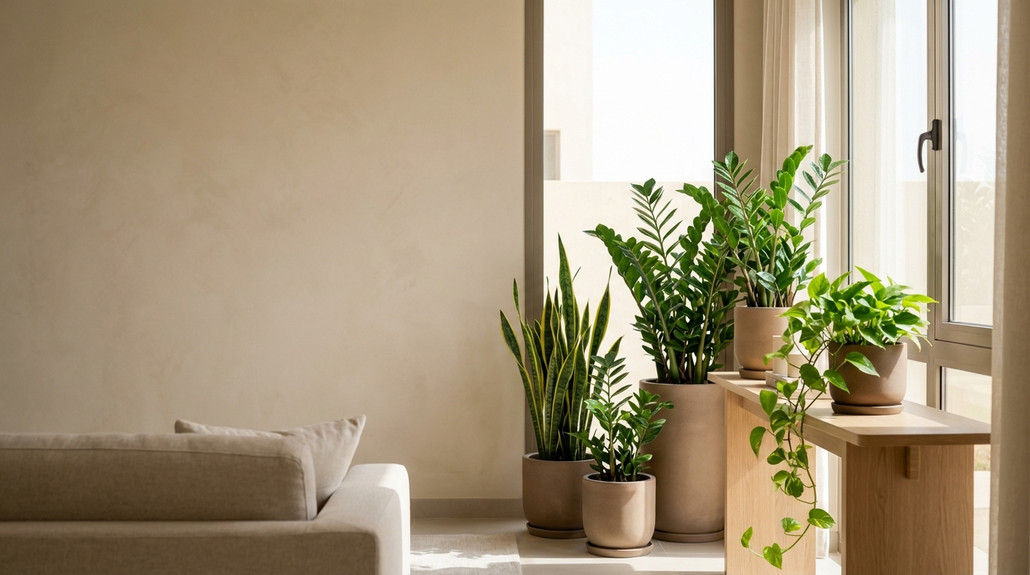
Best Indoor Plants for Offices in Hot Countries in Saudi Arabia Homes
Posted by Mozher Expoerts on 07.03.26
Navigating Saudi Arabia's Unique Indoor Climate: Heat, AC, and Light Constraints
In the heart of Saudi Arabian homes and bustling offices, where the scorching sun outside gives way to the indispensable, continuously humming air conditioning unit—colloquially known as AC or ‘السبلت’—the desire for a vibrant indoor oasis is a shared aspiration. While indoor plants offer a profound sense of peace and a tangible connection to nature, the journey of nurturing them here comes with a unique set of environmental challenges. Generic plant care advice, often tailored for more temperate regions, simply won't suffice. Success in Saudi Arabia hinges on a nuanced understanding of the interplay between persistently high outdoor temperatures, the pervasive dry air created by constant AC operation, subtle indoor light levels, and even the inherent stress plants endure during delivery.
As a senior indoor-plant specialist and horticulture educator at Mozher, I've observed firsthand what commonly goes wrong for plant owners in Saudi Arabia. Fine dust, the relentless dehumidifying effect of the Al-Sablat, and fluctuating indoor conditions all contribute to a challenging microclimate. This guide is crafted to equip you with climate-aware recommendations, ensuring your chosen suitable indoor plants not only survive but genuinely thrive within the specific realities of your Saudi Arabian home or office. Our focus at Mozher is on real outcomes: healthier plants, fewer losses, and more beautiful homes and offices.
Essential Qualities of Thriving Indoor Plants for Saudi Arabian Offices and Homes
Cultivating a flourishing indoor garden in a Saudi Arabian office or home requires selecting plants with inherent resilience. These aren't delicate specimens that demand constant pampering, but rather robust, adaptable varieties that can withstand periods of occasional inattention, adapt to fluctuating indoor temperatures, consistently low humidity, and still genuinely thrive with a minimal, thoughtful care routine. The best choices for this region are those that possess specific biological traits allowing them to cope with the harshness of high heat and the drying effects of constant AC. When curating options for the best indoor plants, we prioritize robust health and reliable performance, looking for qualities beyond mere aesthetics.
Heat and AC Tolerance: A Must for Survival
The ability of an indoor plant to tolerate both high ambient temperatures (when the AC is off or less effective, such as during cooler months or brief power outages) and the dry, cool drafts from continuous AC operation is paramount in Saudi Arabia. This isn't just about surviving for a few hours; it's about enduring long periods of warmth and rapid changes when the AC cycles on and off throughout the day. Plants best suited for this environment often possess thicker, waxy leaves or specialized structures that help them conserve moisture, making them inherently more resistant to the desiccation caused by dry indoor air. Their cellular structure also allows them to recover quickly from environmental shifts, showing minimal stress. Choosing genuinely exceptionally hardy indoor plants for these demanding conditions is the first and most critical step towards a sustainable indoor green space.
Watering Forgiveness for Busy Lifestyles
Given the bustling lifestyles and varying attention levels of plant owners in Saudi Arabia, a plant's capacity for "watering forgiveness" is a highly desirable trait. This means the plant can tolerate both slightly delayed watering and the occasional, accidental overwatering (a common issue in AC-cooled environments where soil dries slowly) without rapidly declining. True drought tolerance often comes from specialized water-storage organs, such as thick leaves, fleshy stems, or rhizomes. These biological adaptations allow plants to draw upon internal reserves during dry spells, providing a buffer against inconsistent watering frequency. Such species are ideal for those who travel frequently, have demanding work schedules, or simply prefer a less hands-on approach to plant care, ensuring your investment in greenery remains vibrant despite occasional oversights.
Adaptability to Varied Light Levels: From Dim Corners to Bright Indirect
As noted, indoor light levels in Saudi Arabian offices and homes can fluctuate dramatically depending on architectural design, window size, and the use of heavy curtains to block the intense sun. A truly resilient plant for our region is one that doesn't demand very specific light conditions, but can adapt and still perform well across a broad spectrum, from genuinely low-light tolerant varieties to bright, indirect exposure. This flexibility significantly reduces the burden on the owner to find a "perfect" spot and substantially increases the chances of the plant thriving in its chosen location, even if conditions shift slightly with the seasons or room usage. For deeper interior spaces or offices with minimal natural light, choosing plants that naturally excel in lower light conditions from the outset is a smart strategy for long-term success.
Top Indoor Plants That Flourish in Saudi Arabian Offices and Homes
The secret to cultivating a flourishing indoor garden in a Saudi Arabian home or office, especially one navigating high temperatures, low humidity from continuous AC use, and potentially inconsistent care, lies in selecting species that are naturally adapted. These are the true beginner-friendly best indoor plants that offer maximum beauty with minimal fuss, making them perfect companions for busy households and workspaces across Saudi Arabia. Here, I present some of the most reliable choices that consistently prove their resilience even in challenging indoor environments:
Snake Plant (Sansevieria trifasciata): The Architectural Survivor
The Snake Plant, widely recognized as Mother-in-Law's Tongue, truly sets the gold standard for an exceptionally resilient indoor plant. Its distinctive upright, sword-like leaves are not only aesthetically striking, adding a modern, sculptural element to any room or office desk, but are also incredibly efficient natural reservoirs, adept at storing water for extended periods. This remarkable ability allows the plant to thrive for weeks, or even months, without needing frequent watering, making it practically immune to the dry air created by constant Al-Sablat. What makes it even more appealing for spaces with limited or fluctuating light levels is its extraordinary versatility across various conditions; it flourishes equally well in dimly lit corners as it does in bright, indirect light. The most common pitfall with a Snake Plant is, ironically, overwatering, which can rapidly lead to root rot. Its needs are genuinely minimal, typically requiring only an occasional wipe-down of its leaves with a damp cloth to remove the pervasive fine dust and ensure efficient light absorption. This plant embodies the very essence of a truly neglect-tolerant companion, ideal for any busy Saudi Arabian lifestyle.
ZZ Plant (Zamioculcas zamiifolia): Effortless Elegance for Dim Settings
If your quest is for an indoor plant that is nearly impossible to compromise, even in persistently challenging low light conditions, the ZZ Plant is your definitive answer. Its signature glossy, dark green leaves emerge gracefully from large, potato-like rhizomes, which are cleverly concealed beneath the soil surface. These rhizomes function as natural water batteries, enabling the plant to endure remarkably long periods of drought tolerance with exceptional ease. This inherent resilience makes it an ideal choice for busy individuals, frequent travelers, or anyone who tends to occasionally forget their watering frequency. The ZZ Plant truly excels in low light environments, positioning it as a perfect candidate for deeper interior rooms or offices where natural illumination is inherently limited. It remains completely unfazed by the dry airflow from Al-Sablat units, showing no visible signs of stress or discomfort. Its characteristically slow growth rate means it will maintain its elegant form without quickly outgrowing its designated space, thus requiring minimal pruning or repotting for many years. For any Saudi Arabian home or office that demands an enduring touch of stylish greenery, even in the dimmest conditions and through prolonged periods of inattention, this plant is a prime candidate among the best indoor plants for Saudi Arabia.
Pothos (Epipremnum aureum): The Communicative Trailing Companion
Often endearingly referred to as "Devil's Ivy," the Pothos is an incredibly versatile and remarkably forgiving trailing plant. While it does appreciate more consistent moisture compared to the Snake or ZZ Plant, its most significant virtue lies in its unequivocal communication: its vibrant leaves will visibly begin to droop when the plant is thirsty, providing an unmistakable signal that it needs attention. Crucially, it quickly revives and perks up once thoroughly hydrated, removing much of the guesswork from the watering process. This clear feedback mechanism makes it an excellent, beginner-friendly option. Pothos demonstrates impressive adaptability across a broad spectrum of light levels, ranging from low-light corners to bright, indirect light, and it copes commendably with the average dry indoor air found in Al-Sablat-cooled environments. Its relatively fast growth rate offers dynamic greenery; it can be left to cascade elegantly from shelves, bookcases, or hanging planters, adding a sense of abundance and natural charm to any office or apartment space with minimal ongoing fuss. This inherent flexibility and resilience firmly establish Pothos as a reliable and aesthetically pleasing addition to virtually any Saudi Arabian indoor setting.
Cast Iron Plant (Aspidistra elatior): The Unyielding Green Statement
True to its name, the Cast Iron Plant is almost indestructible, making it an ideal candidate even for the most challenging indoor conditions in Saudi Arabia, particularly in dimly lit apartments or offices with very limited light. It is famously tolerant of very low light, infrequent watering, and even prolonged periods of neglect, thriving where many other plants would simply give up. Its dark green, leathery leaves are resilient to the dry Al-Sablat air and dust, requiring minimal attention beyond an occasional wipe to keep them shiny. The characteristically slow growth rate of the Cast Iron Plant means it will maintain its elegant, upright form without needing frequent repotting or pruning, making it a truly "set-it-and-forget-it" option. Its non-toxicity also makes it a safe choice for homes with pet-safe indoor plants or children, an important consideration for many families. For those seeking a long-lasting, robust green presence in a particularly dark or overlooked corner in their home or office, the Cast Iron Plant is a superb choice, renowned for its incredible hardiness and reliability in diverse conditions.
Spider Plant (Chlorophytum comosum): Air Purifier and Family Favorite
The Spider Plant retains its classic status for excellent reasons: it is remarkably easy to care for and produces charming "spiderettes" that can be effortlessly propagated, adding a delightful and interactive element to any home or office. Its adaptability to various light levels, from bright indirect to medium light, makes it a flexible choice for different areas within a Saudi Arabian space, though it typically flourishes best with consistent indirect light for optimal leaf coloration. While it enjoys slightly more humidity than some of the arid-adapted plants on this list, it tolerates the dry Saudi Arabian indoor air reasonably well and is quite forgiving of an inconsistent watering schedule. In addition to its aesthetic appeal and ease of care, the Spider Plant is highly regarded for its air-purifying qualities, actively helping to remove common indoor toxins from the environment, thereby contributing to a healthier living space. Furthermore, and of significant importance for many households, it is non-toxic to both pets and children, making it a fantastic choice for family-friendly homes looking for the best indoor plants.
Foundational Care Practices for Longevity in the Saudi Arabian Climate
Even the hardiest plants need a foundational level of care, especially within Saudi Arabia’s unique indoor climate. The key to successful low-maintenance plant ownership is a consistent and thoughtful routine that prevents common pitfalls without demanding constant, intensive attention. It's a "low commitment but correct environment" approach, focusing on being mindful and responsive to your plant’s signals, not adhering to a rigid, time-consuming schedule. This approach minimizes stress for both you and your plants, fostering a flourishing indoor oasis. Investing in quality potting mixes and care essentials can significantly simplify this routine.
The Golden Rule of Watering: Check Deeply, Don't Guess
Forget rigid watering schedules. The most common mistake plant owners make in Saudi Arabia is overwatering, especially because the Al-Sablat significantly slows down soil evaporation. Before you grab your watering can, always perform the "finger test": insert your finger about 5-7 centimeters (2-3 inches) deep into the soil. Only water if the soil at that depth feels completely dry, powdery, or crumbling. If there's any lingering coolness or dampness, even slight, patiently wait a few more days. For added accuracy, consider using a reliable moisture meter. This observation-based approach is crucial, as individual plant needs and environmental factors such as AC usage significantly affect drying times. Proper drainage is equally vital; ensure your chosen well-draining pots allow excess water to escape freely, and always empty any collected water from the saucer promptly to prevent stagnant water and subsequent root rot.
Optimizing Light Exposure: Bright Indirect is Paramount
While some indoor plants in Saudi Arabia are admirably low-light tolerant, most thrive best in bright, indirect light. Direct, unfiltered Saudi Arabian sun through a window can easily scorch delicate leaves, leaving them with unsightly brown or bleached patches. Position your plants a few feet back from a bright window or use sheer curtains to diffuse the intense light. Rotate your plants weekly to encourage even growth and prevent them from stretching dramatically towards a single light source. For naturally dim areas, choosing low-light tolerant plants from the outset is the most sustainable strategy for long-term success. Even the hardiest of plants need appropriate lighting to truly flourish.
Managing Humidity and Airflow with the Al-Sablat
The continuous operation of the Al-Sablat actively strips moisture from the air, creating an exceptionally dry indoor atmosphere. This low humidity can lead to crispy leaf tips and edges and general damage, even when the soil is adequately moist. To counteract this, group your humidity-loving plants together to create a localized, slightly more humid microclimate. You can also place plants on pebble trays filled with water (with the crucial caveat that the pot doesn't sit directly in the water) to provide a gentle, consistent humidity boost. Crucially, position your plants well away from direct blasts of cold, dry air from Al-Sablat vents. While good air circulation is beneficial, harsh drafts are detrimental. Regular dusting of leaves with a soft, damp cloth is also essential to ensure efficient photosynthesis, as the fine dust in Saudi Arabia can quickly accumulate and block vital pores.
What to Avoid: Plants That Struggle in Saudi Arabian Indoor Conditions
While many plants are beautiful, not all are suitable for the specific climate challenges of a Saudi Arabian office or home. Some species are simply too delicate or demand conditions that are difficult to replicate indoors with constant AC and dry air. Knowing what to avoid can save you frustration and plant losses. Even exceptionally hardy indoor plants won't flourish if they are in an environment completely unsuited to their needs.
High-Humidity Lovers: A Losing Battle
Avoid plants that thrive in consistently high humidity, such as many ferns (e.g., Maidenhair Fern) or prayer plants (Marantas). While humidifiers can certainly help, maintaining the 60-80% humidity these plants crave is a constant and often exhausting battle against the Al-Sablat. They will likely develop crispy brown edges and struggle to flourish, leading to continuous disappointment for indoor plant enthusiasts in Saudi Arabia.
Finicky Waterers: No Room for Error
Plants that are extremely sensitive to either overwatering or underwatering pose a significant challenge in our environment. While our recommended plants offer some "watering forgiveness," species like certain Calatheas can quickly decline if their specific moisture needs aren't met precisely. In an AC-controlled environment where soil drying rates are deceptive, these become high-risk choices, often leading to rapid plant demise. Consistency in care is much harder for these delicate varieties, making them unsuitable for the demands of a typical Saudi Arabian setting, particularly in busy offices or apartments where maintaining a consistent watering frequency might be difficult.
High-Light Demanding Plants in Dim Spaces
Many flowering plants or variegated varieties require consistently high, bright light to maintain their blooms or vibrant patterns. If your office or apartment has limited natural light due to architectural design or heavy window treatments, attempting to force these plants into a dim corner will only result in leggy, pale growth and a distinct lack of flowers. Resist the temptation to try and "make it work" if the light conditions aren't genuinely suitable. Instead, embrace the beauty of low-light tolerant plants that naturally thrive in such conditions, matching plant to environment for best results.
Comparison Table: Best Indoor Plants for Saudi Arabia Offices and Homes
| Plant Name | Light Tolerance | Watering Frequency (AC Home) | AC / Heat Tolerance | Growth Rate | Toxicity (Pet/Child Safety) | Best For... |
|---|---|---|---|---|---|---|
| Snake Plant (Sansevieria) | Low to Bright Indirect | Very Low (3-6 weeks) | Excellent | Slow | Mildly Toxic | Low-light corners, busy owners, architectural display. |
| ZZ Plant (Zamioculcas) | Low to Bright Indirect | Very Low (4-8 weeks) | Excellent | Very Slow | Mildly Toxic | Extremely low light, frequent travelers, modern minimalist. |
| Pothos (Epipremnum aureum) | Low to Bright Indirect | Medium (1-2 weeks) | Good | Medium to Fast | Mildly Toxic | Hanging baskets, shelves, forgiving for beginners. |
| Spider Plant (Chlorophytum) | Medium to Bright Indirect | Medium (1-2 weeks) | Good | Medium | Non-Toxic | Pet-friendly homes, air purification, easy propagation. |
| Cast Iron Plant (Aspidistra) | Very Low to Medium Indirect | Low (2-4 weeks) | Excellent | Very Slow | Non-Toxic | Extremely dark corners, extreme neglect, entryways. |
Making the Right Choice: Decision Guidance for Your Saudi Arabian Space
Your journey to selecting the best indoor plants for your Saudi Arabian home or office ultimately involves a thoughtful alignment between the plant's inherent needs and your specific living or working environment. It requires an honest, realistic assessment of your space's light levels, temperature fluctuations (especially with the omnipresent Al-Sablat), and your capacity for consistent care. All too often, plant losses stem from aspirational plant choices that don't truly match the prevailing conditions. To avoid frustration and ensure your green oasis thrives, always choose plants that are forgiving of your realistic schedule and adapt to the actual light and humidity conditions in your space, rather than an idealized scenario you might wish for.
If your space is naturally dim and you travel frequently, the ZZ Plant or Cast Iron Plant offer enduring greenery with minimal upkeep. If you have bright indirect light and enjoy a bit more interaction with your plants, a Pothos or Spider Plant might be perfect. For striking architectural presence with minimal fuss, a Snake Plant is unparalleled. Focus on understanding what you can realistically provide, then select from the range of truly exceptionally hardy indoor plants that will flourish in those conditions. This simple rule will shield you from disappointment and guide you toward a successful, enduring indoor garden that brings natural beauty and tranquility to your home or office for years to come. At Mozher, we curate premium indoor plants, well-draining pots, and quality potting mixes and care essentials, designed specifically for the Saudi Arabian climate, helping you achieve this success.
Frequently Asked Questions About Indoor Plants in Saudi Arabia Homes
How can I tell if yellowing leaves are from overwatering or underwatering in an AC-cooled environment in Saudi Arabia?
This is a critical distinction in Saudi Arabia's climate, largely influenced by the AC (السبلت). If the yellow leaves are soft, limp, and mushy, and the soil feels wet to the touch even days after watering, this strongly indicates overwatering. The cool air from the AC significantly slows water evaporation, trapping moisture around the roots. Conversely, if the yellow leaves are dry, crispy, and brittle, and the soil is bone-dry and visibly pulling away from the pot, it's a clear sign of underwatering. Always check the soil moisture deeply with your finger or by using a reliable moisture meter before diagnosing the problem or adding more water. Understanding this difference is paramount to providing the correct care for your indoor plants in Saudi Arabia.
What are the common signs of low humidity stress for indoor plants in Saudi Arabia’s dry, AC environment?
Low humidity stress, common in Saudi Arabian homes due to the continuous use of the AC, typically manifests as crispy, brown leaf tips and edges, even when the potting soil is adequately moist. Leaves may also curl inward or droop as the plant attempts to conserve moisture. Some plants, especially those with thinner foliage, may also develop yellowing between the veins. If you notice these symptoms, consider grouping plants to create a localized microclimate with slightly higher humidity or using pebble trays with water under the pots (with care to ensure the pot bases do not sit directly in standing water). Moving plants away from direct AC blasts is also vital. You can also explore Mozher's collection of exceptionally hardy indoor plants that tend to adapt better to dry conditions.
Are there any truly pet-safe indoor plants suitable for homes with children and pets in Saudi Arabia?
Yes, absolutely. For households that include curious pets or small children, ensuring the safety of your indoor plants is a top priority. Excellent low-maintenance and non-toxic options that thrive well in Saudi Arabian indoor conditions include the popular Spider Plant (Chlorophytum comosum) and the resilient Cast Iron Plant (Aspidistra elatior). While the Areca Palm is also generally considered pet-safe, it typically requires a bit more humidity, so it's advisable to keep it away from direct AC drafts. It is always a wise practice to thoroughly research any new plant before introducing it into your home. Mozher places a special emphasis on curating a selection of pet-safe indoor plants to ensure a harmonious and secure living environment for everyone in your family.
Does the quality of tap water in Saudi Arabia affect indoor plant health?
Yes, unequivocally. Tap water in Saudi Arabia can frequently contain elevated levels of minerals, such as chlorine and fluoride, alongside other dissolved salts. Over time, these minerals and salts can accumulate in the potting soil. This buildup often leads to what is known as "salt burn," which can damage the delicate plant roots and impede their ability to absorb essential nutrients and moisture, leading to symptoms like crispy brown leaf tips or a general yellowing of the foliage. To mitigate this, consider using filtered water or rainwater, or simply allowing tap water to sit uncovered in a container for 24 hours before watering. This allows chlorine to dissipate and reduces the impact of some minerals. Regular, deep watering that allows water to freely flush through the drainage holes is also beneficial, as it helps to leach out excess salts from the soil, maintaining a healthier growing environment. For optimal root health and to prevent such issues, always ensure you are using quality potting mixes and care essentials.
For more comprehensive advice on maintaining healthy plants, always consult credible horticulture sources such as the Missouri Botanical Garden or the Clemson University Home & Garden Information Center.