


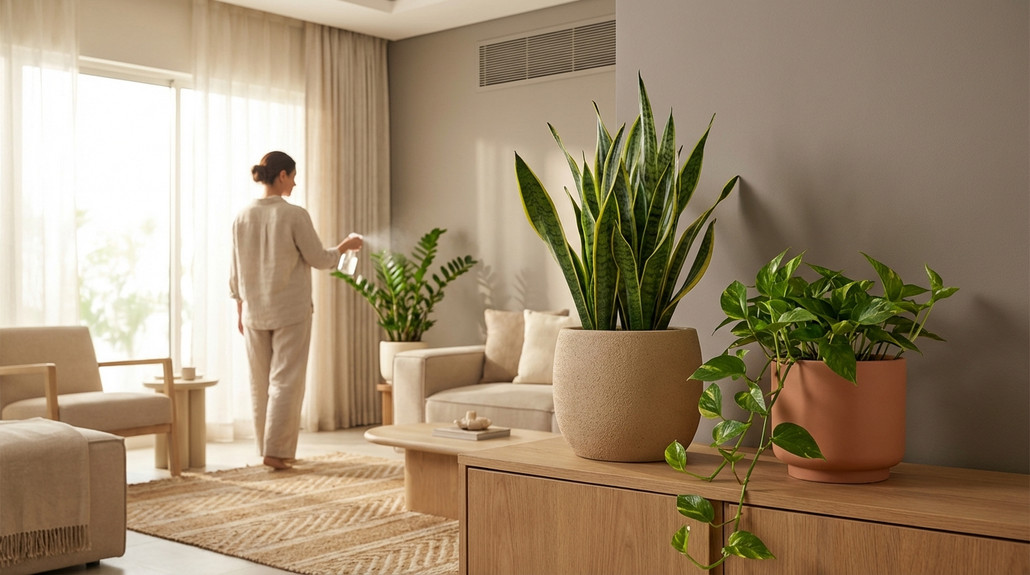
Best Indoor Plants That Survive Heat and AC in Iraq Homes
Posted by Mozher Experts on 24.02.26
Navigating the Unique Challenges of the Iraqi Indoor Climate
Choosing an indoor plant in Iraq involves more than just aesthetics. The primary challenge is not the outdoor heat, but the artificial environment we create to escape it. Homes and offices rely heavily on air conditioning, or the *split*, for months on end. This creates a unique microclimate characterized by cool, extremely dry air and constant drafts. This is a stressful environment for many popular houseplants that originate from humid, tropical regions. Furthermore, dust, or *ghubar*, settles on leaves, blocking light and hindering photosynthesis. A plant that thrives in a European or North American home may quickly decline here. The key to success is selecting species that are inherently resilient to drought, low humidity, and fluctuating conditions. This guide focuses exclusively on plants proven to withstand the specific pressures of our indoor spaces, ensuring you invest in greenery that will last.
Top 5 Exceptionally Resilient Houseplants
After observing thousands of plants in local homes and offices, a clear group of survivors has emerged. These species are not merely tolerant; they are well-suited to the demands of an air-conditioned Iraqi interior. They forgive occasional neglect, adapt to various light levels, and are not easily stressed by the dry air produced by cooling systems. When selecting your first plant or adding to your collection, starting with these proven performers will build confidence and ensure a better outcome. They offer a range of shapes and sizes, providing green solutions for any space.
The Snake Plant (Sansevieria trifasciata)
Also known as Mother-in-Law's Tongue, this plant is the definition of indestructible. Its tough, architectural leaves store water efficiently, making it extremely drought-tolerant. It can be left for weeks without water and will show no signs of distress. Critically for our environment, it is not bothered by the dry air from AC units. The Snake Plant is also highly adaptable to different light levels, thriving in bright, indirect light but also surviving in very low-light corners where other plants would fail. Its vertical growth habit makes it ideal for tight spaces. Furthermore, its smooth leaves are easy to wipe clean from dust, which is a practical advantage in our region.
The ZZ Plant (Zamioculcas zamiifolia)
If you consider yourself a forgetful plant owner, the ZZ Plant is your perfect match. Originating from drought-prone parts of Africa, it has underground rhizomes that store water, allowing it to survive long periods of neglect. Its naturally glossy leaves seem to repel dust and require minimal cleaning. The ZZ Plant is exceptionally tolerant of low light conditions, making it one of the best low light tolerant plants for offices or rooms with limited natural sunlight. It is not affected by low humidity and maintains its deep green color year-round. Overwatering is its only real enemy, so it is best to err on the side of letting it dry out completely between waterings.
The Pothos (Epipremnum aureum)
Often called Devil's Ivy, the Pothos is a versatile and communicative plant. Its trailing vines can be trained to climb or allowed to cascade from a high shelf or hanging basket. It is a fast grower that provides a lush, tropical feel without the high demands of other tropical plants. Pothos is forgiving when it comes to watering; its leaves will visibly droop when it is thirsty, providing a clear signal for when to water. It adapts well to a range of lighting conditions, from medium to bright, indirect light. While it prefers higher humidity, it tolerates the dry air from a split far better than most other vining plants, making it a reliable choice for adding greenery to living rooms and bedrooms.
Matching Plants to Your Home's Available Light
Properly assessing your light is the single most important factor for plant health. An Iraqi home presents intense, direct sun near south and west-facing windows, and deep shade elsewhere. The position of your plant relative to a window determines what species can survive there. Placing a plant in the wrong light environment is the most common reason for failure. Before you purchase a plant, observe how the light moves through your room during the day. This will help you choose a plant that is naturally suited to that specific spot, rather than trying to force a plant to adapt to unsuitable conditions. This simple step saves time, money, and the disappointment of a failing plant.
Areas with Bright, Indirect Light
This is the ideal condition for the majority of houseplants. It refers to a spot near an east-facing window that receives gentle morning sun, or a position several feet back from a powerful south or west-facing window. The light is bright enough to cast a soft shadow, but the sun's rays do not directly hit the plant's leaves. This environment supports healthy, sustained growth without the risk of leaf scorch. Many of the most popular and visually appealing plants for bright indirect light fall into this category, including the Pothos and Spider Plant. These spaces are perfect for creating a lush, green focal point in your living room or bedroom.
Spaces with Limited Natural Light
Many modern apartments or office buildings have rooms with north-facing windows, windows obstructed by other buildings, or simply no windows at all. These areas are not a lost cause for greenery. This is where low-light champions like the ZZ Plant and Snake Plant truly excel. They can survive and maintain their appearance on very little ambient light. While their growth will be slower than in brighter conditions, they will not etiolate or decline rapidly like other plants would. These are the workhorse plants that bring life to hallways, bathrooms, and cubicles where other options would fail within weeks.
Essential Care Adjustments for Air-Conditioned Rooms
Caring for plants in a home cooled by an AC unit requires a different approach. The constant flow of cold, dry air strips moisture from both the soil and the plant's leaves. This can lead to a cycle of confusion where the topsoil dries quickly, prompting owners to water again, while the lower soil remains saturated, leading to root rot. To avoid this, always check the soil moisture at least a few inches down before watering. A simple finger test or a moisture meter can prevent this critical mistake. Additionally, the low humidity can cause brown, crispy leaf tips on more sensitive plants. While our recommended resilient plants handle this well, periodically wiping leaves with a damp cloth removes dust and provides a momentary humidity boost. Forgetting these adjustments is why many new plant owners struggle, despite having good intentions.
Plants to Avoid for a Stress-Free Experience
While many plants are beautiful, some are notoriously difficult to keep alive in our specific indoor climate. Bringing these into a dry, air-conditioned home is often a recipe for disappointment. Avoiding them from the start saves you from the frustration of watching a plant slowly decline. Boston Ferns, for example, require very high humidity and will quickly develop brown, crispy fronds. Calathea and Maranta, known as "prayer plants," are famously intolerant of dry air and drafts, leading to curled, yellowing leaves. The popular Fiddle Leaf Fig is highly sensitive to environmental changes and despises the direct drafts from an AC vent, often dropping its leaves in protest. Unless you are an experienced hobbyist willing to provide a dedicated humidifier and precise care, it is best to stick with more resilient options.
Selecting the Right Plant for Your Lifestyle
The best indoor plant is not just one that survives, but one that fits seamlessly into your daily life. Your schedule, home environment, and reasons for wanting a plant should guide your final choice. A busy professional who travels frequently has very different needs from a family with curious pets. Being realistic about the time and attention you can dedicate to plant care is crucial for long-term success. By matching the plant's needs to your lifestyle, you create a sustainable and enjoyable relationship with your indoor greenery.
For the Busy Individual or Frequent Traveler
If your schedule is demanding or unpredictable, you need a plant that thrives on neglect. The ZZ Plant and the Snake Plant are the undisputed champions in this category. They can go for a month or more without water and show no ill effects. They do not require special feeding, pruning, or light conditions. This makes them perfect for office desks, or for people who want the aesthetic benefit of a plant without adding another task to their to-do list. Our selection of hardy indoor plants is curated specifically for this purpose.
For Homes with Children and Pets
Safety is paramount when there are children or pets in the house who might be tempted to chew on leaves. Many common houseplants are toxic if ingested. The Spider Plant (Chlorophytum comosum) is a classic choice that is completely non-toxic and safe. It is also very forgiving and produces "pups" or baby plants that are easy to propagate. For a wider variety, exploring a curated list of non-toxic options is essential. Always check the toxicity of a plant before bringing it home. You can browse our dedicated pet-friendly plant collection to find beautiful and safe choices for your family.