


Best Indoor Plants That Survive Heat and AC in UAE Homes
Posted by Mozher Experts on 24.02.26
The UAE Indoor Climate Challenge: Heat vs. Air Conditioning
Choosing the right indoor plants in the UAE involves more than just aesthetics. The primary challenge is not the outdoor heat, but the indoor environment created to combat it. Homes and offices run air conditioning nearly year-round. This creates a unique microclimate characterized by low humidity, constant cool air drafts, and often, reduced natural light as curtains are drawn to block the sun. Many popular tropical plants that crave humidity will struggle in this dry, cool air. The constant airflow from an AC unit can dehydrate leaves and soil rapidly, leading to brown tips, yellowing, and eventual decline. Therefore, the best house plants for this region are not just heat-tolerant, but more importantly, resilient to the dry conditions and temperature fluctuations typical of an air-conditioned space. Success depends on selecting species that are structurally adapted to conserve water and tolerate less-than-ideal humidity levels. Ignoring this crucial factor is the most common reason plants fail to thrive in UAE homes.
Top Resilient Plants for UAE Conditions
Certain plants have proven their ability to withstand the specific challenges of UAE interiors. These selections are known for their tolerance to lower humidity, inconsistent watering, and varying light levels. They offer visual appeal without demanding constant, specialized care, making them ideal starting points for both new and experienced plant owners in the region. We focus on plants that provide a high rate of success, reducing the frustration of seeing a new plant struggle.
The Snake Plant (Dracaena trifasciata)
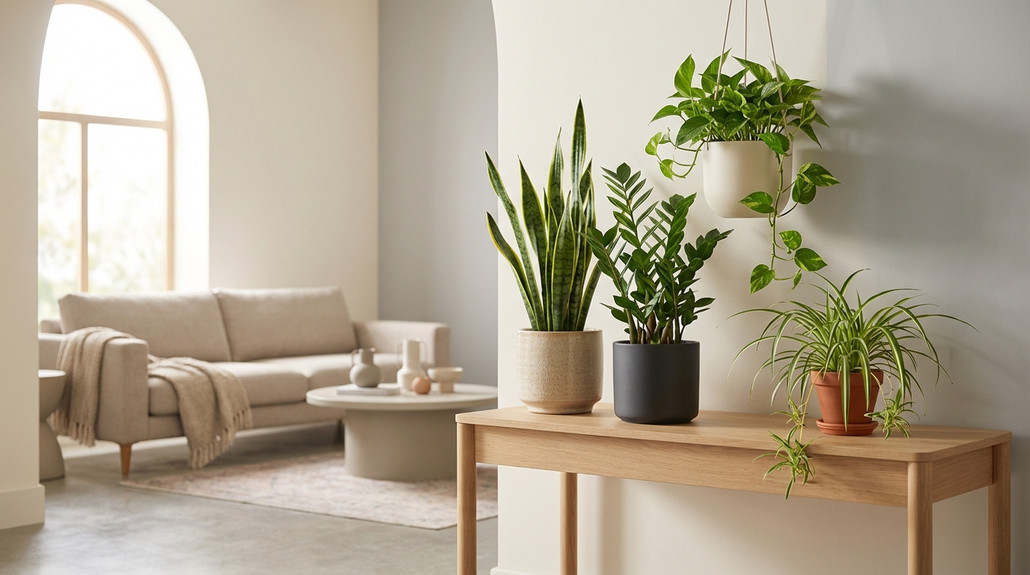
The Snake Plant is perhaps the most durable option for any indoor setting, especially in the UAE. Its tough, succulent leaves are excellent at storing water, making it extremely drought-tolerant. This is a significant advantage in an environment where AC can dry soil out quickly. You can often go two to three weeks, or even longer in lower light, between waterings. Snake Plants are also highly adaptable to different light conditions, thriving in bright, indirect light but also surviving in much shadier corners of a room. This versatility makes them suitable for almost any space. Furthermore, they are excellent air-purifying plants, known for filtering indoor air pollutants. Their vertical growth habit has a small footprint, making them perfect for apartments and offices.
The ZZ Plant (Zamioculcas zamiifolia)
The ZZ Plant is another exceptionally low-maintenance choice. Its ability to thrive on neglect is legendary. The plant's underground rhizomes store water, allowing it to endure long periods of drought. It is the perfect plant for frequent travelers or those who may forget to water regularly. The ZZ Plant's glossy, dark green leaves add a touch of lushness without requiring high humidity. It is perfectly content with the dry air produced by air conditioning. Like the Snake Plant, it tolerates low light extremely well, making it a prime candidate for hallways, office cubicles, or rooms with limited sun exposure. Its slow growth means it will not outgrow its space quickly, requiring minimal pruning or repotting.
The Pothos (Epipremnum aureum)
Known for its trailing vines and heart-shaped leaves, the Pothos is both beautiful and forgiving. It is an excellent communicator, as its leaves will visibly droop when it needs water, bouncing back quickly once irrigated. This makes it a great learning plant for beginners. While it prefers bright, indirect light to maintain its variegation, it adapts well to lower light levels, though its growth may become less dense. Pothos is not particularly demanding about humidity and tolerates the dry air of an AC-run home better than many other vining plants. It is a fast grower, providing a satisfying sense of progress, and can be easily propagated from cuttings. Its versatility allows it to be grown in a hanging basket, on a shelf, or trained to climb a support.
The Spider Plant (Chlorophytum comosum)
The Spider Plant is a classic houseplant celebrated for its resilience and air-purifying qualities. It has a graceful, fountain-like appearance with arching leaves. One of its most distinctive features is its ability to produce "spiderettes," or baby plants, that dangle from the mother plant, which can be easily repotted. Spider Plants are adaptable to a range of light conditions but prefer bright, indirect light. They are more tolerant of underwatering than overwatering. While they can sometimes get brown tips from very dry air or minerals in tap water, they are generally robust and bounce back easily with minor care adjustments. These are excellent choices for adding a touch of green to desktops or office environments.
Comparison of Recommended House Plants
To simplify your decision, this table summarizes the key characteristics of our top recommended plants for UAE homes. Use it to match a plant's needs with the conditions in your space and your lifestyle.
| Plant | Light Tolerance | Watering Needs | AC/Dry Air Tolerance | Pet Safety |
|---|---|---|---|---|
| Snake Plant | Low to Bright, Indirect | Very Low | Excellent | Toxic if ingested |
| ZZ Plant | Low to Bright, Indirect | Very Low | Excellent | Toxic if ingested |
| Pothos | Low to Bright, Indirect | Low to Medium | Good | Toxic if ingested |
| Spider Plant | Medium to Bright, Indirect | Medium | Good | Non-toxic |
Matching the Right Plant to Your Space
Choosing the best house plants depends entirely on your specific environment and routine. A plant that thrives in one home may struggle in another. Assess your space honestly before purchasing.
For Low-Light Rooms
Many UAE apartments and homes have rooms with limited natural light due to building orientation or the need to keep blinds closed. In these cases, the ZZ Plant and Snake Plant are superior choices. They can maintain their health and appearance for long periods in very dim conditions where other plants would fail. A wide selection of plants for areas with minimal sun exposure can help you find the perfect fit for even the darkest corner.
For the Forgetful Owner
If your schedule is demanding or you are new to plant care, forgiveness is key. The ZZ Plant and Snake Plant are the most drought-tolerant options, capable of surviving weeks of neglect. Their water-storing capabilities mean that an occasional missed watering is not a problem. This makes them ideal for busy professionals or those who travel often. Our collection of exceptionally hardy plants features species that require minimal intervention.
For Pet-Friendly Homes
If you have curious pets, safety is paramount. Of the plants listed, the Spider Plant is the best choice as it is non-toxic to cats and dogs. Many other common houseplants, including the Snake Plant, ZZ Plant, and Pothos, are toxic if ingested and should be kept out of reach of pets. Always verify a plant's toxicity before bringing it into a home with animals.
Plants That Struggle in Local Indoor Environments
While beautiful, some plants are poorly suited to the typical air-conditioned UAE home. These species generally require high humidity, which is the direct opposite of what an AC unit provides. Attempting to grow them often leads to frustration. Calathea varieties, with their stunning foliage, are notoriously difficult as they demand consistently high humidity to prevent their leaf edges from turning brown and crispy. Similarly, most Ferns, like the Boston Fern, need a moist environment to thrive and will quickly decline in dry, air-conditioned rooms. Fittonia (Nerve Plant) is another example; it wilts dramatically at the slightest lack of humidity or water. While these plants can be kept with the help of a humidifier and very attentive care, they are not recommended for beginners or those seeking low-maintenance greenery.
Frequently Asked Questions
How does constant AC affect indoor plants?
Constant air conditioning has two main effects. First, it drastically reduces ambient humidity, which can desiccate the leaves of tropical plants, causing brown, crispy edges. Second, the direct draft from an AC vent can shock a plant with cold air and dry out its soil and foliage much faster than normal. It's best to place plants away from the direct path of airflow.
Can I keep plants in a room with no windows?
While some plants are labeled "low light," no plant can survive with zero natural light. Plants like the ZZ Plant or Snake Plant can tolerate very low light for extended periods but will not grow and may eventually decline. For a windowless room, you must provide a dedicated grow light for several hours a day to sustain the plant's health. You can find more guidance on plant care essentials to ensure your plants receive proper lighting.
What are the first signs of stress from dry air?
The most common initial sign of stress from low humidity is the browning of leaf tips and edges. The leaves may feel crispy to the touch. In some plants, like the Spider Plant, this is a very common cosmetic issue. For more sensitive plants, you might also see yellowing leaves or leaf drop as the plant tries to conserve water by shedding foliage. Increasing humidity through occasional misting or a pebble tray can help mitigate this.