


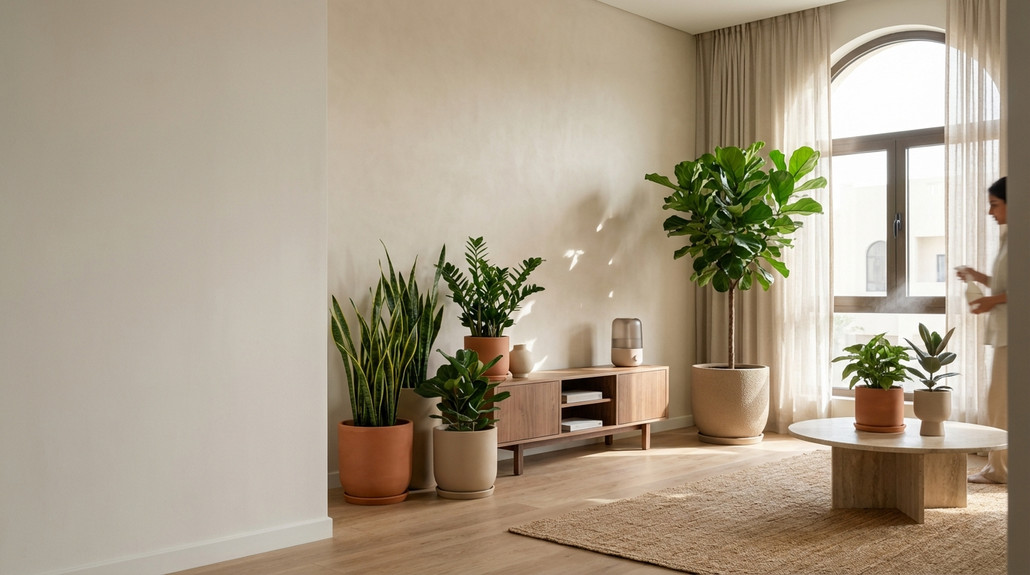
Common Indoor Plant Problems in Hot Homes in Iraq Homes
Posted by Mozher Expoerts on 12.03.26
Understanding the Iraqi Climate Reality for Your Indoor Plants
The vision of lush, vibrant indoor plants is a cherished one for many in Iraq, creating a peaceful contrast to our often challenging external environment. However, this pursuit frequently encounters a unique set of environmental realities that diverge significantly from conventional indoor plant care advice. Picture a typical Iraqi summer day: outside, scorching temperatures regularly push past 45°C, casting a relentless, dry glare. Indoors, the indispensable air conditioning unit, locally known as "Al-Sablat" (السبلت), hums continuously, providing essential refuge from the relentless heat and pervasive fine dust.
While this modern comfort is vital for us, it paradoxically creates an indoor microclimate that is not only refreshingly cool but, critically, profoundly dry. This sharp environmental divergence profoundly impacts the delicate physiology of our cherished indoor plants, often leading to a slow decline rather than the robust, thriving growth we envision. Many enthusiastic plant owners in Iraq, despite their best intentions, find their green companions struggling with crispy leaf edges, stunted development, or a general lack of vigor that seems to defy conventional wisdom. This disheartening scenario rarely stems from a lack of genuine care; instead, it frequently arises from a fundamental misunderstanding of how Iraq’s distinct local environment truly shapes a plant’s physiological demands. Generic plant advice, typically crafted for more temperate, humid regions, simply won’t suffice here. This guide is designed to empower you with practical, climate-aware knowledge, enabling you to cultivate indoor plants that not only survive but genuinely flourish within the specific realities of your Iraqi home.
When Your Plant Leaves Yellow: A Call for Immediate Diagnosis
Few sights are as alarming to a plant owner as plant leaves turning yellow. This common symptom, known as chlorosis, is your plant's clear signal that something is amiss. It's a broad indicator of stress, not a specific disease, meaning numerous underlying issues could be at play. The key to successful recovery lies in accurate diagnosis. Start by observing the pattern of yellowing, which leaves are affected, and the texture of the foliage. These details are vital clues in understanding what your plant is trying to tell you, especially when considering the particular conditions of an Iraqi indoor environment. Understanding the precise cause allows for targeted intervention, preventing further decline and guiding your plant back to health. For comprehensive problem-solving, consult Mozher's guide on common indoor plant problems.
Overwatering: The Silent Killer in Air-Conditioned Homes
Paradoxically, overwatering is arguably the most common and devastating mistake made in indoor plant care in Iraq, despite the arid external climate. The cool, dehumidified air from your Al-Sablat system significantly slows down the drying rate of the potting mix, especially deeper down in the pot. The top inch or two of soil might feel dry, deceptively prompting you to water again. However, beneath this misleading surface, the sensitive root ball can be sitting in consistently saturated, oxygen-deprived soil. This leads to root rot, a fungal disease that literally suffocates the roots, preventing them from absorbing water and nutrients. When roots can't function, the plant can't take up water, leading to what looks like thirst – but with soggy soil.
Symptoms of overwatering often include yellow leaves that are soft, mushy, and drooping, particularly the older, lower foliage. The pot will feel noticeably heavy, and the soil may even emit a foul, musty odor. To remedy this, immediately stop watering. Allow the top 5-7 centimeters (2-3 inches) of soil to dry out completely. If the soil is severely waterlogged and smelly, carefully remove the plant, inspect the roots, prune any mushy, black roots, and repot into fresh, well-draining soil in a clean pot. Ensure your chosen well-draining pots are used to promote healthy aeration. Damaged leaves from overwatering will not recover and should be pruned to redirect energy towards new, healthy growth. Recovery, marked by new healthy growth, can take 2-4 weeks.
Underwatering: The Thirsty Signal
While less common than overwatering in AC-heavy Iraqi homes, underwatering can also lead to yellow leaves. In this scenario, your plant is simply not receiving enough moisture to sustain its foliage. Leaves, often starting from the bottom, will typically turn crispy, brittle, and may curl inwards, and the entire plant might droop. The pot will feel noticeably lightweight, and the soil will be bone-dry, often visibly shrinking away from the edges of the pot. The good news is that many plants are remarkably resilient and can often bounce back quickly from underwatering once given a thorough drink. To fix this, water your plant deeply until water freely flows from the drainage holes. Then, use an accurate moisture meter or the deep finger test to check soil moisture regularly before watering again. Recovery, with leaves perking up, can be seen in a few hours to a day, but any fully yellowed or crispy leaves will not recover and should be pruned to redirect the plant's energy.
Light Imbalance: Too Much or Too Little Sun
Light is the fundamental energy source for your indoor plants, fueling the intricate process of photosynthesis that sustains their life and vibrant growth. In Iraqi homes, however, the concept of "light" is far more nuanced than simply placing a plant near a window. The external sun is intensely powerful; even when diffused or filtered through glass, it can be overwhelmingly strong for many tropical indoor plant species. This harsh, direct light can easily scorch delicate leaves, leaving them with unsightly bleached or brown patches, making the plant appear stressed and unhealthy.
Conversely, to combat the extreme heat, many modern homes feature heavy curtains or tinted windows, inadvertently creating dimly lit interiors where indoor plants struggle to photosynthesize efficiently. The key is finding the correct balance: providing "bright, indirect light" that energizes the plant without causing damage. This means strategically positioning your indoor plants to receive ample illumination without the scorching effects of harsh, direct sun rays, which often leads to healthier, more vibrant foliage.
Insufficient Light: The Pale Struggle
If your plant is not getting enough light, its leaves may turn a pale, uniform yellow, become smaller than usual, and the stems might appear "leggy" or stretched as the plant desperately reaches for a light source. This usually happens uniformly across the plant rather than starting at the bottom. To remedy this, relocate your plant to a brighter spot where it receives ample, but indirect, light. If natural light is genuinely limited in your space, consider adding a grow light or exploring Mozher's selection of low-light tolerant plants. Healthier new growth should appear within 2-4 weeks once light conditions are optimized.
Too Much Direct Sun: The Sunburn Effect
While insufficient light is a problem, too much direct, unfiltered sunlight, especially from the powerful Iraqi sun, can be equally detrimental. Many tropical indoor plants are not accustomed to such intensity. Symptoms of sunburn include bleached, yellowish, or even brown crispy spots and patches on the leaves. This damage often appears on new growth first or on leaves directly exposed to a bright window. The affected areas often feel brittle to the touch. To protect your plant, move it to a location where it receives bright, indirect light, a few feet away from a south or west-facing window. Sheer curtains can also be invaluable for diffusing harsh sunlight. New, healthy growth should emerge within 1-2 weeks after relocation, but the sun-damaged leaves will not recover and should be carefully pruned away.
Humidity and Airflow: Counteracting Dryness from Al-Sablat and Dust
The Al-Sablat, while providing much-needed comfort, is often the silent adversary of our indoor plants. These units are engineered to actively pull moisture from the air, resulting in an exceptionally dry indoor atmosphere. Most tropical indoor plants typically flourish in humidity levels ranging between 40-60%, a stark contrast to the often significantly lower levels—frequently below 30%—found in a continuously air-conditioned room. This relentless dry air aggressively pulls moisture from the plant's leaves, often faster than its roots can possibly replenish it, leading to classic, tell-tale symptoms such as crispy, brown tips and edges on otherwise green leaves, even if the soil itself feels adequately moist. Direct blasts of cold, dry air from Al-Sablat vents further exacerbate this desiccating situation, causing rapid dehydration, leaf curling, and severe overall plant stress. This "dry air effect" (jafaf Al Jaw) is a significant challenge in Iraq, demanding specific strategies to ensure plant health.
Boosting Localized Humidity Effectively
To directly combat the Al-Sablat's drying grip, simple yet effective solutions can be implemented. One straightforward and surprisingly effective method is to group your humidity-loving indoor plants together. As each plant releases moisture into the air through transpiration, a small, localized humid microclimate is created, benefiting the entire cluster. Utilizing pebble trays is another popular and easy technique: fill a shallow tray with decorative pebbles and add water until it just barely sits below the top of the pebbles, then place your plant pot directly on top (ensure the pot’s base does not sit directly in the standing water). As the water gradually evaporates from the tray, it gently humidifies the air immediately surrounding the plant. For serious enthusiasts or larger collections of indoor plants, a small room humidifier can make a significant difference, especially during peak summer months when Al-Sablat usage is constant.
The Silent Threat of Stagnant Air and Dust Accumulation
Beyond the dry air, the pervasive fine dust prevalent in Iraq can rapidly accumulate on indoor plant leaves, physically blocking vital stomata—tiny pores through which plants "breathe" and exchange gases. This physical barrier severely hinders efficient photosynthesis and overall plant health. Therefore, regular, gentle dusting of plant leaves with a soft, damp cloth every few weeks is crucial for optimal light absorption and proper airflow. Clean leaves can breathe and convert light into energy far more efficiently, thereby improving the plant's overall resilience. Additionally, while harsh drafts from the Al-Sablat are detrimental, completely stagnant air is also unhealthy for indoor plants. Without adequate air circulation, moisture can settle on leaves and on the soil surface, creating an ideal breeding ground for fungal diseases and certain pests, like fungus gnats. A gentle, consistent airflow helps prevent these issues. However, this is a fine line; avoid strong, direct drafts that can dry out foliage rapidly. Placing plants where there is subtle air movement, perhaps near an open door in a less air-conditioned room, or using a small, oscillating fan set on its lowest setting a few feet away from your plants, can be beneficial. The goal is to mimic a gentle breeze, not a desert wind.
Nutrient Imbalance and Soil Health: The Foundation Below
Sometimes, yellowing leaves aren't just about water or light; they can also indicate underlying nutrient issues or pest problems. Over time, potting soil loses its nutrients, and its pH can change, making remaining nutrients unavailable. Uniform yellowing of older, lower leaves can signal a nitrogen deficiency, as the plant reallocates this mobile nutrient to new growth. Yellowing between the veins (chlorosis), especially on new leaves, might suggest a deficiency in micronutrients like iron or magnesium. To address this, fertilize sparingly with a balanced, diluted liquid fertilizer during the plant's active growing season (typically spring and summer in Iraq). Before fertilizing, always ensure the soil is thoroughly moist to prevent chemical root burn. Mozher offers quality potting mixes and care essentials that promote balanced plant nutrition and robust root health.
Pests and Diseases: Unwanted Guests
Pest infestations can also lead to yellowing, spotting, and overall decline. Common culprits include spider mites (often leave fine webbing), mealybugs (cottony white masses), and fungus gnats (tiny flying insects often associated with overly wet soil). Diseases, while less common for indoor plants, can also cause discoloration. If you notice any tiny bugs, sticky residue, or unusual spots along with yellowing leaves, inspect your plant thoroughly. Isolate any affected plant immediately to prevent spread. Treat with insecticidal soap or neem oil as appropriate. Early detection is your best defense against these issues, which can thrive in the dry indoor air if not managed. Expect 1-2 weeks for pest control and then 2-4 weeks for the plant to begin showing signs of recovery.
Troubleshooting Chart: Quick Diagnosis and Solutions for Indoor Plant Problems in Iraq
This table offers a concise guide to help you quickly identify and address common issues with your indoor plants in Iraq's climate, providing a clear diagnosis and path to recovery.
| Symptom | Likely Cause | Key Observation | Solution | Recovery Timeline |
|---|---|---|---|---|
| Yellow, soft, mushy leaves (often lower) | Overwatering, Root Rot | Soil consistently wet, heavy pot, possibly foul smell from roots. | Reduce watering frequency, check roots for rot and repot if needed. Ensure excellent pot drainage. | 2-4 weeks for new growth; damaged leaves won't recover. |
| Yellow, crispy, brittle leaves (often lower) | Underwatering | Soil bone dry, lightweight pot, leaves may be curling. | Water thoroughly until drainage, then check regularly with a reliable moisture meter. | A few hours to 1 day for revival; damaged leaves won't recover. |
| Yellowing/bleaching on new growth, brown crispy spots | Too much direct sun | Plant exposed to intense, unfiltered sun (e.g., south/west window). | Move to a spot with bright, indirect light; use sheer curtains to diffuse harsh light. | New growth appears healthy in 1-2 weeks. |
| Pale yellow, small leaves, leggy growth | Insufficient light | Plant in a very dim area, noticeably stretching towards a light source. | Relocate to a brighter spot; consider low-light tolerant plants if the space is inherently dim. | New, healthier growth in 2-4 weeks. |
| Crispy brown tips/edges, otherwise green leaves | Low humidity (Al-Sablat effect) or Salt Buildup | Dry indoor air, plant near Al-Sablat vent, or white crust on soil surface. | Increase local humidity (pebble tray, grouping plants), move from drafts, flush soil to remove salts. | New growth appears healthier in 2-3 weeks; damaged tips won't recover. |
| Yellowing with tiny bugs, sticky residue, or fine webbing | Pests (spider mites, mealybugs, fungus gnats, etc.) | Visible insects, mottled spots, or fine webbing on the leaves. | Isolate the plant, treat with insecticidal soap or neem oil. | 1-2 weeks for pest control, then 2-4 weeks for plant recovery. |
| Uniform yellowing of older leaves, stunted growth | Nutrient Deficiency (e.g., Nitrogen) | Long-term issue, typically new growth appears healthy for some time. | Fertilize sparingly with a balanced, diluted liquid fertilizer during active growth. Ensure appropriate quality potting mixes and care essentials. | Improvement in new growth in 3-5 weeks. |
| Yellowing between veins, especially on new leaves | Micronutrient Deficiency (Iron, Magnesium) | Green veins with yellow tissue; can be related to water pH. | Use a chelated micronutrient supplement; check water quality and adjust if necessary. | Slow recovery; new growth shows improvement in 4-6 weeks. |
Avoiding Common Pitfalls: What NOT to Do When Your Plant is Struggling
When panic sets in at the sight of struggling plants, it's easy to make mistakes that further harm your greenery. Avoid these common "panic responses":
- Do NOT water immediately and excessively. Always check soil moisture deeply first. Assuming yellow leaves mean thirst without checking soil leads to overwatering, exacerbating root rot.
- Do NOT fertilize a stressed plant. A plant struggling for survival is not "hungry"; it's unwell and under pressure. Over-fertilizing can chemically burn already weakened roots, worsening the problem. Fertilize sparingly and only for healthy, actively growing plants.
- Do NOT move your plant constantly. Frequent changes in location (seeking "the right light") cause additional stress. Once you diagnose the problem, try to provide a stable environment to allow the plant to recover.
- Do NOT ignore accumulated dust on leaves. It may seem minor, but dust acts as a barrier, hindering efficient photosynthesis. Gently wipe down leaves with a soft, damp cloth regularly.
- Do NOT give up too quickly. Many plants are remarkably resilient and can recover with the right adjustments and patience. Remember that yellowed or browned leaves often won't revert to green; focus on promoting new, healthy growth.
Proactive Prevention: Cultivating Resilience in Iraqi Homes
Prevention is always better than cure, especially in the challenging environment of Iraq. A consistent, climate-aware care routine is the best defense for your indoor plants in Iraq.
- Consistent Soil Moisture Checks: Regularly use the deep finger test or a reliable moisture meter. Only water when the top 5-7 centimeters (2-3 inches) of soil feel genuinely dry.
- Optimal Drainage: Always use pots with excellent drainage. Ensure no standing water in saucers to prevent root rot.
- Right Light, Right Place: Match your plant's light needs to your home's conditions, utilizing bright, indirect light and avoiding harsh direct sun or overly dim corners. Consider Mozher's low-light tolerant plant varieties for dim spaces.
- Humidity Boosters: To combat the Al-Sablat's drying effect, group plants, use pebble trays, and keep them away from direct AC drafts.
- Regular Leaf Cleaning: Gently wipe leaves to remove accumulated dust, promoting efficient photosynthesis.
- Mindful Fertilizing: Only fertilize healthy, actively growing plants during their season, using a diluted, balanced liquid feed. Refer to Mozher's quality potting mixes and care essentials for guidance.
- Isolate New Plants: Always keep new plant arrivals separate for a few weeks to monitor for pests or diseases, minimizing the risk to your existing collection.
Frequently Asked Questions
How do I differentiate between yellowing leaves caused by overwatering versus underwatering in an AC-cooled Iraqi environment?
This is a critical distinction in Iraq's climate, heavily influenced by the Al-Sablat. If the yellow leaves are soft, limp, and feel somewhat mushy, and the soil remains wet to the touch even days after watering, this strongly indicates overwatering, which can lead to root rot. The cool air from the Al-Sablat significantly slows water evaporation, trapping moisture around the roots. Conversely, if the yellow leaves are dry, crispy, and brittle, and the soil is bone-dry and visibly pulling away from the pot, this is a clear sign of underwatering. Always check the soil moisture deeply with your finger or using a reliable moisture meter before diagnosing the problem or adding more water. Understanding this key difference is paramount to providing the correct care for your indoor plants in Iraq. For more comprehensive guidance, you can refer to the Clemson University Home & Garden Information Center: Indoor Plant Care.
What are the common signs of low humidity stress for indoor plants in Iraq’s dry, AC environment?
Low humidity stress, common in Iraqi homes due to the continuous use of the Al-Sablat (locally known as jafaf Al Jaw, or dry air effect), typically manifests as crispy, brown tips and edges on otherwise green leaves, even when the potting soil is adequately moist. You might also observe leaves curling inward or developing a general drooping as the plant actively tries to conserve moisture. Some plants, especially those with thinner or more delicate foliage, may also exhibit yellowing between the veins. If these symptoms are present, consider grouping your plants closer together to create a localized microclimate with slightly higher humidity or using pebble trays filled with water beneath the pots (with the crucial caveat that the pot’s base must not sit directly in the standing water). Crucially, position your plants well away from direct drafts of cold, dry air from the Al-Sablat vents. For more resilient choices in dry conditions, explore Mozher’s selection of exceptionally hardy indoor plants.
Can yellow leaves ever turn green again?
In most cases, once an indoor plant's leaf has fully turned yellow due to stress or damage, it will not revert to green. The chlorophyll (the green pigment) in the cells has degraded, and that process is generally irreversible. It's best to address the underlying cause of the yellowing to prevent new leaves from turning yellow and to encourage fresh, healthy green growth. You can gently prune off fully yellowed or brown leaves to direct the plant's energy towards recovery.
Can the quality of tap water in Iraq affect the health of my indoor plants?
Yes, unequivocally. Tap water in Iraq can frequently contain elevated levels of minerals, such as chlorine and fluoride, alongside other dissolved salts. Over time, these minerals and salts can accumulate in the potting soil. This buildup often leads to what is known as "salt burn," which can damage the delicate plant roots and impede its ability to absorb essential nutrients and moisture, leading to symptoms like crispy brown tips or a general yellowing of the foliage. To mitigate this, consider using filtered water or collected rainwater for your plants. Alternatively, allowing tap water to sit uncovered in a container for 24 hours before watering can help the chlorine dissipate. Regular, deep watering that allows water to freely flush through the drainage holes is also beneficial, as it helps to leach out excess salts from the soil, maintaining a healthier growing environment. For optimal root health and to prevent such issues, always ensure you are using quality potting mixes and care essentials. For more comprehensive advice on maintaining healthy plants, always consult credible horticulture sources such as the Missouri Botanical Garden: Houseplant Pests and Problems.
The journey of nurturing indoor plants in Iraq is one of continuous learning and adaptation. By adopting a thoughtful, observant, and proactive approach, and by truly tailoring your care routine to the unique challenges of our local climate and Al-Sablat-dependent indoor environments, you'll discover that plant care transforms from a frustrating task into a deeply rewarding hobby. Your indoor plants are constantly communicating their needs through subtle cues; your role is to be an attentive listener, ready to adjust your strategies based on their signals. With patience and keen observation as your best allies, you'll find that the reward of this mindful care is enduring beauty, less anxiety, and a deeper sense of connection to the natural world right inside the walls of your Iraqi home. Mozher is dedicated to providing climate-aware indoor plant care resources and plants curated for resilience and the knowledge to help them flourish, ensuring you select the best indoor plants that can truly thrive in your Iraqi apartment or office.