


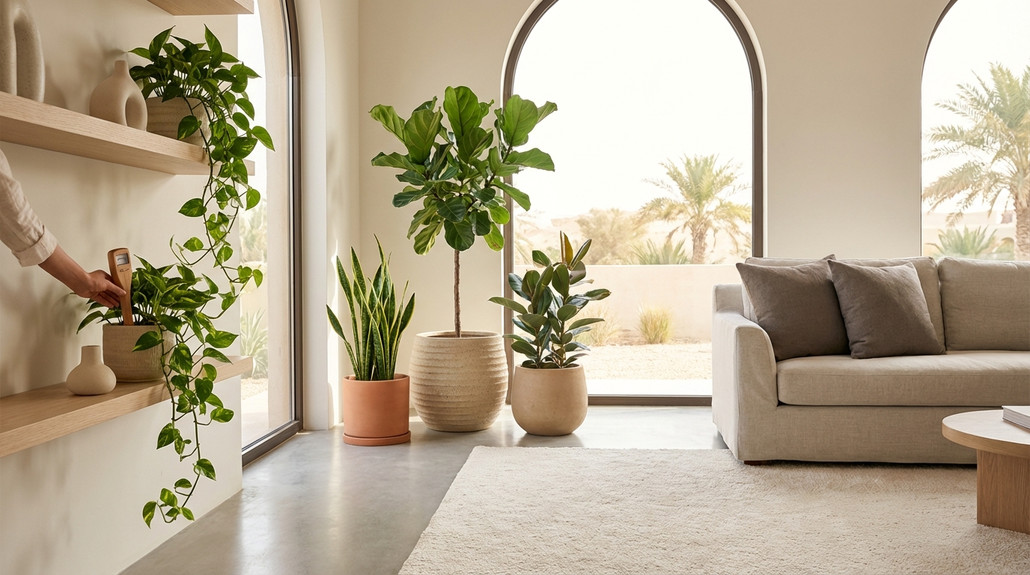
How Often You Should Really Water Indoor Plants in Iraq Homes
Posted by Mozher Experts on 19.02.26
Why watering indoor plants in Iraq is different
Watering indoor plants in Iraq is not about following a fixed calendar. It is about managing heat, strong sun, and long hours of air conditioning. In most homes, the outdoor temperature is extreme for much of the year, while inside the AC runs daily. This combination changes how soil dries and how roots function.
Air conditioners reduce humidity and increase airflow around leaves. The surface of the soil can look dry within a day, even if the root zone is still moist. At the same time, pots placed near windows may heat up quickly during the day and cool rapidly at night. These fluctuations stress root systems and affect how often watering indoor plants is truly needed.
Many common guides suggest watering once a week. In indoor plants Iraq homes, that advice often causes root rot in winter and dehydration in peak summer. Instead of a schedule, you need a method. You need to understand your soil mix, drainage quality, pot size, plant type, and exact placement in the room.
If you are new to climate-adapted plant care, start with the broader principles outlined in our indoor plant care guidance for hot climates. Watering is only one part of maintaining strong root health, but it is the part that causes the most losses.
Step 1: Check the soil before you water
The most reliable watering schedule is based on soil moisture, not days. Before watering indoor plants, check the root zone properly.
Finger test
Insert your finger 3–5 cm into the soil. If it feels cool and moist at that depth, wait. If it feels dry and slightly crumbly, watering is likely needed. This method works well for medium and large pots.
Weight test
Lift the pot slightly after watering and remember the weight. When the pot feels noticeably lighter, much of the moisture has been used. This is especially useful for compact desk plants for offices and apartments, where overwatering is common.
Moisture meter
In AC-heavy homes, the top layer dries fast while deeper soil remains wet. A simple tool such as a soil moisture meter for accurate watering decisions helps you read moisture at root depth. Insert it halfway into the soil, not just near the surface.
If the reading is dry in the lower half, water thoroughly. If it shows moisture in the root zone, wait another two or three days and recheck. This prevents suffocation of roots, which is more dangerous than slight dryness.
Step 2: Water deeply, then allow proper drainage
When watering indoor plants, shallow watering is a common mistake. Pouring a small amount every few days encourages weak, surface roots. In Iraq’s dry indoor air, that leads to faster stress.
Instead, water slowly until excess flows out of the drainage holes. This ensures the entire soil mix is moistened evenly. Then empty the saucer after 10–15 minutes. Standing water at the base of the pot reduces oxygen around the roots and invites fungal problems.
Good drainage is non-negotiable. Use containers with holes and quality soil from a reliable source such as soil and plant care essentials designed for indoor plants. Dense garden soil holds too much water indoors and compacts quickly under AC conditions.
If your pot has no drainage holes, watering must be extremely controlled. In that case, measure the water volume carefully and water less frequently. However, in most cases, switching to proper containers is the safer long-term solution.
How season and AC use change your watering schedule
There is no single answer to how often you should water. The frequency shifts with season, sunlight, and AC usage.
| Season | Typical Indoor Condition | Watering Tendency |
|---|---|---|
| Peak Summer | Strong AC, low humidity, bright light | Check every 3–5 days |
| Mild Spring/Autumn | Moderate airflow, mixed light | Check every 5–7 days |
| Winter | Less growth, cooler rooms | Check every 7–10 days |
These are checkpoints, not instructions to water on those exact days. Always confirm soil dryness first.
Plants near windows with bright indirect light placements will dry faster than those in shaded corners. Rooms with constant airflow from the AC vent also dry soil more quickly.
If leaves are drooping but soil is wet, do not add water. Improve airflow or reduce watering frequency. If leaves are curling and soil is dry at depth, water thoroughly and monitor recovery over the next 48 hours.
Plant type matters more than people expect
Different plant categories use water at different rates. Grouping all indoor plants under one watering rule leads to problems.
Low-light foliage plants
Plants kept in low light indoor settings grow more slowly and consume less water. Overwatering is common here. Allow the top third of the soil to dry before watering again.
Air-purifying and medium-growth plants
Many popular foliage varieties with moderate growth need consistent moisture but not constant wetness. For air-purifying indoor plants, aim for evenly moist soil during active growth, especially in summer.
Flowering indoor varieties
flowering houseplants for interiors often require slightly more consistent moisture while in bloom. However, after flowering, reduce frequency and allow partial drying to support root health.
Understanding plant category reduces guesswork and protects against both dehydration and root rot.
Common mistakes when watering indoor plants
Most plant losses in indoor plants Iraq homes come from three repeated errors.
Watering on a fixed weekly schedule
This ignores seasonal change and AC intensity. Roots either remain constantly wet or experience irregular drought.
Misting instead of proper watering
Misting leaves does not replace soil watering. In dry indoor air, it evaporates quickly and does little for root hydration.
Ignoring drainage and soil mix
Compacted soil blocks airflow around roots. If water sits on top for more than a few seconds before draining, the mix may need improvement or repotting.
If overwatering has occurred, stop watering completely until the top half of the soil dries. Increase airflow and ensure excess water is removed. If roots smell sour during repotting, trim damaged sections and replace the soil with a lighter mix.
After delivery or repotting: adjust your watering approach
Newly delivered plants often experience acclimation stress. Leaves may soften slightly as they adjust to new light and airflow. Do not immediately increase watering unless the soil is actually dry.
During the first two weeks after delivery, monitor soil moisture more closely but water conservatively. Roots need oxygen to re-establish. Overwatering at this stage delays recovery.
After repotting, water once thoroughly to settle the soil. Then wait until the upper layer dries before watering again. Fresh soil retains moisture longer than old compacted mix.
Wear gloves when handling unfamiliar plants, and wash hands after repotting. Some varieties may cause mild skin irritation. Always lift pots carefully, especially larger floor plants, to avoid root disturbance.
A simple weekly and monthly routine that works
A maintainable routine is better than frequent correction.
Weekly check (10–15 minutes)
- Check soil moisture in every pot.
- Rotate plants slightly for balanced light exposure.
- Inspect leaves for yellowing or soft stems.
- Empty any standing water from saucers.
Monthly review
- Assess whether pots feel root-bound.
- Adjust watering frequency based on season change.
- Lightly clean leaves to improve airflow and photosynthesis.
If growth is strong and roots are healthy, your watering pattern is correct. If yellowing, fungus, or persistent drooping appear, reassess moisture levels before changing fertilizer or light.
Frequently asked questions
How often should I be watering indoor plants during Iraqi summer?
In peak summer with constant AC, check soil every three to five days. Some plants will need water weekly, others twice a week. Always confirm dryness at root depth before watering.
Why does the top soil look dry after one day?
AC airflow dries the surface quickly. The lower soil may still be moist. Use a finger test or moisture meter to avoid watering too soon.
Is tap water safe for indoor plants in Iraq?
In most areas it is acceptable if left to sit for several hours before use. This allows chlorine to dissipate. If white mineral buildup appears on soil or pots, flush occasionally with distilled water.
What is worse: overwatering or underwatering?
Overwatering is generally more dangerous. Roots deprived of oxygen decline quickly and may rot. Slight underwatering is usually reversible within a day or two if corrected properly.