


How Often You Should Really Water Indoor Plants in Saudi Arabia Homes
Posted by Mozher Experts on 25.02.26
Understanding the Indoor Climate Challenge in Saudi Arabia
The most common mistake plant owners make is following a rigid watering schedule. A "water once a week" rule, often found online, is not applicable to homes in Saudi Arabia. The environment inside our homes is in a constant battle with the climate outside. Extreme external heat means air conditioning units run almost continuously. This creates an indoor atmosphere that is significantly drier than what most tropical houseplants prefer. The cool, dehumidified air from the AC unit rapidly evaporates moisture from the soil surface, making it appear dry. However, deep inside the pot, the soil can remain saturated. This discrepancy is the primary cause of root rot, the most common reason indoor plants fail in this region. Your watering frequency must be a direct response to the plant's actual needs, which are dictated by a unique combination of intense light, pot size, and the powerful drying effect of constant air conditioning.
Therefore, the goal is not to adhere to a calendar but to develop the skill of assessing the soil's moisture level accurately. Different plants have different needs; a succulent requires its soil to dry out completely, while a Calathea prefers to stay consistently moist. Placing a plant directly in the path of an AC vent will cause it to dry out exceptionally fast, leading to stress, brown leaf tips, and stunted growth. Conversely, a plant in a corner with poor airflow might stay wet for over a week. Learning to manage these microclimates within your home is the foundation of successful indoor plant care here.
Forget the Schedule: Check the Soil First
The most reliable method for determining if a plant needs water is to check the soil manually. A fixed schedule ignores the daily fluctuations in temperature, light, and humidity within your home. It does not account for the plant's growth cycles, where it might need more water during active growth and less while dormant. The finger test is the most straightforward technique. Insert your index finger into the soil up to your second knuckle, about 5 cm deep. Do not just touch the surface, as it often dries first due to airflow. If the soil at your fingertip feels dry and crumbly, it is likely time to water. If it feels moist or cool, or if soil sticks to your finger, wait another day or two and check again. This simple physical check provides direct feedback from the root zone, where moisture matters most.
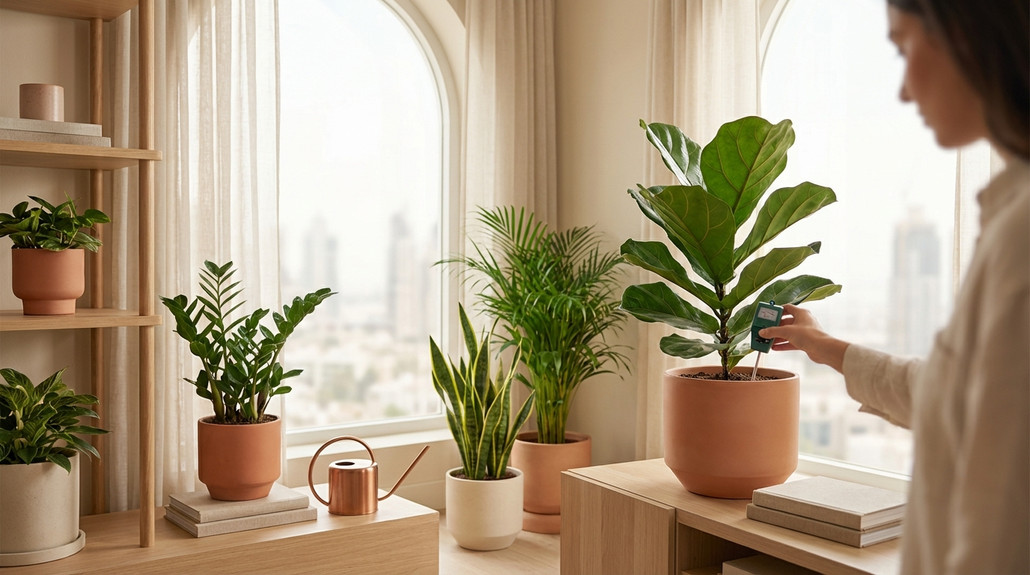
For those who prefer a more precise measurement or are caring for particularly sensitive plants, investing in a tool can remove the guesswork. While the finger test is effective, a reliable moisture meter is a valuable tool for beginners and experts alike. You insert the probe deep into the root ball to get an accurate reading of the moisture level. This is especially useful for larger pots where the finger test cannot reach the core of the soil. Consistently checking before you water prevents the cycle of overwatering that leads to root suffocation and fungal diseases. It shifts your role from someone following a routine to someone responding to the specific, real-time needs of your plant.
The Correct Technique: Deep Soaking vs. Superficial Sips
Once you have confirmed the soil is dry, the way you apply water is critical. Avoid giving your plants small, frequent sips of water. This practice is harmful because it only moistens the top layer of soil, encouraging shallow, weak root development. The deeper roots, which are essential for anchoring the plant and absorbing nutrients, are left dry. Over time, this leads to a stressed plant that is more susceptible to pests and diseases. The proper method is to water thoroughly and deeply until water flows freely from the drainage holes at the bottom of the pot. This ensures that the entire root ball is completely saturated. Allow the pot to drain for 10-15 minutes in a sink or on a saucer, and then discard any excess water. Never let a plant sit in a saucer full of water, as this is a direct path to root rot.
Using the right equipment makes this process easier. For best results, use a proper watering can with a long spout to direct water to the soil surface, avoiding the leaves. Wetting the foliage of certain plants can encourage fungal issues. For most common houseplants, this deep soak and subsequent drying period mimics the natural cycle of rainfall and drought, promoting strong, healthy root systems that can penetrate the entire volume of the pot. This method also helps to flush out any accumulated mineral salts from the soil, which can be an issue with tap water in the region. A thorough watering every 7-14 days is far more beneficial than a small amount of water every 2-3 days.
Key Factors Influencing Watering Needs in Your Home
Several variables within your home interact to determine how quickly a plant's soil will dry out. Mastering the art of watering indoor plants means understanding and adapting to these specific conditions. What works for a plant in one room may not work for the same plant in another.
Plant Species and Size
Different plants have evolved in different climates, and their water needs reflect that. Succulents and cacti, for example, store water in their leaves and stems and require their soil to dry out completely between waterings. Tropical plants like ferns, Calatheas, and Alocasias, on the other hand, prefer consistently moist (but not soggy) soil. A larger, more mature plant with an extensive root system will consume water much faster than a small, young plant in the same size pot. Understanding the needs of different types of indoor plants is the first step.
Pot Material and Drainage
The type of container your plant lives in has a significant impact on soil moisture. Porous materials like terracotta allow air and moisture to pass through their walls, causing the soil to dry out much more quickly. This makes them an excellent choice for plants that are prone to root rot, such as succulents or Snake Plants. Non-porous containers, such as glazed ceramic or plastic, hold moisture for longer. Regardless of material, it is absolutely critical to ensure your selection of pots provides adequate drainage. A pot without drainage holes is a recipe for failure, as it traps excess water around the roots, leading to suffocation and decay.
Light and Temperature
Light is the energy source for photosynthesis, a process that consumes water. A plant in a bright, sunny spot will photosynthesize more actively and use water much faster than a plant in a low-light corner. Similarly, higher temperatures increase the rate of transpiration (water loss from leaves) and evaporation from the soil. A plant placed near a sun-facing window in a warm room will need more frequent watering than one in a cool, dimly lit hallway. These factors are why a plant's water needs can change dramatically from one season to the next, even when it remains indoors.
Recognizing the Signs of Water Stress
Your plants will communicate their needs through visual cues. Learning to read these signals allows you to correct watering issues before they become fatal. Both overwatering and underwatering can present similar symptoms, such as yellowing leaves, so it is important to check the soil to confirm your diagnosis.
Symptoms of Overwatering
Overwatering is the more dangerous of the two issues because it suffocates the roots, leading to irreversible rot. The signs often develop slowly and can be mistaken for other problems.
- Yellowing leaves, especially lower ones, that feel soft and limp.
- Stems that are soft, mushy, or blackening at the base of the plant.
- Consistently damp or waterlogged soil that never seems to dry out.
- A sour or swampy smell coming from the soil, indicating root decay.
- Stunted growth or a complete lack of new leaves.
- Presence of fungus gnats, small black flies that thrive in moist soil.
Symptoms of Underwatering
While often easier to correct, chronic underwatering stresses the plant, making it vulnerable to pests and hindering its growth. The signs are usually more immediate and dramatic.
- Wilting or drooping leaves that feel dry or papery.
- The soil pulling away from the sides of the pot.
- Crispy, brown edges or tips on the leaves.
- Lower leaves turning yellow or brown and falling off completely.
- Slowed or stopped growth, with new leaves being smaller than usual.
- Flowers or flower buds dropping prematurely.
Essential Equipment for Healthy Hydration
While you can get by with basic tools, having the right equipment makes watering more efficient, effective, and less messy. It ensures that you are providing care in a way that truly benefits the plant's long-term health. The foundation of good plant care starts with a proper setup. This includes not only the plant itself but the environment you create for it, which begins with the container and the medium it grows in. Using high-quality potting mix designed for indoor plants provides the right balance of aeration, moisture retention, and drainage. Poor soil can either retain too much water, leading to rot, or drain too quickly, leaving the roots thirsty.
Beyond the pot and soil, a few key items can elevate your care routine. A watering can with a narrow, long spout allows you to deliver water directly to the soil, avoiding the plant’s foliage and reaching the base of dense plants without difficulty. For larger collections, this is indispensable. A simple moisture meter, as mentioned earlier, can be a game-changer for understanding what's happening below the surface. Additionally, a tray or saucer is essential for catching excess water and protecting your furniture, but always remember to empty it after watering. Investing in the right soil and plant care tools is fundamental to creating a thriving indoor garden and simplifies the process of providing consistent, accurate care.
Frequently Asked Questions About Watering
Should I use tap water for my plants?
For most hardy indoor plants, tap water in Saudi Arabia is acceptable. However, it can be high in minerals and chlorine. To improve its quality, you can let it sit in an open container for 24 hours. This allows chlorine to evaporate. For very sensitive plants like Calatheas or carnivorous plants, using filtered or distilled water is recommended to avoid mineral buildup in the soil, which can cause brown leaf tips.
How do I recover an overwatered plant?
First, stop watering immediately. If the pot feels very heavy, gently tip it to drain any excess water. Increase airflow around the plant by using a small fan or moving it to a better-ventilated area, but avoid direct AC drafts. If the soil is completely saturated and shows no signs of drying after several days, you may need to repot. Carefully remove the plant, inspect the roots, trim away any black or mushy ones with clean shears, and repot into fresh, well-draining soil.
Is misting a good substitute for watering?
No, misting is not a substitute for watering the soil. Misting increases the humidity in the immediate vicinity of the plant's leaves for a very short period. While some tropical plants appreciate this, it does not provide water to the roots, which is where the plant absorbs moisture for all its essential functions. You must still water the soil thoroughly when it becomes dry. Misting is a supplemental activity for humidity, not a primary method for hydration.