


How to Care for Indoor Plants During Extreme Summer Heat in Iraq Homes
Posted by Mozher Experts on 24.02.26
The AC and Heat Challenge: Balancing Two Extremes
In Iraq, the primary challenge for indoor plants is not just the extreme summer heat outside, but the artificial, dry cold created by air conditioning (AC) units inside. This creates two conflicting environments. Your windows may radiate intense heat, while the air circulating in the room is cold and stripped of moisture. This constant fluctuation and dryness is a significant source of stress for most houseplants, leading to brown leaf tips, stunted growth, and sudden decline. The goal of successful indoor plant care here is to create a stable microclimate for your plants. Avoid placing plants directly in the line of fire from an AC vent. The constant cold draft will dehydrate leaves and can even shock the root system. Instead, position them in a part of the room that benefits from the cool temperature but is not subject to a direct blast of air. Observe how the cool air settles in your home and find those stable pockets of indirect cooling.
Mastering Your Watering Routine
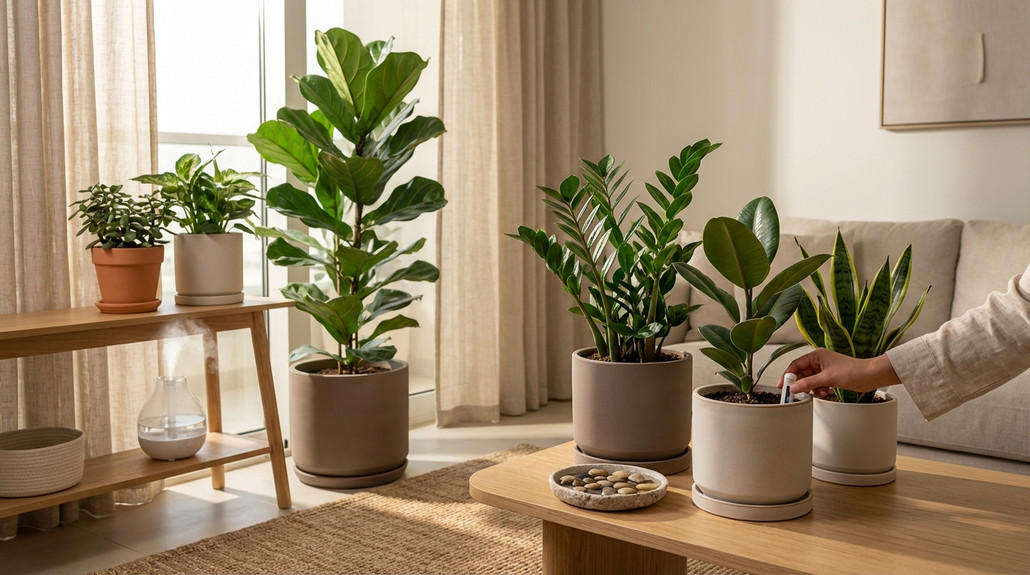
The biggest mistake in a hot, AC-heavy environment is assuming plants need more water simply because it is hot outside. The opposite is often true. The cool indoor air from the AC slows down the rate of water evaporation from the soil. Simultaneously, the dry air can make the very top layer of soil feel dry to the touch, deceiving you into watering again too soon. This leads to the most common problem: overwatering and root rot. Do not water on a fixed schedule. Instead, rely on checking the soil moisture. For most common houseplants, the rule is to water thoroughly only when the top 5-7 cm of soil is completely dry. A simple finger test works well. For more accuracy and to remove all doubt, using a dedicated moisture meter is the most reliable method. When you do water, do so deeply until water drains from the bottom of the pot. Discard any excess water from the saucer; never let the plant sit in standing water. This ensures the roots get access to water without being suffocated.
Light Exposure: Managing Intense Iraqi Sun
The sun in Iraq is incredibly strong, even through a window. Direct sunlight, especially from a south or west-facing window, will scorch the leaves of most indoor plants, leaving them bleached, yellow, or with brown patches. The solution is to provide bright but indirect light. You can achieve this by placing plants a few feet away from the window, rather than directly on the windowsill. Another effective method is to use sheer curtains to diffuse the intense rays. Pay attention to how the light moves through your home during the day and adjust plant placement accordingly. The goal is to give them the energy they need to photosynthesize without causing heat stress or sunburn. Many homes have areas that don't get much natural sun; these spots are perfect for resilient plants that tolerate low light conditions, which often require less maintenance overall.
Increasing Humidity in a Dry, Air-Conditioned Home
Air conditioning is excellent at cooling the air but is also extremely effective at removing humidity. Most popular tropical houseplants, like ferns, Calatheas, and Alocasias, thrive in humidity levels of 50-60%. An air-conditioned Iraqi home might have humidity levels as low as 20-30%. This disparity causes crispy brown edges on leaves and can make plants more susceptible to pests like spider mites. To combat this, you need to increase the ambient humidity around your plants. The most effective methods include:
- Grouping plants together: As plants transpire, they release moisture into the air. Placing them in a group creates a small, humid micro-environment.
- Using a pebble tray: Place a layer of pebbles in the plant's saucer. Fill the saucer with water so the level is just below the top of the pebbles. As the water evaporates, it will increase humidity directly around the plant without the pot sitting in water.
- Regular misting: While misting provides only a temporary boost, a light spray with room-temperature water in the mornings can help, especially for humidity-loving species.
- Using a humidifier: For serious collectors or those with many tropical plants, a small electric humidifier is the most consistent and effective solution.
Soil, Drainage, and Pot Selection
The foundation of a healthy plant is its root system, and that starts with the right soil and pot. In an environment where overwatering is a major risk, excellent drainage is non-negotiable. Ensure every one of your planters and decorative pots has a drainage hole at the bottom. If you use a decorative pot without a hole (a cachepot), keep your plant in its plastic nursery pot and place that inside, removing it to water and allowing it to drain fully before returning it. The soil itself should be airy and well-draining. Avoid using heavy garden soil. A high-quality potting mix, often containing perlite, coco coir, or orchid bark, allows for proper aeration and prevents water from compacting the soil and suffocating the roots. Using the right soil mix and tools is fundamental for long-term plant health, as it gives you a much larger margin for error with your watering.
Pest and Dust Management
Dust is a constant reality in Iraq. A fine layer of dust on plant leaves can block light, hindering photosynthesis and weakening the plant over time. It can also create a welcoming environment for pests. Make it a routine to regularly clean your plant's leaves. For smooth-leaved plants, use a soft, damp cloth to gently wipe down each leaf. For plants with many small leaves, a gentle shower with lukewarm water in the bathtub can wash the dust away. Always check the undersides of leaves and stems for common indoor pests like spider mites, mealybugs, and aphids. Stressed plants are more vulnerable to infestations. Keeping them clean, properly watered, and in good health is the best defense. If you do find pests, act quickly by isolating the plant and treating it with a horticultural soap or neem oil solution.
Acclimatizing New Plants to Your Home
When you bring new houseplants into your home, they experience a shock. They have just moved from a controlled nursery environment to your unique home conditions. This is especially true after delivery in a hot climate. Give them time to adjust. For the first week or two, keep a new plant isolated from your other plants. This is a good quarantine practice to prevent the potential spread of pests. Do not immediately repot a new plant unless it is absolutely necessary (e.g., the roots are severely bound or the soil is completely degraded). Let it acclimate to your home's light, temperature, and humidity first. Expect some minor leaf drop or yellowing during this period; it is a normal part of the process. Monitor its soil moisture carefully, as its watering needs in your home may be different from the nursery.
Can I still fertilize my plants in the summer?
Yes, but with caution. Most indoor plants are in their active growing season during the long days of summer. However, if a plant is stressed by heat, low humidity, or improper watering, adding fertilizer can burn the roots and cause more harm. Fertilize only if your plant is actively producing new, healthy growth. Use a balanced liquid fertilizer diluted to half the recommended strength, and apply it every 4-6 weeks during the summer months. Always fertilize on moist soil, never when it is completely dry.
Why are my plant's leaves turning brown and crispy?
Crispy, brown leaf edges or tips are almost always a sign of low humidity. The dry air from the AC unit pulls moisture from the leaves faster than the roots can absorb it. This is particularly common in plants native to tropical rainforests. Refer to the section on increasing humidity by grouping plants, using pebble trays, or misting. It can also be a sign of underwatering, so always check the soil moisture to be sure. Salinity in tap water can also cause brown tips over time; using filtered water can sometimes help.
Is it better to keep plants near or far from the AC unit?
It is always better to keep plants far from a direct AC draft. The ideal location is a spot that benefits from the overall cool temperature of the room but is not in the direct path of the cold, blowing air. A constant draft, whether hot or cold, is stressful for any plant. Observe the airflow in your room and choose a location with stable, indirect cool air and appropriate light.