


How to Care for Indoor Plants During Extreme Summer Heat in Saudi Arabia Homes
Posted by Mozher Experts on 22.02.26
Assessing Moisture: The Foundation of Correct Watering
The single most common failure in plant care is watering on a fixed schedule. A "water every Saturday" routine ignores the actual needs of your plant, which change daily based on indoor conditions. In Saudi Arabia, the environment inside your home is dominated by air conditioning. This creates a uniquely dry atmosphere that can mislead even experienced plant owners. The AC unit actively removes humidity from the air, causing soil to dry out from the surface down. However, the soil at the root level may still be damp. Relying on a schedule or just looking at the topsoil will inevitably lead to either overwatering or underwatering.
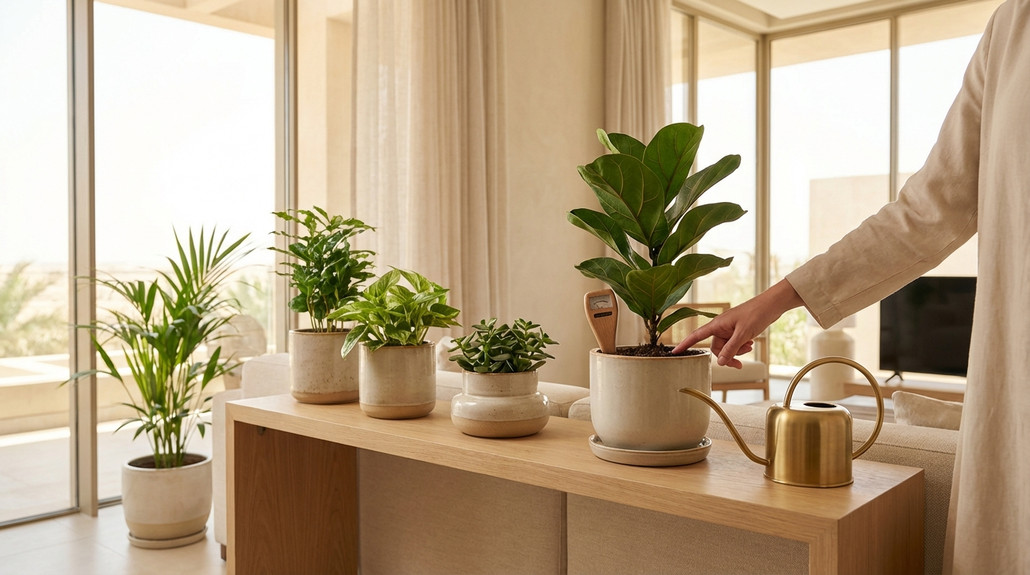
The correct approach is to assess soil moisture directly. The most reliable method is the finger test. Insert your index finger into the soil up to your second knuckle. For most common houseplants like Monstera, Pothos, or Fiddle Leaf Figs, the soil should feel dry at this depth before you water again. If you feel any moisture or coolness, wait another day or two and check again. For desert plants like succulents and cacti, you should let the soil dry out completely throughout the pot. A more precise tool for this is a moisture meter, which provides a numerical reading of the moisture level deep within the pot, removing all guesswork. Understanding your plant's specific needs and checking the soil before reaching for the watering can is the most critical skill for keeping indoor plants healthy in our climate.
The Critical Impact of Air Conditioning on Indoor Plants
Living in Saudi Arabia means relying on air conditioning for most of the year. While essential for our comfort, AC systems create an artificial desert indoors, posing a significant challenge for most houseplants, which are native to humid, tropical regions. The primary effect of an AC is dehumidification. It pulls moisture from the air, causing the relative humidity in a room to drop significantly. This low humidity accelerates transpiration, the process where plants lose water vapor from their leaves. Your plant will lose moisture to the air much faster than it would in a more temperate climate, causing the soil to dry out more quickly than you might expect.
Furthermore, plants placed directly in the path of an AC vent are subjected to constant drafts of cold, dry air. This can cause sudden leaf drop, brown and crispy leaf edges, and overall stress. To counteract these effects, avoid placing your plants in the direct line of airflow from a vent. Grouping plants together can also create a small microclimate of higher humidity around them as they transpire. For humidity-loving plants like Calatheas or Ferns, placing them on a pebble tray with water or using a small room humidifier can make a significant difference. Acknowledging the AC's role is not about turning it off; it's about adapting your care routine to mitigate its drying effects and choosing plants suited to these conditions.
Proper Watering Technique for Root Health
How you water is as important as when you water. The goal is to moisten the entire root ball evenly, not just the top layer of soil. A common mistake is to give plants small, frequent sips of water. This practice encourages shallow root growth, as the roots have no incentive to grow deeper in search of moisture. It also leads to a buildup of mineral salts from tap water on the soil surface, which can harm the plant over time. The correct method is to water thoroughly and deeply. When it is time to water, apply water slowly and evenly to the soil surface until you see it flowing freely from the drainage holes at the bottom of the pot. This ensures that the entire root system has access to moisture.
After a thorough watering, it is crucial to allow the pot to drain completely. Do not let the pot sit in a saucer full of excess water. This condition, known as "wet feet," deprives the roots of oxygen and is the primary cause of root rot, a fatal condition for most houseplants. Let the pot drain in a sink for 10-15 minutes before placing it back on its saucer. This deep watering and subsequent drying period mimics the natural rain cycles that most plants are adapted to, promoting strong, healthy root development. Ensure your plants are in pots with sufficient drainage holes to make this technique possible.
Water Quality and Temperature Considerations
The water you use can directly impact your plant's health, particularly in regions where tap water can be heavily treated or high in dissolved minerals. Tap water in Saudi Arabia is often desalinated and treated, which can lead to an accumulation of salts like chlorine and fluoride in the soil over time. While most hardy plants can tolerate this, more sensitive species may show signs of stress, such as brown leaf tips or stunted growth. Letting tap water sit out in an open container for 24 hours can allow some of the chlorine to evaporate, making it safer for your plants.
An even better alternative is to use filtered or distilled water, especially for sensitive plants like Calatheas, Marantas, or carnivorous plants. This removes the excess minerals and chemicals, preventing their buildup in the soil. Water temperature is another factor to consider. Using very cold water can shock the plant's root system, especially during warmer months. It is always best to use room-temperature water. Simply fill your watering can after you finish watering and leave it to sit until the next time your plants need a drink. This simple step ensures the water temperature is aligned with the ambient temperature, preventing unnecessary stress on the plant.
Adapting to Plant and Pot Variations
A one-size-fits-all approach to watering will not work because every plant and every pot is different. The water needs of a Snake Plant in a large terracotta pot are vastly different from a Boston Fern in a small plastic pot. Plant species is the first consideration. Succulents, cacti, and ZZ plants have evolved to store water in their leaves and stems and require their soil to dry out completely between waterings. Tropical plants like Alocasias and most ferns prefer consistently moist (but not waterlogged) soil. Researching the specific needs of each of your diverse collection of indoor plants is fundamental.
The pot's material and size also play a major role. Terracotta and other unglazed clay pots are porous, allowing water to evaporate through their sides. This means the soil will dry out much more quickly than it would in a plastic or glazed ceramic pot, which are non-porous. Larger pots hold more soil volume and therefore retain moisture for longer than small pots. When watering, you must account for these variables. A plant in a small terracotta pot on a bright, warm windowsill may need water every few days, while the same plant in a large plastic pot in a dim corner might only need water every two weeks. Regular assessment with the finger test is the only way to manage these differences effectively.
Recognizing Overwatering vs. Underwatering Symptoms
Identifying the early signs of a watering issue is key to correcting the problem before it becomes severe. Both overwatering and underwatering can cause similar symptoms, such as yellowing leaves, which can be confusing. However, there are distinct differences to look for. Overwatering is the more dangerous of the two, as it leads to root rot, from which plants rarely recover.
Signs of Overwatering
- Leaves turn yellow or light green, often starting with the lower leaves first.
- The leaves feel soft and limp, not crispy.
- The soil is consistently damp or wet to the touch and may have a sour, swampy smell.
- Stems feel mushy or soft at the base.
- The plant may wilt, even though the soil is wet. This happens because the rotting roots can no longer absorb water.
- You might see fungus gnats, tiny black flies, hovering around the soil surface.
Signs of Underwatering
- Leaves, especially lower ones, turn yellow or brown and feel dry and crispy.
- The edges of the leaves may turn brown and curl.
- The plant looks wilted and droopy, but the soil is visibly dry and may have pulled away from the sides of the pot.
- Growth is slow or has stopped completely.
- The plant will typically recover quickly within a few hours of being watered thoroughly.
If you suspect overwatering, stop watering immediately and check the roots. If they are brown and mushy, you may need to repot the plant into fresh, dry soil after trimming away the rotted parts. For detailed advice, you can consult our plant care guides.
Developing a Sustainable Care Routine
Instead of a rigid watering schedule, develop a routine of observation. Dedicate one or two days a week, perhaps a Wednesday and a Sunday, to be your "plant check-in" days. On these days, you do not automatically water everything. Instead, you walk around and perform the finger test on each plant. Water only the ones that need it. This process might take five minutes, but it builds a habit of observing your plants and responding to their actual needs. During these check-ins, also take a moment to dust the leaves with a soft cloth. Dust accumulation can block light and hinder photosynthesis. Also, rotate your plants a quarter turn each week to ensure all sides get even light exposure, promoting balanced growth rather than leaning towards the window.
This routine of checking, rather than simply watering, is the most effective way to maintain a thriving indoor garden in the challenging conditions of Saudi Arabia. It allows you to catch problems early, adapt to seasonal changes in light and temperature, and truly understand what each of your plants requires. It transforms plant care from a chore into a rewarding practice. Finding the right appropriate soil and tools will make this routine much more effective and enjoyable, ensuring long-term success for your indoor greenery.