


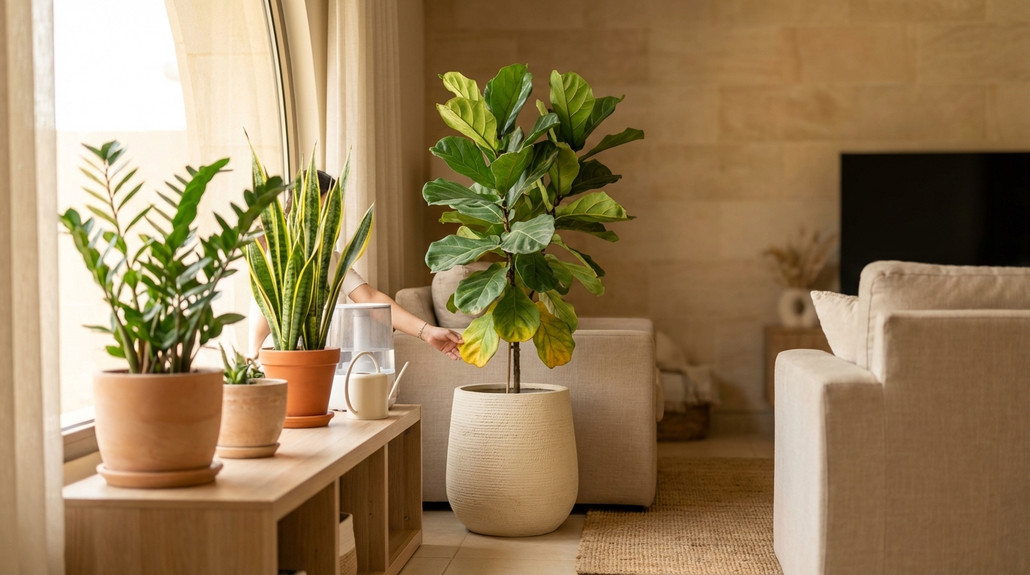
How to Save a Dying Indoor Plant Step by Step in Saudi Arabia Homes
Posted by Mozher Experts on 23.02.26
Understanding the Root Cause of Yellowing Leaves
When you see a plant's leaves turning yellow, it is a signal of stress. It is the plant's way of communicating that something in its environment is not right. In Saudi Arabia, the challenge is often a combination of factors unique to our homes: intense outdoor heat contrasted with the constant, dry air from air conditioning units. This environment can confuse watering schedules and stress plants that are not adapted to low humidity. The first step is not to panic but to diagnose the issue methodically. Yellowing leaves, a condition known as chlorosis, simply means the leaf is not producing enough chlorophyll. The reason for this lack of production can range from simple, natural aging to more serious issues like root rot. Most often, the problem is related to water, light, or nutrients. By carefully observing the pattern of yellowing—whether it affects old leaves or new, the entire leaf or just the tips—you can accurately identify the cause and take precise action to correct it before the entire plant is lost.
Watering Imbalance: The Most Common Culprit
Improper watering is the leading cause of yellowing leaves in indoor plants. Both too much and too little water can lead to this symptom, but they present differently. Overwatering is a frequent mistake, especially for new plant owners. When soil is consistently waterlogged, roots cannot access oxygen and begin to rot. This decay prevents the plant from absorbing water and nutrients, causing lower leaves to turn a dull, soft yellow before falling off. The soil will feel damp or muddy to the touch, even days after watering. Conversely, underwatering starves the plant. The soil pulls away from the pot's edges, and the plant sacrifices its older, lower leaves to conserve moisture for new growth. These leaves will typically turn bright yellow and become dry or crispy before dropping. In our climate, the dry air from AC units can cause the top layer of soil to dry out quickly, deceiving you into thinking the entire pot is dry. To avoid this, always check the soil moisture at least a few inches down. For consistent accuracy, using a reliable moisture meter removes all guesswork and helps you establish a routine based on your plant’s actual needs, not a rigid schedule.
Incorrect Light Exposure
Light is a plant's food source, and an imbalance can quickly cause distress. Too little light is a common issue for plants placed deep inside rooms away from windows. Without sufficient light for photosynthesis, a plant cannot sustain all of its foliage. It will start to shed older leaves, which often turn yellow and drop, to conserve energy for the newer growth that is closer to the light source. The plant may also appear "leggy," with long, stretched-out stems. On the other end of the spectrum is too much direct sunlight. The intense sun in Saudi Arabia, even through a window, can scorch the leaves of most indoor tropical plants. This often appears as pale yellow or whitish patches, or crispy, brown spots on the leaves most directly exposed to the sun's rays. The key is to understand your plant's specific requirements. Most popular houseplants thrive in bright, indirect light—the kind of light you would find in a well-lit room without direct sunbeams hitting the foliage. Observe your space throughout the day to see how the light moves and position your plants accordingly. Successful matching plants to available light is fundamental to their long-term health and prevents many common problems, including yellow leaves.
Nutrient Deficiencies or Excess
While less common than watering or light issues, problems with nutrition can also cause yellowing leaves. A lack of essential nutrients in the soil will manifest in specific ways. A nitrogen deficiency, for instance, typically causes older, lower leaves to turn uniformly yellow. An iron deficiency might cause yellowing on new growth while the leaf veins remain green. This often happens when a plant has been in the same pot and soil for years, having exhausted all available nutrients. During the growing season (spring and summer), most indoor plants benefit from a balanced liquid fertilizer applied every 4-6 weeks. However, it is crucial not to over-fertilize. Too much fertilizer can "burn" the plant's roots, leading to brown, crispy leaf tips and, eventually, yellowing leaves. A common mistake is to fertilize a stressed or sick plant in an attempt to help it recover. This only adds more stress to a weakened root system. If you suspect a nutrient issue, first ensure your watering and light are correct. If they are, and the plant has been in its pot for over a year, a gentle feeding schedule or repotting with fresh soil is the correct course of action. You can explore our soil and plant nutrition essentials to ensure your plants have the foundation they need to thrive.
Environmental Stress and Acclimatization
Plants are sensitive to their environment, and sudden changes can cause them to show signs of stress, including yellow leaves. This is very common when you first bring a plant home. It has moved from a controlled greenhouse environment to your home, which has different light, temperature, and humidity. During this acclimatization period, it is normal for a plant to drop a few lower leaves as it adjusts. The key is to provide a stable environment and not make further drastic changes. Another significant stressor in our region is low humidity caused by continuous air conditioning. Most popular houseplants are tropical and prefer humidity levels between 40-60%, while our indoor environments are often much drier. This dry air can lead to crispy brown leaf edges and yellowing. Placing plants away from the direct airflow of an AC vent is critical. You can increase ambient humidity by grouping plants together, placing them on a pebble tray with water, or using a small humidifier. Finally, yellowing can simply be a part of the natural aging process. As a plant grows, it directs energy to new leaves and will naturally shed its oldest, lowest leaves, which will turn yellow and fall off. If this is happening slowly to one or two leaves at a time while the rest of the plant looks healthy and is producing new growth, there is no cause for concern.
A Step-by-Step Plan to Address Yellow Leaves
Once you have diagnosed the likely cause, it's time to take corrective action. Follow these steps methodically to help your plant recover without causing additional stress.
- Isolate and Inspect: Move the affected plant away from others to prevent any potential spread of pests. Examine the leaves (top and bottom), stems, and topsoil closely for any signs of insects like spider mites or mealybugs.
- Check the Roots: If you suspect overwatering, the most important step is to check the roots. Gently slide the plant out of its pot. Healthy roots are firm and white or light-colored. Rotted roots will be dark brown or black, mushy, and may have a foul smell.
- Prune Damaged Foliage and Roots: Remove all fully yellow or dead leaves with clean pruning shears. This allows the plant to redirect its energy to healthy growth. If you found root rot, trim away all the mushy, dead roots.
- Correct the Core Issue: If the problem was overwatering, repot the plant in fresh, well-draining soil and a pot with adequate drainage holes. If it was underwatering, give it a thorough soak until water runs from the bottom, then allow it to drain completely. If light was the issue, move the plant to a more suitable location.
- Be Patient: Recovery takes time. Do not expect immediate results. Provide consistent care based on your diagnosis and avoid making more changes. The plant needs stability to recover. Once the yellowing stops and you see signs of new, healthy growth, you know you are on the right path.
Preventing Yellow Leaves in the Future
The best way to deal with yellow leaves is to prevent them from appearing in the first place. This is achieved through consistent, observant care and selecting plants that are well-suited to your home environment. First, establish a consistent watering routine based on the plant’s needs, not the calendar. Always check the soil moisture before watering. Second, understand the light conditions in your home and choose plants that will thrive in those spots. Rotating your plants a quarter turn each week ensures all sides receive adequate light. Third, be mindful of the impact of your AC. Keep plants out of direct drafts and consider measures to boost humidity for tropical species. Finally, inspect your plants regularly. A quick check of the leaves and soil every few days can help you catch potential problems like pests or the first signs of stress before they become severe. By starting with healthy, high-quality specimens and providing them with a stable and appropriate environment, you can maintain a lush, green indoor garden. Choosing from our collection of indoor plants ensures you begin with a strong, well-acclimatized plant ready for its new home.