


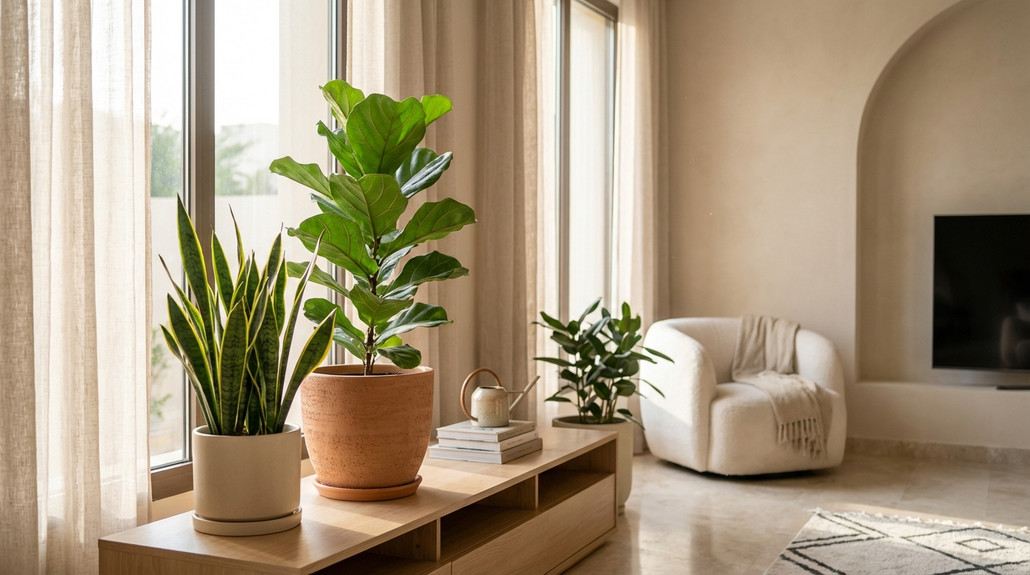
How to Save a Dying Indoor Plant Step by Step in UAE Homes
Posted by Mozher Experts on 23.02.26
Understanding the Impact of UAE Indoor Environments
Seeing yellow leaves on a cherished indoor plant can be alarming. In the UAE, our homes present a unique challenge. We live with near-constant air conditioning, which creates an environment of low humidity and fluctuating soil moisture. The intense outdoor sun means our indoor light is often a sharp contrast of very bright or very dim. These factors are the primary drivers of stress for houseplants, and yellowing foliage is the most common signal that something is wrong. It is not a sign of failure, but rather a request from your plant to adjust its care. The key is to correctly interpret the signal before acting.
Diagnosing Water-Related Stress
Improper watering is the most frequent cause of yellowing leaves. Both too much and too little water can produce similar symptoms, but with subtle differences. Overwatering is particularly common. When soil remains saturated, roots are deprived of oxygen and begin to rot. This damage prevents the plant from absorbing water and nutrients, leading to limp, yellow leaves that often start at the bottom of the plant and spread upwards. The soil will feel consistently wet or even boggy to the touch. Conversely, underwatering causes leaves to become brittle, dry, and yellow, often with brown, crispy edges. The yellowing might appear more uniformly across the plant. In our AC-cooled homes, the top layer of soil can dry out quickly, deceiving you into thinking the entire pot is dry. Always check the moisture level several inches deep. Using a reliable moisture meter can remove the guesswork entirely, providing an accurate reading of moisture levels at the root ball where it matters most.
The Critical Role of Light
Light is a plant's food source, and an incorrect amount will cause significant stress. In the UAE, sunlight streaming through a window can be far more intense than many houseplants can handle. Direct, harsh sun will scorch the leaves, causing them to develop yellow or pale brown patches, often referred to as sunburn. The leaves may feel thin and burnt. If you see this, move the plant immediately to a location with bright, but indirect, light. On the other hand, insufficient light is equally damaging. A plant struggling in a dim corner cannot photosynthesise effectively. This leads to a slow, general paling of the leaves, turning them a uniform, faded yellow. New growth will be weak and spindly. The plant is conserving energy by shedding its older leaves, which often turn yellow and drop first. The solution is to relocate the plant to a brighter spot or supplement with a grow light. The best approach is to match plants to your available light from the beginning to ensure their long-term health.
Assessing Soil and Nutrient Health
Over time, the soil in your plant's pot becomes depleted of essential nutrients. A common sign of a nutrient deficiency is yellowing leaves. A nitrogen deficiency, for example, typically causes the oldest, lower leaves to turn yellow first, as the plant moves this mobile nutrient to support new growth. An iron deficiency might cause yellowing on new leaves while the veins remain green. This is why a regular feeding schedule during the growing season is important. Furthermore, the soil itself can become problematic. Old, compacted soil can hinder root growth and water drainage, leading to the same issues as overwatering. If your plant has been in the same pot for several years, its growth is stunted, and leaves are yellowing despite proper watering and light, it may be time to repot. Repotting with fresh, well-draining potting mix provides a renewed foundation for health. Ensure you are using quality soil and plant nutrients appropriate for your specific type of plant.
Temperature Fluctuations and AC Drafts
Indoor plants generally prefer stable conditions. In our region, the constant use of air conditioning creates microclimates within our homes. A plant placed directly in the path of a cold AC vent will experience significant stress. This sudden, cold draft can shock the plant, causing its leaves to curl, yellow, and drop unexpectedly. This is a physical response to the rapid temperature change. Similarly, the dry air produced by AC units strips humidity from the air, which is detrimental to tropical plants that thrive in moisture. This can lead to brown, crispy leaf tips and edges, followed by yellowing. To combat this, ensure your plants are positioned away from direct airflow from AC units. You can increase humidity by grouping plants together, placing them on a pebble tray with water, or using a humidifier, which is particularly effective in our dry indoor climate.
Pests and Natural Plant Cycles
While less common than environmental issues, pests can certainly cause yellowing leaves. Tiny insects like spider mites, aphids, and mealybugs feed on plant sap, draining the life from the leaves. This feeding often results in a stippled or speckled yellow pattern on the foliage. Inspect the undersides of leaves and the joints where leaves meet the stem for any signs of pests, such as fine webbing (spider mites) or white, cottony masses (mealybugs). If pests are found, isolate the plant immediately to prevent them from spreading and treat it with an appropriate insecticidal soap or neem oil. It is also crucial to recognise the natural life cycle of a plant. It is perfectly normal for the oldest, lowest leaves to gradually turn yellow and fall off as the plant matures and directs its energy towards new growth at the top. This is a slow, one-or-two-leaf process and is not a cause for concern as long as the rest of the plant looks healthy and vibrant.
Creating a Recovery Action Plan
Once you have diagnosed the likely cause, it is time to act methodically. Do not make multiple drastic changes at once, as this can further stress the plant.
- Step 1: Adjust Placement. Move the plant away from direct sun, heat sources, or cold AC drafts. Find a spot that meets its ideal light and temperature requirements.
- Step 2: Correct Watering. If overwatered, allow the soil to dry out significantly before watering again. If underwatered, give it a thorough soak until water runs from the drainage holes, then discard the excess. Establish a consistent schedule based on checking the soil, not the calendar.
- Step 3: Prune Damaged Leaves. Leaves that are fully yellow will not turn green again. Removing them allows the plant to redirect its energy to healthy growth. Use a pair of clean pruning shears to make a clean cut near the main stem.
- Step 4: Assess for Repotting or Pests. Gently check the root system. Healthy roots are firm and white or light-coloured. Brown, mushy roots indicate rot and should be trimmed off before repotting in fresh soil. If pests are present, begin treatment.
- Step 5: Be Patient. Recovery takes time. After making adjustments, monitor the plant for a few weeks. Look for signs of new, healthy growth as an indication that your interventions are working. Avoid fertilizing a stressed plant until it shows clear signs of recovery.
Preventative Care for Thriving Indoor Plants
The best way to deal with yellow leaves is to prevent them from appearing. Building a consistent and observant care routine is the foundation of success. First, choose the right plant for your space. Being realistic about the light conditions in your home will save a great deal of trouble later on. By selecting resilient indoor plants suited to your environment, you set yourself up for success. Second, establish a routine of checking your plants. Instead of watering on a fixed weekly schedule, physically check the soil moisture every few days. This helps you adapt to seasonal changes and the effects of air conditioning. Third, clean the leaves regularly. Dust buildup on leaves can block light and harbour pests. A gentle wipe with a damp cloth keeps them healthy and photosynthesising efficiently. Finally, rotate your plants every month to ensure all sides receive adequate light, promoting even growth and preventing stress on one side of the plant.