


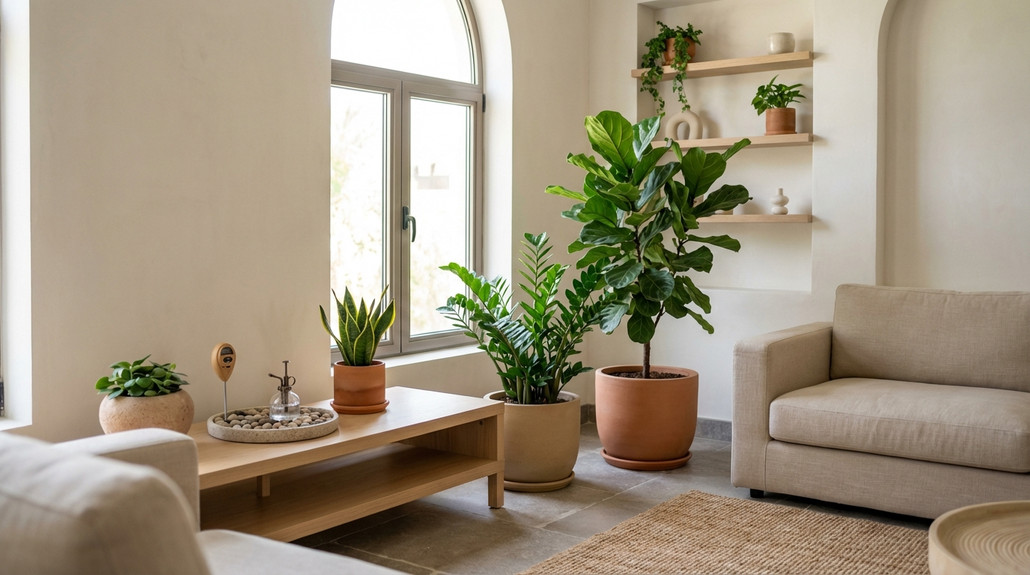
Indoor Plant Care Mistakes That Kill Plants Slowly in Iraq Homes
Posted by Mozher Experts on 24.02.26
Ignoring the Overpowering Effect of Air Conditioning
In Iraq, the greatest challenge to indoor plant health is not always the sun, but the environment we create to escape it. Constant air conditioning saves us from the heat, but it wages a silent war on most houseplants. The primary issue is the extreme lack of humidity. AC units are designed to pull moisture from the air, creating a desert-like dryness that is stressful for tropical and subtropical plants, which constitute the majority of the popular indoor varieties. This dry air causes leaves to develop brown, crispy edges, wilt, and become more susceptible to pests like spider mites that thrive in arid conditions. Another critical mistake is placing plants directly in the line of fire. A blast of cold air from a vent can cause thermal shock, leading to sudden leaf drop and stunted growth. The plant experiences a drastic temperature change that its cellular structure is not equipped to handle. Think of it as a constant, chilling wind. To counteract these effects, avoid placing any plant in the direct path of an AC vent. Grouping plants together can also create a small microclimate of shared humidity. For particularly sensitive plants, a pebble tray (a tray filled with pebbles and water) placed underneath the pot can increase local moisture as the water evaporates, without waterlogging the soil.
Applying an Inconsistent or Incorrect Watering Routine
The most frequent cause of indoor plant decline is improper watering, and it is almost always overwatering. In a hot climate, the instinct is to provide more water, but this is a fatal error. Plant roots need oxygen as much as they need water. When soil is constantly saturated, the air pockets disappear, and the roots effectively drown. This leads to root rot, a fungal condition from which few plants recover. The signs are often misleading: yellowing leaves, wilting, and a mushy stem base, which can be mistaken for signs of thirst. A rigid watering schedule, such as watering every Saturday, is another common mistake. A plant's water needs change based on the season, light exposure, temperature, and its growth cycle. The correct method is to check the soil before watering. Insert your finger about two inches deep; if the soil feels dry at that depth, it is likely time to water. For greater accuracy and to avoid guesswork, using a reliable moisture meter is an invaluable practice. When you do water, do it thoroughly until water drains from the bottom of the pot, then discard the excess. This ensures the entire root ball is hydrated and helps flush out mineral salts that can accumulate from tap water.
Providing the Wrong Type and Amount of Light
Light is a plant's food. Misunderstanding a plant's specific light requirements is a slow but certain path to its demise. The sun in Iraq is intensely powerful, and placing a plant that needs indirect light in a south-facing window will scorch its leaves, causing pale, yellow, or brown patches. The term "bright, indirect light" means a spot that is well-lit for most of the day but does not receive the direct, harsh rays of the sun. This is often found a few feet away from an east-facing window or near a west-facing window that is partially shaded by a sheer curtain or building. On the other end of the spectrum is providing too little light. Placing a sun-loving plant, like a succulent or a Fiddle Leaf Fig, in a dark corner will lead to weak, "leggy" growth as the plant stretches desperately toward a light source. Its leaves may be small, pale, and the plant will eventually fail to sustain itself. It is critical to match the plant to the location. Before purchasing, observe the light patterns in your home throughout the day. This knowledge will guide your selection and ensure you can provide the right environment. We have a wide selection of plants that thrive in bright indirect light, which is the most common condition in Iraqi homes.
Neglecting Soil Composition and Proper Drainage
The foundation of a healthy indoor plant is what happens below the surface. Two common mistakes guarantee failure: using a pot without drainage holes and using the wrong type of soil. A decorative pot with no holes is a death trap. Without an escape route for excess water, the soil becomes a stagnant swamp, leading directly to the root rot discussed earlier. If you have a decorative pot you love, use it as a "cachepot" by placing a plastic nursery pot with drainage holes inside it. After watering, simply remove the inner pot, let it drain completely, and then place it back. The second issue is soil density. Using soil from an outdoor garden is a mistake. It is too heavy, compacts easily in a pot, drains poorly, and can contain pests or diseases. A proper indoor potting mix is specifically formulated to be lighter, providing the aeration and moisture balance that container plants need. It typically contains ingredients like peat moss, perlite, and vermiculite to keep the structure loose and allow roots to breathe. Choosing appropriate pots with drainage is the most critical first step you can take for long-term plant health.
Choosing Plants Unsuited to Your Home Environment
Success begins with selection. Often, a plant fails not because of poor care but because it was never the right choice for the home in the first place. It is easy to be captivated by a beautiful plant at a nursery or online, but if your home conditions cannot meet its needs, you are setting yourself up for disappointment. Before you buy, conduct an honest assessment of your space. How much natural light do you truly get? Is your home's air very dry due to constant AC? Do you have time for a high-maintenance plant, or do you need something more forgiving? Starting with a plant that is known for its resilience can build confidence and provide a more rewarding experience. Snake Plants (Sansevieria) and ZZ Plants (Zamioculcas zamiifolia) are excellent choices for beginners as they tolerate lower light and are drought-tolerant, making them more forgiving of occasional neglect. Rather than choosing based on appearance alone, it is more sustainable to explore plants based on their ease of care and match them to the environment you can realistically provide. This single decision is the most proactive step toward successful indoor gardening.
Overlooking the Importance of Dust and Pest Prevention
In our climate, dust is a constant factor. It settles on every surface, including plant leaves. This is more than a cosmetic issue; a thick layer of dust can significantly hinder a plant's ability to photosynthesize. It physically blocks sunlight from reaching the leaf's surface, essentially reducing the plant's ability to create food for itself. Over time, this can lead to weakened growth and a dull appearance. The solution is simple: regular cleaning. Once every couple of weeks, gently wipe the leaves with a soft, damp cloth. For plants with many small leaves, a gentle shower in the sink or bathtub can work well. This routine cleaning has a second benefit: it is your first line of defense against pests. While wiping the leaves, you can inspect their undersides for common pests like spider mites, which look like tiny white or red dots, and mealybugs, which appear as small, white cottony masses. These pests thrive in the warm, dry conditions created by our indoor environments. Catching an infestation early makes it much easier to manage. Regular inspection and cleaning are fundamental parts of essential plant maintenance tools and practices.