


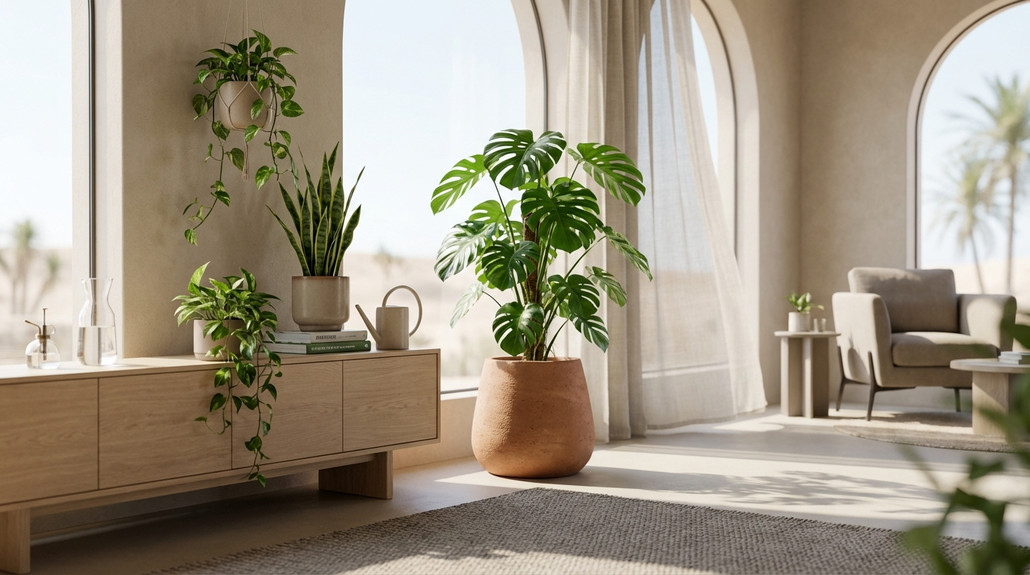
Indoor Plants Explained for First-Time Owners in Iraq Homes
Posted by Mozher Experts on 24.02.26
The Challenge: Balancing Intense Heat with Cold Indoor Air
Keeping indoor plants thriving in Iraq presents a unique set of challenges not found in standard care guides. Outside, the sun is intense and the heat can be extreme. Inside, we create a very different environment to cope. Air conditioners run for months, creating a cool but artificially dry atmosphere. This constant battle between external heat and internal, chilled air is the primary factor you must understand. A plant placed near a window might experience scorching heat through the glass, while another just a few meters away sits in the direct, cold draft of an AC unit. Neither situation is ideal. The key to success is not just about watering and light; it's about managing these microclimates within your home. Successful plant ownership begins with observing your space and understanding how these powerful environmental forces affect the small ecosystem you are trying to build.
Many first-time owners assume that if they are comfortable, their plants will be too. This is a common misconception. The dry air from an AC unit rapidly pulls moisture from both the plant's leaves and its soil, leading to dehydration even when you think you are watering correctly. Furthermore, the dust that settles in our homes can coat leaves, blocking their ability to photosynthesize effectively. Your goal is to create a stable, consistent environment that buffers your plants from these extremes. This involves careful placement, a thoughtful watering routine, and selecting plants that are inherently resilient to such conditions. It is a more deliberate process than simply placing a pot on a table, but it is entirely achievable with the right knowledge.
Understanding Light in Iraqi Homes
Light is a plant's food, but not all light is equal. In our region, the sunlight coming through a window can be far more intense than in other parts of the world. What is considered "bright indirect light" in a European climate might be scorching direct sun here. You must learn to read the light in your own space throughout the day. Direct sunlight, especially from a south or west-facing window during the afternoon, will burn the leaves of most common houseplants, causing brown, crispy patches. Very few indoor plants can tolerate this intensity.
The ideal location for the majority of houseplants is a spot that receives bright, filtered light for several hours a day. This could be near an east-facing window that gets gentle morning sun, or a few feet back from a south-facing window, where the light is bright but not direct. Sheer curtains are an excellent tool for diffusing harsh sunlight, transforming a potentially damaging spot into a perfect one. Pay attention to how the light moves across your rooms. A spot that is shaded in the morning may be in full sun by 3 PM. Observing this pattern is more important than following a generic tag on a plant. For those with limited natural light, many modern plants can adapt well to artificial lighting, but it's crucial to start with understanding your natural sources first.
Watering, Airflow, and Humidity Management
Watering is where most new plant owners make mistakes, and our climate complicates things further. The combination of dry AC air and indoor heat can cause soil to dry out quickly. However, the fear of this leads many to overwater, which is the most common cause of plant failure. Saturated soil cuts off oxygen to the roots, leading to root rot, a condition from which few plants recover. The correct approach is to always check the soil before watering. Do not water on a fixed schedule. Instead, insert your finger about two inches into the soil. If it feels dry at that depth, it is time to water. If it feels damp, wait another day or two and check again.
When you do water, do it thoroughly. Pour water evenly over the soil surface until it begins to drain from the bottom of the pot. This ensures all the roots have access to moisture. Discard any excess water that collects in the saucer; never let the plant sit in a puddle. The dry air from AC units also strips humidity from the air, which is a problem for tropical plants that enjoy moisture. You can increase humidity by grouping plants together, placing them on a tray of pebbles and water (ensuring the pot sits on the pebbles, not in the water), or by misting the leaves every few days. Just as important is airflow. Stagnant air can encourage pests and diseases. While you must avoid placing plants in the direct path of an AC vent, ensuring good general air circulation in the room is beneficial. A slightly open window in a cooler part of the day or a distant, oscillating fan can make a significant difference.
Choosing the Right Soil and Container
The foundation of a healthy plant is its root system, and the root system's health depends entirely on the soil and pot you provide. Using soil from your garden is not a viable option for indoor plants. Outdoor soil is heavy, compacts easily in a pot, drains poorly, and can contain pests or diseases. A quality indoor potting mix is essential. These mixes are specifically formulated to be light and airy, providing the right balance of moisture retention and drainage that roots need to breathe. They often contain ingredients like perlite, coir, and peat moss to create this ideal structure.
The container itself is just as critical. The single most important feature of any pot is a drainage hole. Without it, excess water has nowhere to go, leading directly to root rot. If you fall in love with a decorative pot that has no hole, you can use it as a "cachepot." Simply keep your plant in its plastic nursery pot (which has holes) and place it inside the decorative one. When you water, remove the inner pot, let it drain completely, and then return it to the cachepot. When choosing pots with adequate drainage, consider the material. Terracotta is porous and allows soil to dry out faster, which is excellent for succulents and plants prone to rot. Glazed ceramic or plastic pots retain moisture for longer, which can be beneficial for plants that prefer to stay consistently moist.
Helping Your New Plant Acclimate
Bringing a new plant home is an exciting moment, but it is also a stressful one for the plant. It has just been moved from a controlled nursery environment, to a delivery vehicle, and finally into your home, which has completely different light, temperature, and humidity levels. This transition can cause a period of shock, which might manifest as a few yellowing or dropped leaves. This is normal and not necessarily a sign that you are doing something wrong. The most important thing you can do during the first couple of weeks is to provide a stable environment and resist the urge to fuss over it.
Find a suitable spot for your new plant and leave it there. Do not move it around the house trying to find the "perfect" location. Constant relocation only adds to its stress. Also, resist the urge to immediately repot it unless it is clearly root-bound (roots growing out of the drainage holes). Most plants are fine in their nursery pots for some time. Give it a week or two to adjust to your home's conditions before considering repotting or fertilizing. During this acclimation period, monitor its watering needs carefully by checking the soil, but otherwise, let it be. This initial period of patience sets the stage for long-term health and allows the plant to adapt to its new forever home without being overwhelmed.
Beginner Mistakes Specific to Our Climate
Many common plant care errors are amplified by the conditions in Iraqi homes. Understanding these specific pitfalls can save you from losing your first few plants.
- Direct AC Draft: Placing a plant directly in the line of fire of an air conditioner is a swift way to damage it. The cold, dry air will dehydrate and stress the leaves, causing them to curl, brown, and drop. Always place plants away from direct vents.
- Sun Scald Through Glass: Underestimating the power of the sun through a window is a frequent mistake. Glass can magnify the sun's intensity, quickly scorching leaves. If you see white, yellow, or brown patches appearing on the leaves closest to the window, the plant is getting burned and must be moved further away or protected with a sheer curtain.
- Forgetting About Dust: In our dusty environment, a fine layer of grime can quickly accumulate on plant leaves. This coating blocks sunlight and clogs the pores (stomata) that plants use to breathe. Gently wipe the leaves with a damp cloth every couple of weeks to keep them clean and functioning efficiently.
- Inconsistent Watering: The rapid drying effect of AC can lead to a cycle of panic-watering. An owner might let the soil get bone-dry, then flood it, then let it dry completely again. This inconsistency stresses the root system. Aim for a more consistent state of soil moisture, rehydrating just as the soil begins to feel dry a couple of inches down. A simple tool can help with this, and using a simple moisture meter removes all the guesswork.
Developing a Simple and Sustainable Care Routine
Consistency is more important than intensity when it comes to plant care. You do not need to spend hours every day tending to your plants. Instead, establishing a simple weekly routine is far more effective. Choose one day a week to be your "plant day." On this day, perform a quick check-in on all your indoor plants. This process should only take a few minutes but will keep you in tune with their needs and allow you to catch any potential issues early. This is one of the best habits to build for plant longevity.
Your weekly checklist should include:
The Soil Check
Physically touch the soil of each plant. As discussed, this is the only reliable way to know if it needs water. After a while, you will also get a feel for the weight of the pot; a light pot often means the soil is dry, while a heavy one indicates it is still moist.
The Leaf Inspection
Take a moment to look at the leaves, both the tops and the undersides. Are there any yellow or brown spots? Any signs of pests like webbing or tiny insects? Catching these issues early makes them much easier to treat. This is also a good time to wipe away any accumulated dust.
The Rotation
Plants will naturally grow towards their light source. To encourage even, upright growth and prevent a lopsided shape, give each plant a quarter turn every week. This ensures all sides of the plant get adequate light over time.
By following this simple, consistent routine, you replace guesswork and anxiety with a calm, observant practice. It makes plant care a relaxing activity rather than a stressful chore. For more detailed advice, you can always consult comprehensive plant care guides to address specific issues as they arise.
Choosing Forgiving Plants for Your First Purchase
Starting your indoor plant journey with the right species can make all the difference between success and frustration. Some plants are simply more adaptable and tolerant of beginner mistakes and the challenging indoor conditions we face in Iraq. Choosing one of these resilient varieties builds confidence and allows you to learn the fundamentals of plant care without the constant fear of failure. Look for plants known for their toughness and ability to handle a range of conditions, particularly lower humidity and occasional watering inconsistencies.
Excellent choices for beginners in our climate include the Snake Plant (Sansevieria), which tolerates low light and infrequent watering, and the ZZ Plant (Zamioculcas zamiifolia), which is famously drought-tolerant and nearly indestructible. The Pothos (Epipremnum aureum) is another fantastic option; it's a vining plant that grows quickly and clearly shows you when it needs water by slightly drooping its leaves. These plants are not only hardy but also beautiful, offering a great reward for your initial efforts. As you become more comfortable with your routine, you can branch out to other species, but starting with a strong foundation is key. To get started, you can explore our collection of hardy plants curated for their resilience.
Frequently Asked Questions for New Plant Owners
How often should I really water my plants in an air-conditioned room?
There is no fixed schedule. The frequency depends on the plant type, pot size, soil mix, and the intensity of your AC. The only reliable method is to check the soil. Insert your finger 2 inches deep. If it's dry, water thoroughly. If it's moist, wait. This could mean watering every 7 days or every 14 days. Observation is more important than a calendar.
Is direct sun from a window in Iraq too strong for most indoor plants?
Yes, in most cases. Direct afternoon sun through a window, especially from May to September, will scorch the leaves of popular houseplants like Pothos, Monsteras, and Ferns. It's best to place them where they receive bright, but indirect, light. An east-facing window with gentle morning sun is often safer. For south or west windows, use a sheer curtain to filter the light.
Do I need a humidifier for my plants to survive the dry AC air?
While a humidifier can be very beneficial, especially for tropical plants like Calatheas or Ferns, it is not strictly necessary for many hardy beginner plants. You can increase local humidity by grouping plants together, misting them a few times a week, or using a pebble tray with water. Start with these simpler methods before investing in a machine.