


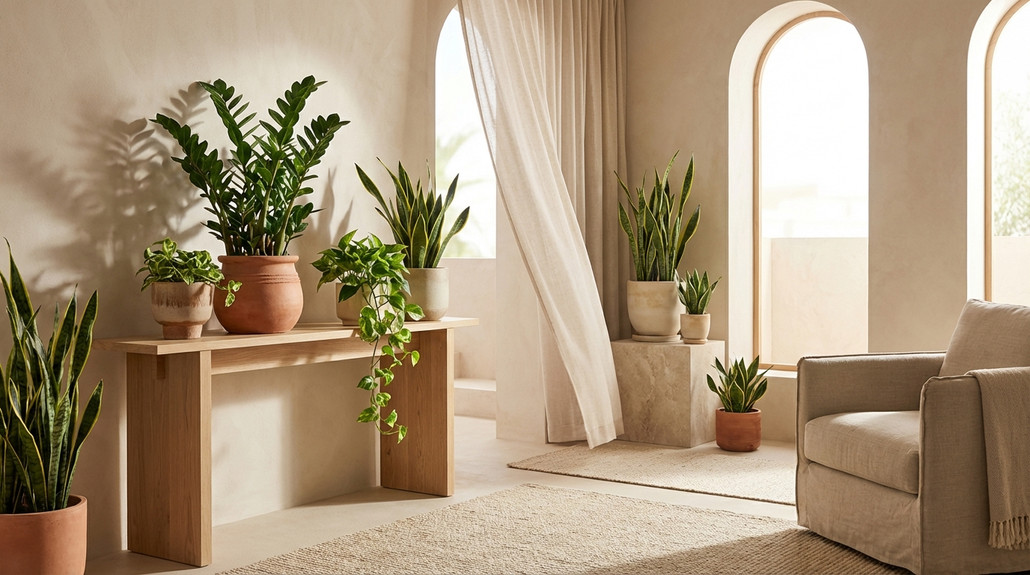
Indoor Plants That Don’t Require Constant Attention in Iraq Homes
Posted by Mozher Experts on 23.02.26
Understanding the Iraqi Indoor Environment
Success with indoor plants in Iraq is less about having a "green thumb" and more about understanding the unique challenges of our homes. The primary factor is not just the extreme outdoor heat, but the constant use of air conditioning (the AC). While the AC provides relief for us, it creates a difficult environment for many plants. It strips humidity from the air, causing rapid moisture loss from leaves and soil. This constant, dry airflow can stress plants that are not adapted to it. Furthermore, dust is a persistent issue, settling on leaves and blocking the light needed for photosynthesis. Choosing a plant is not about finding one that loves these conditions, but one that tolerates them exceptionally well. Low maintenance here means resilience against dry air, inconsistent watering, and lower light levels, which are the realities of an AC-cooled home shielded from the intense sun. The plants that thrive are those that can be largely ignored, as they have natural mechanisms to conserve water and survive periods of neglect.
Key Traits of a Truly Forgiving Plant
Not all plants marketed as "easy" are suitable for our specific indoor climate. A truly low maintenance indoor plant for an Iraqi home possesses a specific set of characteristics. First is drought tolerance. This is the most critical trait. These plants have adapted to survive with infrequent water, often storing it in thick leaves, stems, or underground rhizomes. This built-in reservoir makes them forgiving if you forget to water for a week or two. Second is a tolerance for low to medium light. Many homes in Iraq keep curtains drawn to block out the summer heat, reducing the amount of natural light available. Plants that can photosynthesize efficiently in these conditions are essential. Third is low humidity preference. Plants that come from arid or semi-arid native habitats are naturally better suited to the dry air created by continuous AC use than tropical plants that require high humidity. Finally, they require minimal feeding and pruning. A hardy plant does not need a complex fertilizing schedule to look good. It grows slowly and steadily, maintaining its shape without constant intervention. These are the plants that offer greenery without demanding a lifestyle change.
Top Selections for Effortless Greenery
Based on decades of experience with what survives and thrives in local homes and offices, a few species consistently prove to be the most resilient. These are the plants we recommend when a client wants beauty without the burden of constant care.
Zamioculcas Zamiifolia (ZZ Plant)
The ZZ Plant is perhaps the most indestructible houseplant available. Its ability to tolerate neglect is legendary. It thrives on low light and infrequent watering, making it perfect for office corners or rooms with little natural sun. The reason for its hardiness lies in its large, potato-like rhizomes located beneath the soil. These structures store water for extended periods, allowing the plant to survive droughts that would kill most other species. In fact, the most common way to harm a ZZ Plant is by overwatering it. You should allow the soil to dry out completely before even considering watering it again. Its waxy, dark green leaves are also excellent at resisting dust buildup and require only an occasional wipe-down.
Dracaena Trifasciata (Snake Plant)
Formerly known as Sansevieria, the Snake Plant is another champion of neglect. Its upright, architectural leaves make a strong statement in any room. It is highly adaptable to a wide range of light conditions, from low, indirect light to brighter spots. Like the ZZ Plant, the Snake Plant is extremely susceptible to root rot from overwatering. It prefers to be kept on the dry side and can go for a month or more without water, especially during cooler months. This plant is also an excellent air purifier, making it a functional as well as aesthetic choice for bedrooms and living areas. There are many varieties with different leaf patterns and heights, offering versatility in design.
Epipremnum Aureum (Pothos)
Pothos is a versatile vining plant that is exceptionally easy to grow. It is an excellent choice for beginners because it communicates its needs clearly; the leaves will visibly droop when it is thirsty, and they perk up quickly after watering. Pothos is tolerant of a wide spectrum of light conditions, though it will show its best color in medium, indirect light. It can be grown in a hanging basket, allowed to trail down a bookshelf, or trained to climb a support. Its forgiving nature extends to watering; it recovers well from periods of dryness. Regular dusting of the leaves is beneficial to ensure it can absorb adequate light. For those seeking durable and hardy indoor plants, Pothos is a classic and reliable option.
The Minimalist Care Routine
Caring for low maintenance plants is about doing less, but doing it correctly. The goal is to provide the basic conditions for survival without excessive intervention. The most important rule is to water based on soil dryness, not on a schedule. Before watering, insert your finger about two inches into the soil. If it feels dry, it's time to water. If you feel any moisture, wait. This single habit prevents overwatering, the leading cause of death for these hardy plants. Second, placement is key. Even low-light tolerant plants need some light to survive. Place them in a room that gets ambient light, but keep them out of harsh, direct sunbeams that can scorch their leaves. Third, clean the leaves every few weeks. Dust buildup is a significant issue in our climate. A simple wipe with a damp cloth allows the plant to breathe and absorb light more efficiently. Finally, do not rush to fertilize. These plants are slow growers and do not require much feeding. A single dose of a balanced, diluted liquid fertilizer once or twice during the main growing season is sufficient.
Signs You Are Caring Too Much
Enthusiasm is good, but with low maintenance plants, it can lead to problems. Over-caring is a common mistake for new plant owners. The most obvious sign is yellowing leaves, particularly lower ones, combined with consistently damp soil. This is a classic indicator of overwatering, which leads to root rot. If the soil is constantly wet, the roots cannot get oxygen and will begin to decay. Another sign is a lack of new growth during the growing season. While these plants are slow growers, a complete halt in growth can indicate stress from too much water or too much fertilizer. Fertilizer burn can appear as brown, crispy leaf edges or tips. If you notice these signs after feeding your plant, it means the dose was too strong or applied too frequently. Stunted growth or a "leggy" appearance, where stems are long and sparse, can also indicate that while the plant is in a low-light spot, it might need slightly more ambient light to maintain a compact form. The best approach is to observe the plant and respond to its needs, rather than imposing a rigid care schedule.
Matching a Resilient Plant to Your Space
Choosing the right plant is also about fitting it to the specific location within your home or office. Different spaces have different light and traffic patterns, and selecting a plant that suits these conditions from the start increases its chances of thriving with minimal effort. For a desk or a small side table, a compact Snake Plant or a small ZZ Plant is an excellent choice. These plants have a vertical growth habit that does not take up much horizontal space. They are also among the best choices for office and desk plants due to their tolerance for artificial light and infrequent watering schedules. For a living room corner or an entryway, a larger Snake Plant or a Pothos on a plant stand can create a significant visual impact. In rooms with very little natural light, such as an internal hallway or a bathroom without windows, the ZZ Plant is the most reliable option. A trailing Pothos is ideal for placing on top of a bookshelf or in a hanging planter, where its vines can cascade down gracefully. By matching the plant's minimal needs to the room's conditions, you set yourself up for long-term success.
Frequently Asked Questions About Easy-Care Plants
How often should I really water a "drought-tolerant" plant?
There is no fixed schedule like "once a week." The correct frequency depends on light, temperature, and pot size. For plants like the ZZ and Snake Plant, this could mean once every 3-4 weeks in summer and even less, perhaps every 6-8 weeks, in winter. The only reliable method is to check the soil. It must be completely dry to the touch several inches down before you water again. When in doubt, it is always safer to wait another week.
Do low-maintenance plants need special soil?
They do not need complex soil, but they absolutely require well-draining soil. The worst thing you can do is pot them in heavy, water-retentive soil that stays soggy. A good quality potting mix designed for cacti and succulents, or a standard indoor mix amended with perlite or sand, is ideal. This ensures that excess water drains away quickly, protecting the roots from rot. You can find appropriate essential soil and tools to ensure your plant has the right foundation.
Can these plants survive in a room with no windows?
No plant can survive indefinitely with zero natural light. However, plants like the ZZ Plant can tolerate extremely low light conditions for long periods. They are often used in windowless offices or bathrooms where they are sustained by fluorescent or LED lighting for several hours a day. While they will survive, they will not actively grow. To keep them healthy, you could rotate them into a spot with some indirect light for a week every month or so. It's a management strategy rather than a permanent solution for a completely dark space. You can browse our full collection of indoor plants to find the perfect fit for your light conditions.