


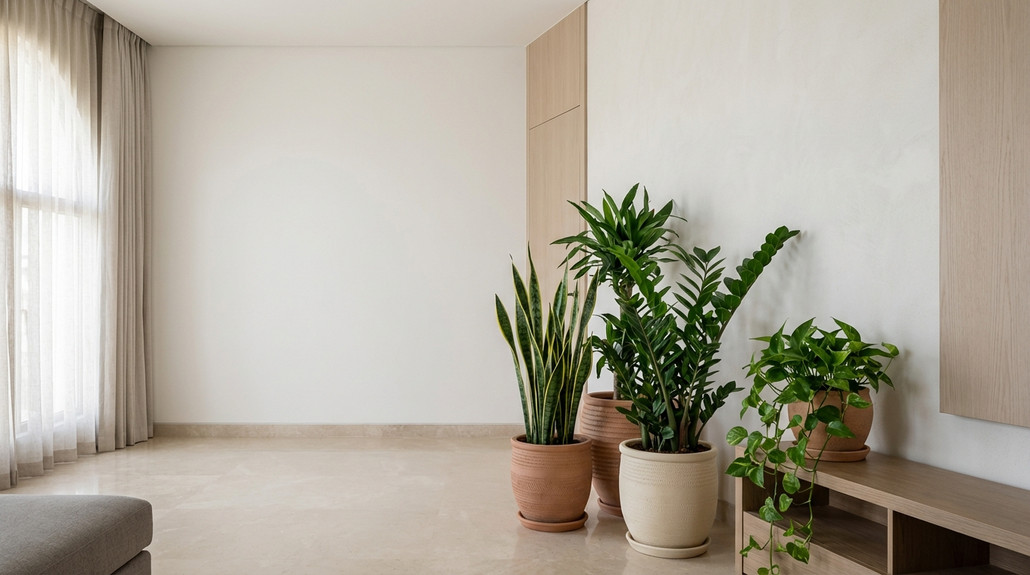
Indoor Plants That Don’t Require Constant Attention in Iraq Homes
Posted by Mozher Expoerts on 08.03.26
The Unique Climate Reality: Thriving Indoor Plants in Iraq's AC-Dependent Homes
In Iraq, the cherished aspiration of cultivating vibrant indoor greenery often confronts a unique set of environmental realities. Imagine a typical Iraqi summer day: outside, the scorching sun often drives temperatures to extreme highs, frequently exceeding 45°C. Indoors, the indispensable air conditioning unit—locally known as Al-Sablat (السبلت)—hums continuously, providing essential refuge from the relentless heat. While this comfort is vital for us, it paradoxically creates an exceptionally dry, cool indoor microclimate that profoundly impacts a plant's delicate needs.
Many passionate plant owners, despite their best intentions, find their plants struggling. This disheartening sight rarely stems from a lack of genuine care. Instead, it frequently arises from a fundamental misunderstanding of how Iraq's distinct local environment truly shapes a plant's physiological demands. The relentless dehumidification by the Al-Sablat actively strips moisture from the air, often reducing indoor humidity levels far below the ideal 40-60% range where most tropical indoor plants naturally thrive. This persistent dry air, coupled with potential cold drafts from AC vents, the pervasive fine dust (غبار) that inevitably settles on foliage, and the inherent stress plants endure during delivery, all contribute to an unseen battleground for even the most resilient flora. Generic plant advice, typically crafted for more temperate regions, simply won’t suffice here. As a senior indoor-plant specialist and horticulture educator with Mozher, I’ve observed firsthand what commonly goes wrong for plant owners in Iraq. Our curated selection and climate-aware recommendations are designed to ensure your choices not only survive but genuinely flourish within the specific realities of your Iraqi home. Our focus at Mozher is on delivering real outcomes: healthier plants, fewer losses, and truly vibrant living spaces.
Understanding What "Low Maintenance Indoor Plants" Truly Means in Iraq's Unique Environment
When we talk about "low maintenance indoor plants" for Iraqi homes, we're not merely referring to species that can tolerate a missed watering or two. We are specifically discussing plants inherently equipped to handle the distinct stressors of our region: the intense dry heat, the continuous dehumidification from the Al-Sablat, and often, less-than-ideal natural light conditions that prevail. These are the truly resilient indoor plants for Iraq, varieties that don't just endure, but genuinely thrive on a minimalist care approach. At Mozher, our meticulous focus is on offering plants that promise tangible results: more robust growth, significantly fewer losses, and greater enjoyment for busy Iraqi plant owners who seek a curated selection of low-maintenance indoor plants.
Drought Tolerance and Watering Forgiveness: Essential for Our Climate
The capacity of an indoor plant to tolerate extended periods between waterings is paramount in Iraq. The cool, dry air emanating from the Al-Sablat can be deceptive; while the topsoil may feel parched, the deeper layers often retain moisture for far longer than one might anticipate. This creates a unique "evaporation paradox" where overwatering ironically becomes a far more frequent problem than underwatering. Therefore, truly low-maintenance plants for Iraq possess specific adaptations, such as thick, fleshy leaves or robust, water-storing root systems, enabling them to efficiently conserve moisture. This "watering forgiveness" means they won't rapidly decline if you happen to forget their hydration for an extra week or two – a genuine blessing for anyone with a demanding schedule. Mozher carefully selects exceptionally hardy indoor plants that inherently possess these drought-tolerant qualities, minimizing stress for both you and your greenery.
Low Light Resilience: Adapting to Shaded Interiors
The intense sun outside often necessitates the use of heavy curtains or tinted windows indoors, naturally creating dimmer interiors within many Iraqi homes. A truly low-maintenance plant for Iraq must therefore be capable of flourishing in these subdued conditions, without exhibiting undesirable stretching towards light, yellowing, or a general loss of vitality. These specific plant varieties perform admirably even when natural illumination is limited, thereby reducing the need for constant repositioning or the provision of supplemental lighting. Our thoughtfully curated collection at Mozher includes species specifically chosen for their natural ability to maintain their best appearance, even when placed away from a brightly lit window, ensuring your indoor plants remain lush and beautiful without a constant struggle for adequate light. This adaptability is key for plants that thrive in lower light conditions, which are ideal for many Iraqi apartments and offices.
Resistance to Dry AC Air: The Silent Environmental Stressor
Beyond the critical factors of light and water, the continuous operation of the Al-Sablat represents a significant environmental factor. Most tropical houseplants naturally prefer high humidity, yet our air conditioning systems actively and efficiently strip moisture from the air. The most suitable low-maintenance indoor plants for Iraq are those whose foliage and overall physiological processes are not unduly affected by this persistently dry air. They will not typically develop crispy brown tips or edges, nor will their leaves noticeably curl in protest, even if indoor humidity levels frequently drop below optimal thresholds. This intrinsic resilience to arid indoor environments is an absolute non-negotiable trait for successful, long-term plant ownership in Iraq, allowing your plants to maintain their health and aesthetic appeal with minimal fuss. For a broader range of options, consider our diverse indoor plant collection, all chosen with the Iraqi climate in mind.
Top Low-Maintenance Indoor Plants for Iraqi Homes
For those in Iraq searching for the beauty of indoor greenery without the burden of an exhaustive care routine, selecting the appropriate species is paramount. The following plants represent some of the finest low-maintenance indoor plants that have consistently demonstrated their unwavering resilience within Iraq's distinctive climate. They offer maximum aesthetic appeal with minimal ongoing effort, making them ideal companions for busy Iraqi households.
1. Snake Plant (Sansevieria trifasciata): The Indestructible Architectural Icon
The Snake Plant, often affectionately referred to as Mother-in-Law's Tongue, stands as the quintessential gold standard for robust indoor plants. Its distinctive, upright, and sword-like leaves are not only aesthetically striking, imparting a modern, sculptural element to any room, but also function as incredibly efficient natural reservoirs, adept at storing water for extended durations. This remarkable biological capability allows the plant to thrive for weeks, or even months, without requiring frequent watering, rendering it virtually impervious to the dry air continuously generated by the Al-Sablat. It demonstrates exceptional versatility, flourishing equally well in dimly lit corners as it does in areas receiving bright, indirect light, thereby underscoring its extraordinary adaptability and inherent neglect-tolerant nature. Ironically, the most prevalent mistake made with the Snake Plant is overwatering, which can swiftly lead to root rot. Its needs are truly minimal, typically extending only to an occasional wipe-down of its leaves with a damp cloth to remove the pervasive fine dust characteristic of our region and to ensure optimal light absorption. This plant truly embodies the essence of a neglect-tolerant companion, making it perfectly suited for any bustling Iraqi lifestyle and an excellent beginner plant for both apartment and office environments, thanks to its very slow growth rate.
2. ZZ Plant (Zamioculcas zamiifolia): Effortless Elegance for Dim Spaces
If your quest is for an indoor plant that is almost impossible to compromise, even under persistently challenging low light conditions, the ZZ Plant is your definitive answer. Its signature glossy, dark green leaves grow elegantly from substantial, potato-like rhizomes, cleverly concealed beneath the soil surface. These specialized rhizomes function as natural "water batteries," enabling the plant to endure remarkably long periods of drought with exceptional ease. This inherent resilience makes it an ideal choice for busy individuals, frequent travelers, or any office setting where watering frequency might be inconsistent. The ZZ Plant truly excels in low-light environments, positioning it as a perfect candidate for deeper interior rooms or office corners where natural illumination is inherently limited. It remains completely unfazed by the dry airflow from Al-Sablat units, showing no visible signs of stress or discomfort. Its characteristically very slow growth rate means it will maintain its elegant, compact form without quickly outgrowing its designated space, consequently requiring minimal pruning or repotting for many years. For any Iraqi home or office demanding an enduring touch of stylish greenery, even in the dimmest conditions and through prolonged periods of inattention, this plant is a prime contender among the most robust and forgiving options.
3. Pothos (Epipremnum aureum): The Adaptable Trailing Companion That Communicates Clearly
Often endearingly referred to as "Devil's Ivy," the Pothos is an incredibly versatile and remarkably forgiving trailing plant. While it appreciates more consistent moisture compared to the Snake or ZZ Plants, its most significant virtue lies in its unambiguous communication: its vibrant leaves will visibly begin to droop and appear slightly wilted when the plant is thirsty, providing an unmistakable signal that it requires attention. Crucially, it revives quickly and fully restores its turgor and vibrancy once thoroughly hydrated, effectively removing much of the guesswork from the watering process. This clear, responsive feedback mechanism makes it an excellent, beginner-friendly option. Pothos demonstrates impressive adaptability across a broad spectrum of light levels, ranging from dimly lit corners to bright, indirect light, and it copes commendably with the average dry indoor air found in Al-Sablat-cooled environments. Its relatively medium to fast growth rate offers dynamic greenery; it can be allowed to cascade elegantly from shelves, bookcases, or hanging planters, adding a sense of abundance and natural charm to any living space in Iraq with minimal routine care. This inherent flexibility and resilience firmly establish Pothos as a reliable and aesthetically pleasing addition to virtually any Iraqi indoor setting, offering a low-commitment solution for vibrant green spaces.
4. Cast Iron Plant (Aspidistra elatior): The Unyielding Green Statement
True to its evocative name, the Cast Iron Plant is virtually indestructible, making it an ideal candidate even for the most challenging indoor conditions found in Iraq, particularly in apartments or offices with very limited light. It is famously tolerant of extremely low light levels, infrequent watering, and even prolonged periods of neglect, flourishing robustly where many other plants would simply give up. Its deep green, leathery leaves are highly resilient to the dry Al-Sablat air and the pervasive fine dust, requiring minimal attention beyond an occasional wipe to maintain their lustrous shine. Its characteristically very slow growth rate means it will maintain its elegant, upright form without requiring frequent repotting or pruning for many years, truly making it a "set-it-and-forget-it" option. Furthermore, its non-toxic nature makes it a safe and worry-free choice for homes with pet-friendly indoor plants or small children, which is an important consideration for many families. For those seeking a long-lasting, robust green presence in a particularly dark or overlooked corner within their home or office, the Cast Iron Plant is a superb choice, celebrated for its incredible hardiness and reliability in diverse and often less-than-ideal conditions, truly embodying the spirit of a neglect-tolerant plant.
5. Spider Plant (Chlorophytum comosum): Air Purifier and Family Favorite
The Spider Plant maintains its classic, enduring status for excellent and well-founded reasons: it is remarkably easy to care for and famously produces charming small "spiderettes" that can be effortlessly propagated, thereby adding a delightful and interactive element to any home or office. Its impressive adaptability to various light levels, ranging from bright indirect to medium light, positions it as a flexible choice for different areas within an Iraqi space, though it typically flourishes best with consistent indirect light for optimal leaf coloration and vigor. While it does appreciate slightly higher humidity levels compared to some of the more arid-adapted plants on this list, it tolerates the dry Iraqi indoor air reasonably well and is quite forgiving of an inconsistent watering schedule. Its medium growth rate makes it a manageable and appealing addition. In addition to its appealing aesthetic and ease of care, the Spider Plant is highly regarded for its air-purifying qualities, actively helping to remove common indoor toxins from the environment, thereby contributing to a healthier living space. Moreover, and of significant importance for many households, it is non-toxic to both pets and children, making it a fantastic choice for family-friendly homes looking for easy-care indoor plants in Iraq.
The Minimalist's Guide: Essential Care for Neglect-Tolerant Plants
Even the hardiest and most forgiving plants require a foundational level of attentive care, especially within Iraq's distinct indoor climate. The true key to successful indoor plant ownership is not a rigorous daily schedule, but rather a consistent and thoughtful routine that effectively prevents common pitfalls without demanding constant, intensive attention. It embodies a "low commitment, but correct environment" philosophy, emphasizing mindful observation and responsive action to your plant's subtle signals, rather than strict adherence to a time-consuming calendar. This considered approach ultimately minimizes stress for both you and your plants, thereby fostering a thriving indoor oasis year-round.
The Art of Mindful Watering: Beyond the Rigid Schedule
Forget rigid, calendar-based watering schedules entirely. The single most common and detrimental mistake plant owners make in Iraq is overwatering, due to the continuous operation of the Al-Sablat which significantly slows down the rate of soil evaporation. Before you even consider reaching for your watering can, consistently perform the "finger test": gently insert your finger approximately 5-7 centimeters (2-3 inches) deep into the soil. Only proceed to water if the soil at that depth feels entirely dry, powdery, or crumbly. If there is any lingering coolness or dampness, even if subtle, exercise patience and wait a few more days before rechecking. For enhanced accuracy and confidence, especially with larger pots or for new plant owners, consider using a reliable moisture meter. This observation-based approach is crucial, as individual plant needs and dynamic environmental factors, such as specific Al-Sablat usage patterns, affect soil drying times. Proper drainage is equally vital; ensure your chosen well-draining pots allow excess water to escape freely and promptly, and always empty any collected water from the saucer immediately to prevent stagnant water that promotes root rot. It’s about providing water when genuinely needed, not according to an arbitrary schedule.
Light Placement: Preventing Scorching and Leggy Growth
Iraq's intense sun can be a dual-edged sword indoors. Direct sunlight streaming unfiltered through a window can scorch the delicate leaves of most indoor plants very easily, resulting in unattractive bleached spots or crispy, brown edges. Conversely, providing too little light will lead to characteristic "leggy" growth, where stems stretch excessively in a desperate search for light, and new leaves emerge smaller and paler. For your low-maintenance indoor plants, the optimal goal is "bright, indirect light." This typically means positioning them a few feet away from a sunny window, or in a room with a window that receives only gentle morning sun. Consistently observe your plants' signals: if leaves are yellowing or showing white patches, they may be receiving too much direct light. If they appear stretched out and sparse with pale foliage, they likely need more indirect light. Adjusting placement proactively ensures your plants receive the energy they need without damage.
Humidity Hacks for Al-Sablat Environments
The continuous operation of the Al-Sablat actively and efficiently strips moisture from the air, creating an exceptionally dry indoor atmosphere. This pervasive low humidity can lead to undesirable crispy leaf tips and edges and general damage, even when the soil is adequately moist. To effectively counteract this, strategically group your humidity-loving plants closer together to create a localized, slightly more humid microclimate through the process of collective transpiration. You can also use pebble trays filled with water (with the crucial caveat that the pot must not sit directly in the water) to provide a gentle, consistent humidity boost. Most importantly, position your indoor plants well away from the direct, harsh blasts of cold, dry air emanating from Al-Sablat vents. While good air circulation is beneficial, direct drafts are profoundly detrimental. This proactive management significantly contributes to the overall well-being and long-term health of your plants.
Dealing with Dust and Pests
The pervasive fine dust common in Iraq can accumulate rapidly on plant leaves, clogging vital stomata and severely hindering efficient photosynthesis. Regular and gentle dusting of leaves with a soft, damp cloth every few weeks is essential to ensure optimal light absorption and proper airflow. Additionally, make it a routine to inspect your plants regularly and thoroughly for any signs of pests. Some pests, such as spider mites, particularly thrive in dry, low-humidity environments, conditions that are unfortunately common in AC-cooled Iraqi homes. Early detection and prompt treatment are absolutely key to preventing a minor issue from escalating into a major infestation. Mozher offers a range of quality potting mixes and care essentials to assist you in these routine tasks, making it easier to maintain healthy and vibrant plants.
Red Flags: When You’re “Doing Too Much” for Your Indoor Plants
In the understandable rush to save a struggling plant, it is surprisingly easy to make well-intentioned yet ultimately detrimental mistakes. These common "panic reactions" can often worsen the situation rather than improve it, significantly delaying genuine recovery. Calmness and careful observation are key to effective solutions, especially with indoor plants in a challenging climate like Iraq. Understanding these common pitfalls is a crucial part of successful indoor plant care:
Overwatering: The Silent Killer
Many new plant owners, particularly those new to Iraq's AC-heavy environment, mistakenly assume a struggling plant needs more water. However, overwatering is far more common and destructive than underwatering in our climate. Yellow, soft, or mushy leaves, often accompanied by a faint, foul odor from the soil, are classic indicators of root rot caused by excessive moisture. The Al-Sablat significantly slows soil drying, meaning a rigid "water once a week" schedule often leads to consistently waterlogged roots, suffocating them. Always use the "finger test" to thoroughly check soil moisture deeply before watering, and ensure your pots have proper drainage. Remember, it's about providing water when the plant genuinely needs it, not adhering to a strict, arbitrary calendar.
Over-Fertilizing: More Harm Than Good
When a plant appears unwell, the natural instinct might be to "feed" it with fertilizer. However, a stressed plant is rarely hungry; it is typically reacting to adverse environmental conditions. Over-fertilizing can lead to chemical burns of already weakened roots, exacerbating the problem and causing further damage. Furthermore, the salts from excessive fertilizer accumulate in the soil, hindering the plant's ability to absorb water. Only fertilize healthy, actively growing plants during their active growth season (typically spring and summer), and always use a diluted, balanced liquid fertilizer at half strength. Periodically flush the soil with plain, filtered water to leach out any accumulated salts, especially considering the mineral content often found in local tap water.
Frequent Repotting and Relocation: Unnecessary Stress
Plants generally thrive on stability. Constantly moving a plant to drastically different light, temperature, or humidity conditions, or repotting it unnecessarily, can induce significant stress. New plants, especially after enduring the inherent stress of delivery, require time to acclimate to their new environment. Avoid immediate repotting unless the plant is severely root-bound or the soil quality is extremely poor. Instead, allow your new Mozher plant 1-2 weeks to settle into its designated spot. Find a suitable location and endeavor to keep your plant there consistently. These are resilient organisms; they primarily need a stable home to recover and thrive, rather than constant, often disruptive, adjustments.
Scenario-Based Picks: Finding Your Perfect Green Companion
Selecting the ideal indoor plants that truly complement your specific apartment or office in Iraq and seamlessly integrate with your lifestyle significantly enhances your chances of success. Here's a practical guide to matching resilient plants to common scenarios, carefully considering factors such as prevailing light levels and your general lifestyle.
For Small Spaces and Office Desks
For compact areas such as busy office desks, small bedside tables, or corners within modest apartments where light levels are often limited, the ideal plant is one that will neither rapidly outgrow its space nor demand intense illumination. The ZZ Plant is a standout choice here; its remarkably slow growth rate and impressive ability to thrive in low-light conditions make it perfectly suited for interior desks positioned away from windows. Smaller Snake Plants offer another excellent option, providing striking sculptural interest without monopolizing precious surface area or requiring significant light. A compact Pothos can also perform admirably, especially if allowed to trail elegantly from a shelf or a small hanging pot, adding a touch of vibrant greenery without consuming valuable desk space.
For Larger Living Areas and Dimmer Corners
In more expansive areas such as comfortable living rooms, welcoming entryways, or spacious office lobbies, you might desire a larger, more impactful plant that still requires minimal care. A full-sized Snake Plant makes a striking architectural statement and requires very little ongoing attention regarding watering frequency and heat tolerance. A mature Cast Iron Plant, with its deep green, leathery leaves, is virtually indestructible and can elegantly fill a dim corner with enduring beauty, thriving even with limited light. These resilient choices offer substantial aesthetic appeal without adding a burden to your care routine, providing lush greenery for your space even in the most prominent spots. You can explore Mozher's diverse indoor plant collection for more inspiration.
Safe Choices for Homes with Pets or Children
For households that include curious pets or active young children, ensuring the safety of your plants is an absolute top priority, alongside the desire for ease of care. The Spider Plant is an excellent choice in this regard; it is non-toxic, remarkably easy to care for, and famously produces charming small "spiderettes" that can be effortlessly propagated, making it a fun, interactive, and safe addition for families. The Cast Iron Plant is another superb, non-toxic option, renowned for its incredible hardiness and ability to thrive in challenging conditions, including low light. While the Areca Palm is also generally considered pet-safe, it typically requires slightly more humidity, so positioning it away from direct Al-Sablat drafts is a wise consideration. At Mozher, we meticulously curate a selection of pet-friendly indoor plants to ensure a harmonious and secure living environment for everyone in your family.
Your Simple Selection Rule to Prevent Plant Loss
Your journey to selecting the best low-maintenance indoor plants for your Iraqi home ultimately involves a thoughtful and realistic alignment between the plant's inherent needs and your specific living environment. It requires an honest assessment of your space's actual light levels, its temperature fluctuations (especially with the omnipresent Al-Sablat), and your personal capacity for consistent, albeit minimal, care. All too often, plant losses stem not from malicious neglect, but from aspirational plant choices that simply do not align with the real-world conditions.
To effectively avoid frustration and ensure your green oasis truly thrives, always choose plants that are inherently forgiving of your realistic schedule and are naturally adapted to the actual light and humidity conditions present in your space, rather than an idealized scenario you might wish to create. Focus keenly on understanding what you can realistically provide in terms of care, then select from the diverse range of truly exceptionally hardy indoor plants that are known to flourish reliably in those specific conditions. This simple, pragmatic rule will effectively shield you from disappointment and consistently guide you toward a successful, enduring indoor garden that brings natural beauty and tranquility to your home for years to come. At Mozher, we curate premium indoor plants, well-draining pots, and quality potting mixes and care essentials, all specifically chosen and designed to adapt well to the Iraqi climate, helping you achieve this enduring success.
Frequently Asked Questions
How can I tell if yellowing leaves are from overwatering or underwatering in an AC-cooled environment in Iraq?
This is a critical distinction in Iraq's climate, and it is heavily influenced by the Al-Sablat. If the yellow leaves are soft, limp, and feel somewhat mushy, and the soil remains wet to the touch even days after watering, this strongly indicates overwatering. The cool air from the Al-Sablat significantly slows water evaporation, trapping moisture around the roots, which can lead to root rot. Conversely, if the yellow leaves are dry, crispy, and brittle, and the soil is bone-dry and visibly pulling away from the pot, it's a clear sign of underwatering. Always check the soil moisture deeply with your finger or using a reliable moisture meter before attempting to diagnose the problem or adding more water. Understanding this key difference is paramount to providing the correct care for your indoor plants in Iraq. For more comprehensive guidance, you can refer to the Clemson University Home & Garden Information Center: Indoor Plant Care.
What are the common signs of low humidity stress for indoor plants in Iraq’s dry, AC environment?
Low humidity stress, common in Iraqi homes due to the continuous use of the Al-Sablat, typically manifests as crispy, brown tips and edges on otherwise green leaves, even when the potting soil is adequately moist. You might also observe leaves curling inward or developing a general droop as the plant actively tries to conserve moisture. Some plants, especially those with thinner or more delicate foliage, may also exhibit yellowing between the veins. If these symptoms are present, consider grouping your plants closer together to create a localized microclimate with slightly higher humidity or using pebble trays filled with water beneath the pots (with the crucial caveat that the pot bases do not sit directly in standing water). Crucially, position your plants well away from direct drafts of cold, dry air from the Al-Sablat vents. You can also explore Mozher's collection of exceptionally hardy indoor plants that tend to adapt better to dry conditions.
Are there any truly pet-safe indoor plants suitable for homes with children and pets in Iraq?
Yes, absolutely. For households that include curious pets or small children, ensuring the safety of your plants is a top priority. Excellent low-maintenance and non-toxic options that thrive well in Iraqi indoor conditions include the popular Spider Plant (Chlorophytum comosum) and the resilient Cast Iron Plant (Aspidistra elatior). While the Areca Palm is also generally considered pet-safe, it typically requires a bit more humidity, so it's advisable to keep it away from direct Al-Sablat drafts. It is always a wise practice to thoroughly research any new plant before introducing it into your home. Mozher places a special emphasis on curating a selection of pet-friendly indoor plants to ensure a harmonious and secure living environment for everyone in your family.
Can the quality of tap water in Iraq affect the health of my indoor plants?
Yes, unequivocally. Tap water in Iraq can frequently contain elevated levels of minerals, such as chlorine and fluoride, alongside other dissolved salts. Over time, these minerals and salts can accumulate in the potting soil. This buildup often leads to what is known as "salt burn," which can damage the delicate plant roots and impede their ability to absorb essential nutrients and moisture, leading to symptoms like crispy brown tips or a general yellowing of foliage. To mitigate this, consider using filtered water or collected rainwater for your plants. Alternatively, allowing tap water to sit uncovered in a container for 24 hours before watering can help the chlorine dissipate. Regular, deep watering that allows water to freely flush through the drainage holes is also beneficial, as it helps to leach out excess salts from the soil, maintaining a healthier growing environment. For optimal root health and to prevent such issues, always ensure you are using quality potting mixes and care essentials. For more comprehensive advice on maintaining healthy plants, always consult credible horticulture sources such as the Missouri Botanical Garden: Houseplant Pests and Problems.