


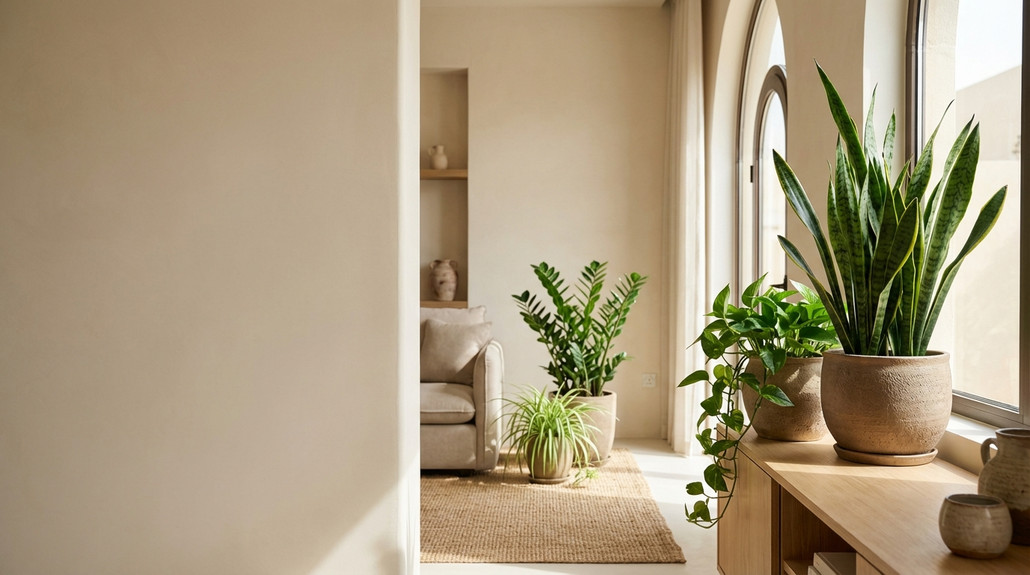
Indoor Plants That Don’t Require Constant Attention in UAE Homes
Posted by Mozher Expoerts on 03.03.26
The Harsh Reality: Nurturing Greenery in UAE Homes
For many in the UAE, the desire to bring the refreshing calm of nature indoors is a deeply felt one. Indoor plants offer a tangible connection to the natural world, a welcome contrast to our often-intense outdoor environment. However, cultivating thriving plants within our homes presents a unique set of challenges, distinctly different from general plant care advice found in more temperate regions. Picture a typical UAE home during our long, scorching summers: intense sunlight streams through windows, while inside, the indispensable air conditioning system—often called the AC or locally, the السبلت—hums continuously to provide essential comfort.
This stark contrast between the fiery heat outside and the cool, dehumidified air within creates a profoundly challenging microclimate for our cherished indoor plants. The continuous operation of the السبلت actively strips moisture from the air, resulting in an exceptionally dry indoor atmosphere. Most tropical indoor plants naturally thrive in humidity levels between 40-60%. In a constantly air-conditioned space, these levels frequently drop below 30%. This relentless dryness, coupled with potential cold drafts from AC vents and the pervasive fine dust that often settles on foliage, presents an unseen battleground for even the most resilient flora. As a senior indoor-plant specialist and horticulture educator at Mozher, I've observed countless plant owners in the UAE struggle, often with the best intentions, because their care routines don't adequately account for these specific local realities. Plants often endure significant stress during their journey from the nursery to their new home, and the mineral content in local tap water can also add layers of complexity. This guide aims to bridge that gap, offering climate-aware recommendations to ensure your chosen low-maintenance indoor plants not only survive but genuinely flourish within the specific conditions of your UAE home, leading to healthier plants, fewer losses, and a truly vibrant indoor oasis.
Understanding Neglect Tolerance: What Makes an Indoor Plant Truly Low-Maintenance in the UAE?
In the demanding indoor climate of the UAE, the term "low maintenance indoor plants" isn't merely a convenience; it's a critical characteristic for plant survival and long-term health. These aren't delicate specimens requiring constant pampering, but rather robust, adaptable species with an inherent resilience. They possess specific biological traits that allow them to withstand periods of neglect tolerant conditions, adapt to fluctuating indoor environments, and truly thrive with a minimal, yet mindful, care routine. When we speak of selecting indoor plants that tolerate neglect in UAE homes, we are specifically looking for attributes such as strong drought tolerance, the ability to flourish in indirect or even low light tolerance conditions, robust foliage that naturally resists common pests in dry air, and a natural hardiness that allows them to recover easily from minor environmental shifts. These are truly hardy plants, making them ideal beginner plants for anyone starting their green journey in the UAE.
Key Biological Adaptations for Arid Environments
These truly low-maintenance species often come equipped with ingenious natural adaptations. Some store water in thick, succulent leaves or stems, acting like living reservoirs, while others possess waxy coatings that reduce moisture loss. Their root systems are often more efficient at absorbing water from drier soils, and their metabolic rates can slow down during periods of stress, conserving energy. These are the plants that will not severely punish you for occasionally forgetting a watering session or for a brief disruption in your minimal routine. They certainly appreciate consistency, but they are remarkably forgiving when life gets busy. They are less susceptible to the drying effects of constant AC air, can manage with less frequent dusting, and often require infrequent repotting. Choosing plants with these intrinsic characteristics from the outset is the most crucial step toward long-term success and a flourishing indoor garden with minimal effort. This approach helps prevent the common cycle of initial enthusiasm followed by frustration and plant loss, providing a sustainable way to enjoy greenery in your living space. Mozher carefully curates exceptionally hardy indoor plants, specifically chosen for their proven ability to thrive in challenging environments like those found throughout the UAE.
Top Low-Maintenance Indoor Plants That Flourish in UAE Homes
The secret to a thriving indoor garden in the UAE lies in selecting species inherently suited to withstand our high temperatures, the low humidity caused by constant air conditioning, and potentially inconsistent care. These are the low maintenance indoor plants that offer maximum beauty with minimal fuss, making them perfect companions for busy households. Here are some of the most reliable choices that consistently prove their resilience as indoor plants in UAE homes:
Snake Plant (Sansevieria trifasciata): The Indestructible Architectural Accent
The Snake Plant, widely recognized as Mother-in-Law's Tongue, truly sets the gold standard for an exceptionally resilient indoor plant. Its distinctive upright, sword-like leaves are not only aesthetically striking, adding a modern, sculptural element to any room, but they are also incredibly efficient natural reservoirs, adept at storing water for extended periods. This remarkable ability allows the plant to thrive for weeks, or even months, without needing frequent watering, making it practically immune to the dry air created by constant AC. What makes it even more appealing for spaces with limited or fluctuating light is its extraordinary versatility across various light levels; it flourishes equally well in dimly lit corners as it does in bright, indirect light. This adaptability makes it an exceptional choice for various spots within a UAE home, including those challenging deep interior rooms or hallways. The most common pitfall with a Snake Plant is, ironically, overwatering, which can rapidly lead to root rot. Its needs are genuinely minimal, typically requiring only an occasional wipe-down of its leaves to ensure efficient light absorption and to combat the pervasive fine dust often found indoors. This plant embodies the very essence of a truly neglect tolerant companion, ideal for any busy lifestyle in the UAE.
ZZ Plant (Zamioculcas zamiifolia): Effortless Elegance in Dimly Lit Spaces
If your quest is for an indoor plant that is nearly impossible to compromise, even in persistently challenging low light conditions, the ZZ Plant is your definitive answer. Its signature glossy, dark green leaves emerge gracefully from large, potato-like rhizomes, which are cleverly concealed beneath the soil surface. These rhizomes function as natural water batteries, enabling the plant to endure remarkably long periods of drought tolerance with exceptional ease. This inherent resilience makes it an ideal choice for busy individuals, frequent travelers, or anyone who tends to occasionally forget their watering routine. The ZZ Plant truly excels in consistently low-light tolerant plants, positioning it as a perfect candidate for deeper interior rooms or apartments where natural illumination is inherently limited. It remains completely unfazed by the dry airflow from AC units, showing no visible signs of stress or discomfort. Its characteristically slow, steady growth rate means it will maintain its elegant form without quickly outgrowing its designated space, thus requiring minimal pruning or repotting for many years. For any UAE home space that demands an enduring touch of stylish greenery, even in the dimmest conditions and through prolonged periods of inattention, this plant is a prime candidate for low maintenance indoor plants in UAE.
Pothos (Epipremnum aureum): The Forgiving Trailing Adaptable
Often endearingly referred to as "Devil's Ivy," the Pothos is an incredibly versatile and remarkably forgiving trailing plant, making it a standout choice for indoor plants UAE homes. While it does appreciate more consistent moisture compared to the Snake or ZZ Plant, its most significant virtue lies in its unequivocal communication: its vibrant leaves will visibly begin to droop when the plant is thirsty, providing an unmistakable signal that it needs attention. Crucially, it quickly revives and perks up once thoroughly hydrated, removing much of the guesswork from the watering process. This clear feedback mechanism makes it an excellent, beginner-friendly option. Pothos demonstrates impressive adaptability across a broad spectrum of light levels, ranging from low-light corners to brighter, indirect light, and it copes commendably with the average dry indoor air found in AC-cooled environments. Its relatively fast growth rate offers dynamic greenery; they can be left to cascade elegantly from shelves or hanging planters, adding a sense of abundance and natural charm to any space with minimal ongoing fuss. This inherent flexibility and resilience firmly establish Pothos as a reliable and aesthetically pleasing addition to virtually any UAE indoor setting.
Cast Iron Plant (Aspidistra elatior): The Ultimate Survivor
True to its name, the Cast Iron Plant is almost indestructible, making it an ideal candidate for even the most challenging indoor conditions in the UAE. It is famously tolerant of very low light, infrequent watering, and even prolonged periods of neglect, thriving where many other plants would simply give up. Its dark green, leathery leaves are resilient to the dry AC air and dust, requiring minimal attention beyond an occasional wipe to keep them shiny. The slow growth rate of the Cast Iron Plant means it will maintain its elegant, upright form without needing frequent repotting or pruning, making it a truly "set-it-and-forget-it" option. Its non-toxicity also makes it a safe choice for homes with pets or children. For those seeking a long-lasting, robust green presence in a particularly dark or overlooked corner in their home, the Cast Iron Plant is a superb choice, renowned for its incredible hardiness and its ability to be a truly neglect tolerant plant.
Spider Plant (Chlorophytum comosum): Air Purifier and Pet-Friendly Pick
The Spider Plant retains its classic status for excellent reasons: it is remarkably easy to care for and produces charming "spiderettes" that can be effortlessly propagated, adding a delightful and interactive element to any home. Its adaptability to various light levels, from bright indirect to medium light, makes it a flexible choice for different areas within a UAE home, though it typically flourishes best with consistent indirect light for optimal leaf coloration. While it enjoys slightly more humidity than some of the arid-adapted plants on this list, it tolerates the dry UAE indoor air reasonably well and is quite forgiving of an inconsistent minimal routine watering schedule. Beyond its aesthetic appeal and ease of care, the Spider Plant is highly regarded for its air-purifying qualities, actively helping to remove common indoor toxins from the environment, thereby contributing to a healthier living space. Furthermore, and of significant importance for many households, it is non-toxic to both pets and children, making it a fantastic choice for family-friendly homes. Mozher selects many pet-safe indoor plants to ensure a harmonious and secure environment for all.
Beyond Watering: A Minimal Yet Mindful Care Routine for Resilient Plants
While these plants are chosen for their resilience and reputation as low maintenance indoor plants, the label "low maintenance" does not mean "no maintenance." It implies a simple, but mindful, minimal routine that respects their natural adaptations. In the UAE home, this routine needs to specifically counteract the drying effects of the السبلت and the accumulation of fine dust.
Light Exposure: Finding the Sweet Spot in UAE Homes
Even plants with strong low light tolerance need some illumination to photosynthesize. Observe how sunlight moves through your rooms. Intense, direct sun through a window, especially during the UAE's summer, can easily scorch delicate leaves, leaving them bleached or with crispy brown patches. On the contrary, too little light will result in leggy, sparse growth and pale foliage. The ideal is generally bright, indirect light. This often means placing the plant a few feet back from a bright window or using sheer curtains to diffuse harsh rays. For naturally darker areas, relying on low-light tolerant plants from the outset is a more sustainable strategy. Rotate your plants a quarter turn every few weeks to ensure even light exposure on all sides.
Dusting for Plant Health: The Unsung Hero of Care
In the UAE, fine dust is a common indoor challenge. When dust settles thickly on plant leaves, it can effectively block the stomata (tiny pores) and hinder photosynthesis, the crucial process by which plants convert light into energy. Regularly wiping down leaves with a soft, damp cloth is a simple yet crucial task. This allows the plant to "breathe" more effectively and absorb light optimally. It’s a quick addition to your routine that makes a significant difference to your plant's overall health and vigor in our dusty climate, preventing the plant from being suffocated by airborne particles.
Occasional Fertilizing: Less is Often More
For low maintenance indoor plants, consistent over-fertilization is far more detrimental than under-fertilization. These resilient species do not typically require intensive feeding. During their active growing season (usually spring and summer, but observe your plant's specific growth), a diluted, balanced liquid fertilizer applied every 2-4 weeks is generally sufficient. Always ensure the soil is moist before fertilizing to prevent root burn. During the intense summer heat or winter months when growth naturally slows, cease fertilization entirely. Mozher offers a range of quality potting mixes and care essentials, including appropriate fertilizers, to support healthy growth when needed.
Red Flags: When You’re Doing Too Much (Or Too Little)
Understanding the signals your plant sends is paramount to preventing problems before they become serious. Often, well-meaning owners inadvertently cause plant stress by over-caring. Here's how to recognize common issues in UAE indoor environments, ensuring your low maintenance indoor plants thrive:
Overwatering: The Silent Killer in AC Environments
This is arguably the most common mistake in UAE homes. In AC-cooled interiors, the soil dries out much slower than outside due to reduced evaporation. Yellow, soft, mushy lower leaves, a consistently wet potting mix, or the presence of tiny flying insects (fungus gnats) are classic signs of overwatering. Root rot can quickly set in if the plant sits in stagnant water. Always use the "finger test" (insert your finger 5-7 cm or 2-3 inches deep into the soil); only water if it feels dry completely. This underscores the importance of choosing pots with proper drainage.
Underwatering: Less Common, But Still a Threat
While overwatering is more frequent, underwatering can also occur, especially with exceptionally drought tolerant plants where owners might become too neglectful. Signs include dry, crispy, and brittle leaves (often starting from the tips and edges), bone-dry soil that pulls away from the pot, and general drooping or wilting. The solution is simple: water thoroughly until water drains from the bottom. For severely dehydrated plants, bottom-watering (leaving the pot in a tray of water for 30 minutes) can be effective. A reliable moisture meter can help prevent both extremes by providing accurate soil moisture readings, crucial for healthy indoor plants UAE.
Over-Fertilizing: Burning with Good Intentions
A struggling plant is often sick or stressed, not hungry. Applying fertilizer to an unhealthy plant can exacerbate issues, especially with the mineral content in local tap water leading to salt buildup. Signs of over-fertilization include crispy brown leaf tips and edges (similar to low humidity, but often more severe), stunted growth, and white crusts on the soil surface or pot rim. If you suspect over-fertilization, flush the soil thoroughly with distilled or filtered water to leach out excess salts, then avoid fertilizing entirely until the plant shows signs of active, healthy growth.
Incorrect Light Placement: Scorched or Starved
Leaves that appear bleached, washed out, or yellow, or have crispy brown spots, often suffer from too much direct, harsh sunlight. Conversely, pale, elongated stems, smaller leaves, and a plant visibly leaning towards the window indicate insufficient light. These problems can be corrected by adjusting the plant's position or using sheer curtains to diffuse the light. Selecting low-light tolerant plants that naturally align with your available illumination is crucial for their success.
Scenario-Based Plant Picks for Every Corner of Your UAE Home
Choosing the ideal indoor plant means aligning its needs with the specific conditions and requirements of a particular spot in your home. Here's a guide to help you select the perfect low-maintenance indoor plants for different scenarios:
For Areas with Bright, Indirect Light
- Pothos (Epipremnum aureum): Its vibrant, trailing foliage thrives here, and it's very forgiving if you occasionally forget to water. It signals its thirst clearly by drooping leaves, and quickly revives once hydrated.
- Spider Plant (Chlorophytum comosum): Produces charming "spiderettes" and flourishes in consistent bright indirect light, adding a classic touch to shelves or hanging baskets while purifying the air. These are truly hardy plants.
For Shady Corners and Low Light
Many UAE apartments have areas that receive very little natural light due to architectural design or heavy curtains. These spots do not have to be plant-free.
- ZZ Plant (Zamioculcas zamiifolia): A true champion of low light tolerance, the ZZ Plant maintains its glossy appearance even in dimly lit rooms and tolerates prolonged drought with ease. It's a prime example of a neglect tolerant plant.
- Snake Plant (Sansevieria trifasciata): Incredibly adaptable, it will endure low light conditions with grace, making it ideal for those forgotten corners. This is a hardy plant with minimal routine care.
- Cast Iron Plant (Aspidistra elatior): As its name suggests, it's exceptionally tough and will tolerate even the darkest corners without complaint, requiring minimal attention, making it a true neglect tolerant plant.
For Busy Lifestyles (Truly Neglect Tolerant)
Life in the UAE can be demanding, and sometimes plant care slips down the priority list. These are the hardy plants that thrive on minimal attention.
- Snake Plant (Sansevieria trifasciata): Can go for weeks without water and is completely unfazed by dry AC air, making it an ultimate neglect tolerant choice, one of the best low maintenance indoor plants.
- ZZ Plant (Zamioculcas zamiifolia): Stores water efficiently in its rhizomes, making it incredibly drought tolerant and perfect for frequent travelers or those with very little time for plant care.
- Cacti and Succulents: If you have a sunny windowsill, these are the ultimate drought tolerant, low-commitment solution, requiring minimal watering and thriving in dry conditions. They are well-known for their inherent hardiness.
For Homes with Pets & Children (Non-Toxic)
Safety is paramount when curious pets or small children are part of the household. Fortunately, many resilient plants are also non-toxic.
- Spider Plant (Chlorophytum comosum): A classic, non-toxic choice that also helps purify the air, producing delightful "spiderettes" for easy propagation.
- Cast Iron Plant (Aspidistra elatior): Extremely hardy and completely safe for your furry and little family members, offering a robust green presence.
- Areca Palm (Dypsis lutescens): A larger, elegant option that is pet-safe and adds a tropical touch. You can explore more options in Mozher’s pet-safe indoor plants collection to ensure a harmonious and secure environment for all.
What to Avoid: Plants That Will Struggle in UAE Homes
While the allure of exotic and delicate plants can be strong, some species are simply not suited for the unique indoor climate in the UAE. Attempting to grow these plants often leads to frustration and disappointment, despite your best efforts. It's best to avoid plants that demand consistently high humidity levels, very frequent watering, or overly stable temperatures, as these conditions are difficult to maintain in our AC-dependent environment without significant, constant effort.
High-Humidity Lovers (e.g., Ferns, Calatheas, Fittonias)
Many popular tropical plants, such as most varieties of ferns (like Maidenhair Ferns), Calatheas, and Fittonias, thrive in consistently high humidity levels, often above 60-70%. The dry air generated by the السبلت in UAE homes makes maintaining such elevated humidity a constant battle, leading to tell-tale symptoms like crispy brown leaf tips and edges, stunted growth, and general decline. While humidifiers can provide some assistance, it's often a losing battle that requires considerable effort, which contradicts the goal of having resilient, low maintenance indoor plants. These plants are beautiful undoubtedly, but they often demand more specialized care than most average plant enthusiasts in the UAE can realistically provide.
Constantly Thirsty Plants (e.g., Ficus Lyrata, many varieties of Coleus)
Plants that demand constantly moist soil are particularly problematic in AC-controlled environments. Even if you diligently water them frequently, the paradox of slow evaporation in the cool indoor air can quickly lead to overwatering and subsequent root rot if the soil doesn't dry out sufficiently between watering sessions. Beloved plants like the Fiddle Leaf Fig (Ficus lyrata) are notoriously temperamental about their watering frequency, often suffering from rapid yellowing and leaf drop if conditions aren't absolutely perfect. Opting for species that prefer their soil to dry out somewhat between waterings significantly minimizes the risk of root-related issues and aligns much better with the dry air prevalent in low maintenance indoor plants UAE homes.
Temperature-Sensitive Delicates (e.g., African Violets, Orchids without proper setup)
While most plants dislike extreme temperature fluctuations, some are exceptionally sensitive to drafts. Delicate flowering plants like African Violets or certain orchids can be severely impacted by direct, cold blasts from AC vents. These plants require very consistent, mild temperatures and very specific humidity levels that are incredibly challenging to replicate without a dedicated, controlled setup (such as a mini-greenhouse). While not entirely impossible to grow, doing so successfully in the UAE often demands a level of meticulous environmental control that far exceeds what most casual plant enthusiasts are looking for, invariably leading to high maintenance requirements and frequent losses.
Making Your Smart Choice: A Mozher Selection Rule
The journey to selecting the perfect low-maintenance indoor plants for your UAE home is ultimately about thoughtful alignment between the plant's inherent needs and your specific living environment. It requires an honest assessment of your space and your capacity for care. If your home features consistently low light and you tend to forget watering occasionally, then a ZZ Plant or Snake Plant would be exceptionally forgiving choices, requiring minimal intervention. For those who appreciate dynamic trailing beauty and a plant that communicates its thirst clearly, the Pothos is an adaptable and rewarding companion. If you have a bright, sunny windowsill and prefer a minimalist aesthetic with extreme drought tolerance, cacti and succulents are ideal. And if pet/child safety is paramount, the Cast Iron Plant and Spider Plant are excellent non-toxic options. Always consider your actual conditions and lifestyle rather than aspirational ones when choosing your next green companion.
At Mozher, our comprehensive collection of indoor plants is chosen with the UAE’s unique climate in mind, ensuring you have the best possible start for your green journey. We focus on offering resilient indoor plants that are selected for their ability to thrive in challenging conditions. Remember that cultivating resilient, healthy indoor plants in the UAE is a rewarding endeavor that brings peace and natural beauty to your home for years to come. By understanding the challenges of heat and the السبلت, and choosing plants that are naturally suited to these conditions, you set yourself up for lasting success. Focus on consistent, mindful care rather than excessive intervention, and your plants will flourish. Don't forget that the right foundation begins with pots with proper drainage and quality potting mixes and care essentials to provide your plants with the best possible start.
Frequently Asked Questions
How often should I really water indoor plants in an AC-cooled environment in the UAE?
Forget rigid watering schedules like "once a week." In the UAE's climate, with constant AC (السبلت), it's crucial to water based on actual soil moisture, not a calendar date. Insert your finger 5-7 cm (2-3 inches) into the soil; if it feels completely dry, then water thoroughly until it drains from the bottom. This could be as infrequent as once every 3-6 weeks for some exceptionally hardy plants like Snake Plants or ZZ Plants. Overwatering is the biggest risk, as the cool indoor air significantly slows evaporation. Using a reliable moisture meter is highly recommended for accurate assessment.
What are the signs of low humidity stress on indoor plants in the UAE’s dry, AC environment?
Low humidity stress, common in UAE homes with continuous AC use, typically manifests as crispy, brown leaf tips and edges, even if the soil is adequately moist. Leaves may also curl inward or droop as the plant attempts to conserve moisture. Some plants, especially those with thinner foliage, may also develop yellowing between the veins. If you notice these symptoms, consider grouping plants to create a localized microclimate with slightly higher humidity or using pebble trays with water beneath the pots (with care to ensure the pot bases do not sit directly in standing water). Moving plants away from direct AC vents is also vital. For additional insights on general plant care, consider resources like the Clemson University Home & Garden Information Center.
Are there any truly pet-safe low-maintenance indoor plants for homes with children and pets in the UAE?
Yes, absolutely. For homes with curious pets or small children, ensuring plant safety is a top priority. Excellent low-maintenance and non-toxic options that thrive in UAE indoor conditions include the Spider Plant (Chlorophytum comosum) and the Cast Iron Plant (Aspidistra elatior). While the Areca Palm is also pet-safe, it typically requires a bit more humidity, so keep it away from direct AC blasts. It's always wise to research any new plant thoroughly before introducing it to your home. Mozher specifically focuses on curating pet-safe indoor plants to ensure a harmonious and secure environment for all.
How does delivery stress impact newly acquired indoor plants in the UAE, and how can I mitigate it?
Plants often endure significant "delivery stress" during their journey from the nursery to a new home in the UAE, due to abrupt changes in light, temperature, and humidity. To mitigate this, provide a stable and consistent environment for new arrivals. Place them initially in a spot with bright, indirect light, well away from direct AC drafts or harsh sun. Avoid immediate repotting or heavy fertilization for the first few weeks. This gentle acclimation allows the plant to adjust peacefully, allocating its energy to adapting to its new surroundings rather than recovering from further shock. Mozher specifically focuses on resilient indoor plants chosen for their ability to recover from environmental shifts and ensures safe delivery.
Are certain pests more common in the UAE’s dry, AC-cooled indoor environments, especially for low-maintenance plants?
Yes, in the UAE’s dry, AC-cooled indoor environment, spider mites are a very common pest that can cause yellowing or speckling on leaves. They thrive in low humidity and can rapidly cause significant damage, often accompanied by fine, delicate webbing on the undersides of leaves. Other potential pests like mealybugs and fungus gnats can also contribute to plant stress and yellowing. Regular inspection of your indoor plants, especially the undersides of leaves, is your best defense against these unwelcome guests. Early detection and prompt, appropriate action are crucial for effective control. For comprehensive pest management strategies, you can review resources from reputable botanical gardens, such as the Missouri Botanical Garden's plant care guides.