


Indoor Plants That Survive Neglect and Irregular Care in Iraq Homes
Posted by Mozher Experts on 20.02.26
Why Plants Fail in Iraq Homes (It’s Not Just Neglect)
Many people ask for low maintenance indoor plants because they are busy, travel often, or simply forget to water. In Iraq, however, plant loss is rarely caused by neglect alone. It is usually a mix of extreme outdoor heat, constant AC use, and irregular watering patterns.
During summer, temperatures outside can exceed 45°C. Indoors, the split AC runs for long hours, creating dry, cool air that pulls moisture from leaves and soil. A plant that would survive mild neglect in another country may struggle here if placed directly under an AC vent or next to a sun-heated window.
This is why choosing the right indoor plants Iraq homes can realistically support is critical. Low effort does not mean zero care. It means selecting hardy plants that tolerate inconsistent watering, fluctuating light, and dry air without collapsing.
If you want a broader overview of reliable options, review this curated guide to low maintenance indoor plants for hot climates. The key is matching plant tolerance to your actual environment, not an ideal one.
What Makes a Plant Truly Neglect-Tolerant?
Not all so-called beginner plants are equal. A truly hardy plant for Iraq homes has at least three of the following traits: drought tolerance, low light tolerance, slow growth, and thick or waxy leaves.
Drought Tolerance
Plants with thick stems or leaves store water. This allows them to handle missed watering cycles. Succulent-type structures or rhizomes act as reserves, buying you time if you forget.
Low Light Flexibility
Many apartments rely on filtered light or artificial lighting. Plants that demand direct sun often scorch behind glass or dry out too quickly. Look for species that adapt to low light indoor conditions without becoming weak or leggy.
Slow Growth
Fast-growing plants need more water, nutrients, and pruning. Slow growers are easier. They stay compact and require minimal routine.
If you want a shortcut, start within collections grouped by ease of care for beginners. These are typically selected for resilience, not just appearance.
Five Reliable Choices That Handle Irregular Care
The following plants consistently perform well in AC-heavy homes when basic placement rules are respected.
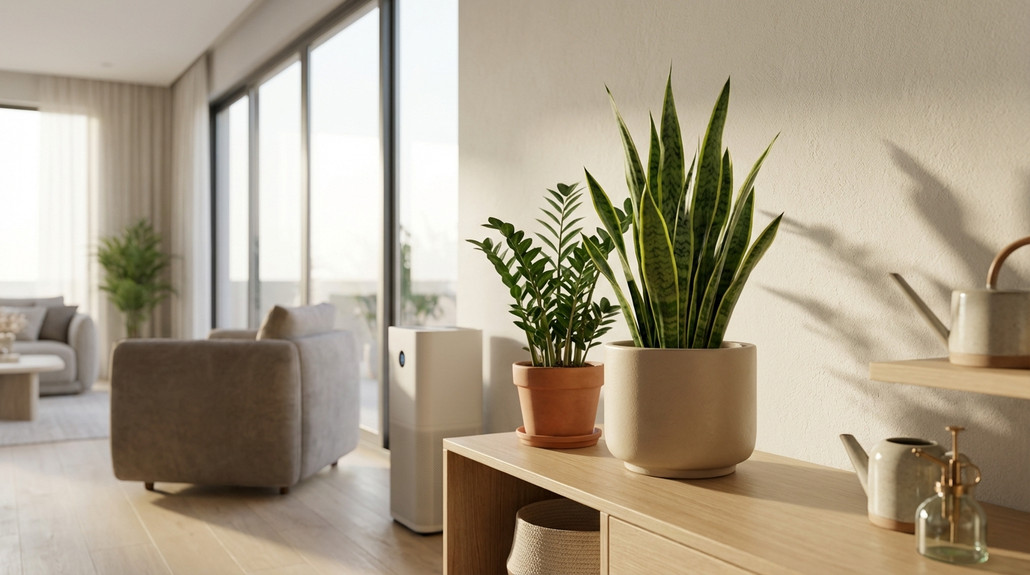
Snake Plant (Sansevieria)
This is one of the most drought tolerant options available. Thick upright leaves store water and tolerate missed watering for weeks. It handles low light and artificial light, making it suitable for bedrooms and offices. Avoid overwatering. That is the main cause of failure.
ZZ Plant (Zamioculcas zamiifolia)
With waxy leaves and underground rhizomes, the ZZ plant thrives on neglect. It tolerates low light and irregular watering. However, placing it under direct AC airflow can cause leaf dullness. Keep it slightly away from vents.
Pothos
Pothos adapts well to varying light levels. It shows visible drooping when thirsty, which helps beginners correct mistakes early. In Iraq homes, it performs best in bright indirect light, not direct sun.
Peace Lily
Although it prefers moderate watering, it clearly signals thirst by drooping dramatically, then recovering after watering. This feedback makes it manageable for inconsistent routines.
Cast Iron Plant
True to its name, this plant tolerates low light, dry air, and irregular care. It grows slowly and is well suited for shaded corners.
You can explore similar resilient options within curated indoor plant collections adapted for regional homes.
The Minimum Care Routine That Keeps Them Alive
Low maintenance indoor plants still require structure. The routine can be simple, but it must be consistent.
- Check soil dryness before watering. Insert your finger 3–5 cm deep. If still moist, wait.
- Water thoroughly, then allow excess to drain completely.
- Keep plants away from direct AC airflow.
- Rotate pots every few weeks for even light exposure.
Many losses come from guessing soil moisture. A simple tool like a soil moisture meter for accurate watering removes that guesswork and prevents overwatering, which is more dangerous than underwatering in this climate.
For containers, choose breathable pots with drainage from this practical range of indoor pots with proper drainage. Decorative pots without drainage are a common mistake.
Signs You Are Doing Too Much
In Iraq, overcare is often the bigger issue. People see dry air and assume plants need daily watering. They do not.
Yellowing Lower Leaves
This often signals overwatering, not dryness. Roots need oxygen. Constantly wet soil suffocates them.
Soft or Mushy Stems
This is advanced root rot. It happens when soil stays wet under AC conditions where evaporation is slower than expected.
White Crust on Soil Surface
Salt buildup from frequent watering with mineral-rich water can accumulate. Flush the soil occasionally with distilled or filtered water if possible.
Fertilizer should be minimal. During extreme summer heat or peak AC use, feeding can stress plants rather than help them.
Best Picks by Room and Lifestyle
Matching the plant to the room reduces failure dramatically.
For Desks and Offices
Snake plant and ZZ plant tolerate artificial lighting and irregular office schedules. They are ideal for workspaces categorized under office-friendly indoor greenery.
For Bedrooms
Choose compact, low light tolerant plants. Avoid placing them directly under the AC. Indirect corner placement works better.
For Living Rooms with Bright Windows
Pothos and other trailing plants thrive in bright indirect light. Sheer curtains help filter harsh afternoon sun.
For Busy Families or Frequent Travelers
Stick to slow growers with water storage capacity. Avoid delicate flowering varieties that demand regular feeding and consistent moisture.
A Simple Rule That Prevents Most Plant Loss
If you remember one principle, make it this: choose hardy plants first, then reduce intervention. In Iraq’s climate, survival depends more on restraint than effort.
Select drought tolerant species. Place them away from direct AC airflow. Water only when the soil is clearly dry. Avoid frequent fertilizer. Observe before reacting.
Low maintenance indoor plants are not indestructible, but they are forgiving. When chosen correctly and placed wisely, they tolerate irregular care and still look stable for years. The goal is not perfection. It is steady survival in a demanding indoor climate.
Frequently Asked Questions
How often should I water low maintenance indoor plants in Iraq?
In most AC environments, every 10–21 days is typical, depending on light and pot size. Always check soil dryness instead of following a fixed calendar.
Can these plants survive with only artificial light?
Yes, certain species like snake plant and ZZ plant tolerate artificial lighting well. However, complete darkness will still cause decline over time.
Are low maintenance plants suitable for beginners?
Yes. Their drought tolerance, slow growth, and resilience make them ideal beginner plants. They provide visual feedback before serious damage occurs.
What is the biggest mistake people make?
Overwatering. In Iraq homes with strong AC, soil may appear dry on top but remain wet deeper down. Always check below the surface before watering.