


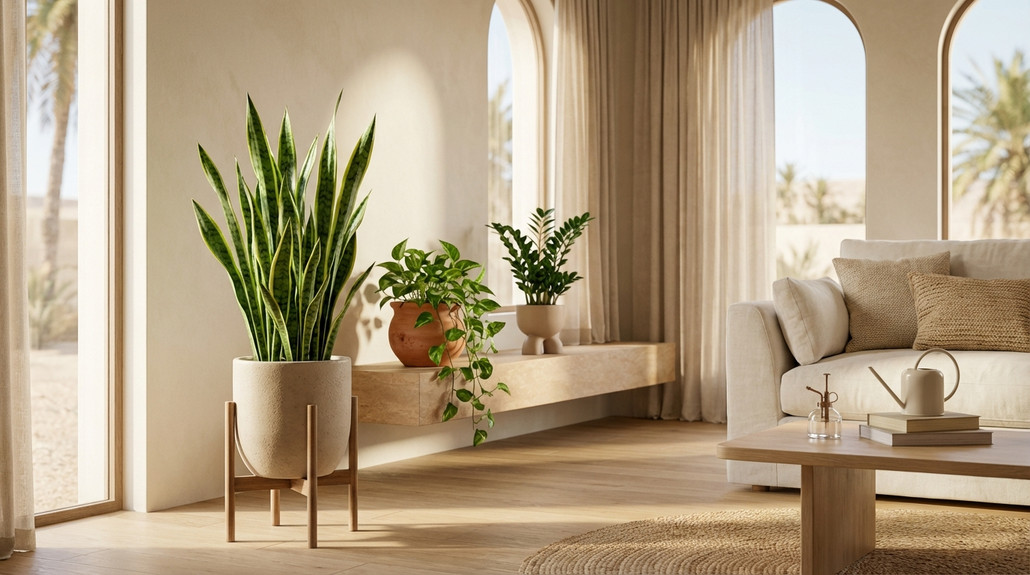
Indoor Plants That Survive Neglect and Irregular Care in Iraq Homes
Posted by Mozher Experts on 22.02.26
The Reality of Plant Care in an Iraqi Climate
Keeping indoor plants alive in Iraq presents a unique challenge. The environment inside our homes is often a series of extremes. Outside, the summer heat is intense. Inside, the air conditioning runs constantly, creating a cool but very dry atmosphere. This rapid shift from outdoor heat to indoor cold, combined with low humidity from the AC, can stress or kill most standard houseplants. Furthermore, dust is a constant factor that can coat leaves, blocking light and hindering the plant's ability to breathe. The goal is not to find a plant that thrives on complete neglect, but to select one that is genetically suited to tolerate these specific conditions: infrequent watering, lower light levels, and dry air. A truly low maintenance indoor plant is one that aligns with our environment, not one that requires us to constantly fight against it.
Characteristics of a Truly Resilient Houseplant
Certain traits make a plant exceptionally hardy and suitable for a busy lifestyle in a challenging climate. Understanding these characteristics helps in making the right choice. First is drought tolerance. Plants that store water in their leaves, stems, or rhizomes (underground stems) are ideal. They have a built-in reservoir, allowing them to survive for weeks without water, which is perfect for those who travel or forget to water. Second is low light adaptability. Many homes in Iraq use heavy curtains to block out the summer sun, resulting in lower indoor light levels. Plants that naturally grow in the understory of forests are pre-adapted to these conditions. They do not require placement in a bright, sunny window to survive. Finally, look for plants with tough, waxy leaves. This feature helps the plant retain moisture by reducing transpiration, making them less susceptible to the dry air produced by constant air conditioning. These plants are structurally built for survival in less-than-ideal conditions.
Top Choices for Minimal Effort
Based on decades of experience with plants in this region, a few species consistently outperform others in their ability to withstand irregular care. These are the plants we recommend when a client needs something truly robust.
The Snake Plant (Sansevieria trifasciata)
Also known as Mother-in-Law's Tongue, this is perhaps the most indestructible houseplant available. Its thick, upright leaves are excellent at storing water, making it extremely drought-tolerant. You can leave for a month and it will likely be fine. It tolerates a vast range of light conditions, from the dim corners of a living room to brighter spots (though it dislikes intense, direct sun). Its vertical growth habit makes it suitable for tight spaces. Furthermore, it is one of the few plants that performs CAM photosynthesis, releasing oxygen at night, making it an excellent choice for bedrooms.
The ZZ Plant (Zamioculcas zamiifolia)
The ZZ plant is the definition of a neglect-tolerant plant. It has large, water-storing rhizomes beneath the soil, resembling small potatoes. This system allows it to survive prolonged periods of drought. Its naturally glossy, waxy leaves are not just for appearance; they prevent moisture loss in the dry air of an air-conditioned room. The ZZ plant is also known for its tolerance of very low light environments, making it perfect for offices or rooms with few windows. Its slow growth means it will not quickly outgrow its pot, requiring minimal intervention.
The Pothos (Epipremnum aureum)
Often called Devil's Ivy, the Pothos is a forgiving vine that communicates its needs clearly. While it prefers its soil to dry out between waterings, its leaves will visibly droop when it is thirsty, removing the guesswork. It is highly adaptable to different light levels, though it may lose some leaf variegation in lower light. Pothos is fast-growing and easy to propagate. Its trailing nature makes it versatile for hanging baskets or shelves. It is an excellent choice for beginners who want a plant that provides clear visual cues about its care requirements.
The Absolute Minimum Care Routine
Low maintenance does not mean no maintenance. It means a forgiving routine that does not demand daily attention. For the plants listed above, a simple and effective schedule is all that is required. First, check the soil. Do not water on a fixed schedule like "once a week." Instead, check the soil every two to three weeks. Insert your finger about two inches deep; if it is completely dry, it is time to water. Water thoroughly until it drains from the bottom of the pot, then discard the excess water. Do not let the plant sit in a saucer of water. Second, manage dust. Once a month, wipe the leaves with a damp cloth. Dust accumulation in our region is heavy and can block sunlight, effectively starving the plant. This simple act keeps the leaves clean and allows for proper photosynthesis. Finally, leave it be. These plants resent being moved constantly. Find a suitable spot and let them acclimate. They do not require frequent feeding; a diluted fertilizer application once or twice during the spring and summer growing season is sufficient.
Signs You Are Caring Too Much
For hardy indoor plants, more problems are caused by excessive care than by neglect. Overwatering is the most common mistake. Yellowing leaves and a soft, mushy base are classic signs of root rot from too much water. A healthy, drought-tolerant plant should have firm roots and soil that is allowed to dry out completely. If the soil is perpetually damp, you are watering too often. Another sign of over-attentiveness is "fertilizer burn." If you notice brown, crispy leaf edges or stunted growth after fertilizing, you may have used too much. These plants have low nutrient requirements. Finally, frequent repotting is unnecessary. Resilient, slow-growing plants like the ZZ or Snake Plant prefer to be slightly root-bound. Repotting them into a much larger container too soon can lead to the soil staying wet for too long, again promoting root rot. It is better to let them fill out their pot before considering an upgrade. You can find a variety of suitable pots and soil mixtures that promote proper drainage.
Best Placements for Low-Effort Plants
Matching the right plant to the right location ensures it will thrive with minimal input. For a desk or small office space, a compact Snake Plant or a small ZZ Plant is ideal. These varieties require little space and tolerate the lower light often found in office and work environments. In a living room corner that doesn't receive direct sunlight, a tall Sansevieria variety can provide a strong vertical accent. For shelves or the top of a cabinet, a trailing Pothos is an excellent choice, as its vines can hang down to create a cascade of green. In the bedroom, a Snake Plant is a superb option due to its air-purifying qualities and its habit of releasing oxygen at night. The key is to avoid placing these plants in direct, harsh sunlight, which can scorch their leaves, and to keep them away from direct drafts from the AC vents. Our full collection of resilient indoor plants offers options for every room and light condition.
A Simple Rule for Success
The single most important principle for succeeding with low maintenance plants is to choose a plant that fits your existing environment and lifestyle, rather than trying to change your habits for the plant. Be realistic about the light in your home and how often you will remember to water. If you have a dim corner and a busy schedule, do not choose a sun-loving plant that needs constant moisture. Instead, select a ZZ Plant or a Snake Plant that is naturally adapted to those conditions. By starting with the right plant, you set yourself up for a successful and effortless experience. Proper selection is the foundation of easy plant care. For more detailed guidance on specific plant needs, our expert plant care section provides valuable information tailored to our climate.
Frequently Asked Questions
How can I tell if my low-maintenance plant needs water?
Do not rely on a schedule. The most reliable method is the touch test. Insert your finger or a wooden skewer about 5 cm into the soil. If it comes out dry with no soil sticking to it, it is time to water. For plants like Pothos, you may also notice a slight drooping of the leaves. For Snake Plants and ZZ Plants, it is always better to wait another few days if you are unsure. They are far more likely to suffer from overwatering than underwatering.
Do these plants need fertilizer in Iraq's climate?
Yes, but very little. The intense heat does not mean they need more food. During the main growing season (spring and early summer), you can apply a balanced, diluted liquid fertilizer once every 6-8 weeks. Do not fertilize in the winter when growth naturally slows down. Over-fertilizing can burn the roots and damage the plant.
Will constant air conditioning harm these hardy plants?
While these plants tolerate the dry air from an AC better than most, it is still a stressor. The main danger is placing them directly in the path of the cold air draft from the unit, which can cause sudden leaf drop or browning. Position them in a part of the room that receives the ambient cool temperature but is not in the direct line of fire from the vent. Wiping the leaves to keep them dust-free also helps them function better in the dry indoor environment.