


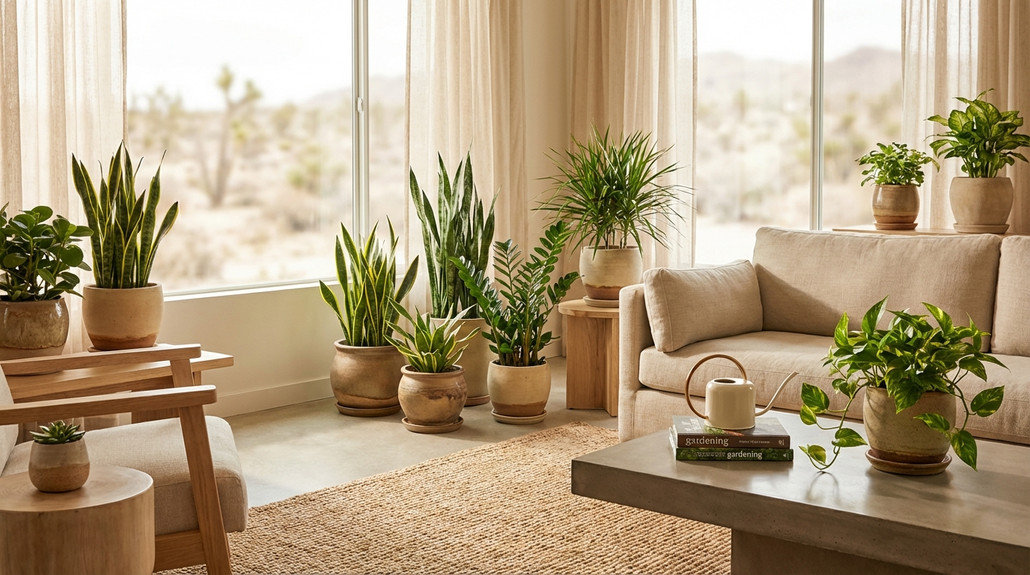
Indoor Plants That Survive Neglect and Irregular Care in Iraq Homes
Posted by Mozher Experts on 25.02.26
Understanding the Challenge of Indoor Plants in Iraq
Maintaining indoor plants in Iraq presents a unique set of challenges. The primary issue is not just the intense outdoor heat, but the extreme contrast with our indoor environments. Homes and offices rely heavily on air conditioning (the AC unit, or *sabelet*), which runs for months on end. This creates a very dry atmosphere that can stress many common houseplants. The air lacks the humidity most tropical plants need to thrive. Furthermore, dust is a constant factor, settling on leaves and blocking their ability to absorb light efficiently. The goal is to select plants that are not only forgiving of irregular watering but are also resilient enough to withstand these specific, often harsh, indoor conditions. Choosing low maintenance indoor plants is less about finding a plant you can completely ignore and more about finding one whose needs align with the reality of a busy life in a climate-controlled Iraqi home.
Core Qualities of a Truly Forgiving Plant
Certain biological traits make a plant exceptionally tolerant of neglect. Understanding these will help you make better selections. The first and most critical quality is drought tolerance. Plants like succulents, Snake Plants, and ZZ Plants have specialized root systems or leaves (rhizomes, tubers, thick waxy cuticles) that store water for long periods. This means they are far more likely to forgive forgotten watering sessions than a thirsty fern. The second quality is adaptability to varying light conditions. Many of the most resilient plants originate from forest floors, where they receive dappled, inconsistent light. This allows them to photosynthesize effectively even in a room with limited natural sun. This tolerance for lower light is a significant advantage in modern homes where not every corner is brightly lit. Finally, a slow growth rate is often linked to low maintenance. Fast-growing plants require more water, more nutrients, and more frequent pruning or repotting. A slow grower demands less from you and from its soil, remaining manageable for longer.
Top Selections for Surviving Irregular Care
Based on decades of experience with what thrives and what fails in our region, a few plants consistently prove their resilience. These are the ones we recommend when someone wants green life without the demanding schedule.
Snake Plant (Dracaena trifasciata)
Also known as Sansevieria, this is arguably the most indestructible houseplant available. Its upright, sword-like leaves are architectural and fit well in modern decor. Its resilience comes from its ability to store water in its leaves and its efficient CAM photosynthesis, which allows it to exchange gases at night to minimize water loss. It tolerates extremely low light, though it prefers indirect brightness. The primary danger to a Snake Plant is overwatering, which causes root rot. It is better to forget to water it for a month than to water it once a week. It also cleans the air, making it a functional choice for bedrooms and living spaces.
ZZ Plant (Zamioculcas zamiifolia)
The ZZ Plant is the definition of a neglect-tolerant plant. Its glossy, dark green leaves look polished and artificial, a testament to its hardiness. The plant grows from large, potato-like rhizomes that store significant amounts of water beneath the soil. This is its survival mechanism, allowing it to endure long periods of drought. Like the Snake Plant, it is highly susceptible to overwatering. It thrives in low to bright indirect light and is not fussy about humidity, making it perfect for air-conditioned rooms. Its slow growth means it will not outgrow its pot or space for years, requiring minimal intervention. For a truly hands-off experience, the ZZ Plant is an unmatched option.
Pothos (Epipremnum aureum)
Often called Devil's Ivy, Pothos is a versatile vining plant that is exceptionally easy to grow. While it appreciates more regular watering than a Snake or ZZ Plant, it is very communicative. Its leaves will visibly droop when it is thirsty, and they perk up quickly after a drink. This clear signal removes the guesswork often associated with plant care. Pothos is tolerant of a wide range of lighting conditions, from low to bright indirect light, and its trailing vines can be trained to climb or hang from a basket. It's a fast grower, but it is also extremely easy to prune and propagate, making it a rewarding choice for beginners who want to see results without high risk.
A Minimalist Routine for Hardy Plants
Caring for low maintenance indoor plants is about doing less, but doing it correctly. Forget rigid watering schedules. The most important rule is to check the soil moisture before adding any water. For drought-tolerant plants like the ZZ and Snake Plant, this means waiting until the soil is completely dry all the way through the pot. For Pothos, wait until the top two inches are dry. You can use your finger or a simple tool like a soil moisture meter to be precise. Second, clean the leaves every few weeks. In Iraq, dust accumulation is a significant problem. A layer of dust blocks sunlight and inhibits photosynthesis. Simply wipe the leaves with a damp cloth to keep them clean and healthy. Finally, avoid moving the plant unnecessarily. Plants acclimate to their environment—the light, temperature, and airflow. Constant relocation causes stress. Find a suitable spot and let it be.
Avoiding Common Care Mistakes
With resilient plants, more harm is done by too much attention than too little. Overwatering is the single most common reason these plants fail. Their root systems are not designed to sit in constantly moist soil, which leads to rot, a condition from which it is difficult to recover. Always err on the side of underwatering. Another mistake is providing too much direct sun. While these plants are adaptable, most hardy indoor species are native to environments where they receive filtered light. Placing them in the path of intense, direct Iraqi sun through a window will scorch their leaves. Bright, indirect light is sufficient. Lastly, resist the urge to fertilize frequently. Slow-growing, low-demand plants require very few nutrients. Fertilizing more than once or twice during the main growing season can burn the roots and do more harm than good. Mastering a proper plant care regimen for these species is about restraint.
Choosing the Right Plant for Your Space
The location within your home or office dictates the best choice. For a dim corner or a hallway with no windows, a ZZ Plant or a Snake Plant are the most reliable options from our collection of plants that tolerate low light. They will survive, and even maintain their appearance, with minimal natural light. For a desktop or a shelf in a brighter room, a Pothos is an excellent choice. Its trailing nature adds a dynamic element, and it is compact enough for smaller surfaces. Many of our clients find success with these in their workspaces, and we have curated a selection of ideal plants for office and desk environments. For a larger statement piece in a living room that doesn't demand attention, a tall Snake Plant in a stylish pot offers vertical interest and requires almost no upkeep. The key is to match the plant's proven tolerance to the conditions of the spot you want to fill.
Frequently Asked Questions
What is the most indestructible indoor plant for a beginner in Iraq?
The ZZ Plant (Zamioculcas zamiifolia) is the top recommendation. Its ability to store water in its underground rhizomes makes it exceptionally tolerant of forgotten waterings. It also handles the low humidity from constant air conditioning and adapts well to the lower light conditions found in many homes and offices. Its slow growth means it requires almost no maintenance beyond an occasional watering and dusting.
How often should I really water a low-maintenance plant?
There is no fixed schedule. It depends on the plant, pot size, light, and indoor temperature. The correct method is to check the soil. For a Snake Plant or ZZ Plant, wait until the soil is 100% dry from top to bottom. This could be every 3-6 weeks, or even longer in winter. For a Pothos, water when the top 5-7 cm of soil feels dry. Overwatering is the greatest risk, so when in doubt, wait a few more days.
Do hardy plants still need good drainage?
Yes, absolutely. Proper drainage is non-negotiable, even for the most drought-tolerant species. All hardy indoor plants must be in pots with drainage holes at the bottom. This allows excess water to escape, preventing the soil from becoming waterlogged and protecting the roots from rot, which is the most common cause of failure for these types of plants.