


Low Maintenance Indoor Plants for Busy People in Iraq Homes
Posted by Mozher Experts on 22.02.26
Understanding the Indoor Climate Challenge in Iraq
Maintaining indoor plants in Iraq presents a unique set of challenges not found in more temperate climates. The primary issue is the stark contrast between the intense outdoor heat and the artificial indoor environment. Homes and offices rely heavily on powerful air conditioning units, or split systems, for months on end. While this makes living conditions comfortable for people, it creates a stressful environment for most plants. The air conditioner's function is to cool and dehumidify the air, resulting in low humidity and constant, cool drafts. This dry air can dehydrate a plant’s leaves quickly, leading to brown, crispy edges, even if the soil is moist. Furthermore, the temperature fluctuations when the AC cycles on and off can shock sensitive species. Compounding this is the pervasive fine dust, which settles on leaves and can block light, inhibiting photosynthesis. Choosing a plant is not just about finding one that looks good; it's about selecting a species that is resilient enough to withstand this specific, demanding indoor climate with minimal intervention.
What Defines a Truly Low-Maintenance Plant?
The term "low maintenance" is often used, but its meaning is critical in our context. A genuinely low-effort plant possesses specific traits that make it forgiving of the conditions and inconsistencies common in a busy household. First is drought tolerance. These plants have adapted to survive periods of neglect and can store water in their leaves, stems, or roots. This means they are far more likely to survive being forgotten for a week or two than to perish from overwatering, the most common cause of plant failure. Second is adaptability to various light levels. A truly easy-care plant does not demand a perfect, brightly lit spot. It can thrive in the lower light conditions typical of interior rooms, far from a window, making placement simple. Finally, resilience is key. Hardy plants are not susceptible to common pests, are not overly sensitive to drafts from the air conditioner, and do not require a complicated feeding schedule. They are self-sufficient by nature, asking for little more than a stable location and occasional watering. These are the characteristics that separate a genuinely easy plant from one that is merely marketed as such.
Recommended Resilient Indoor Plants
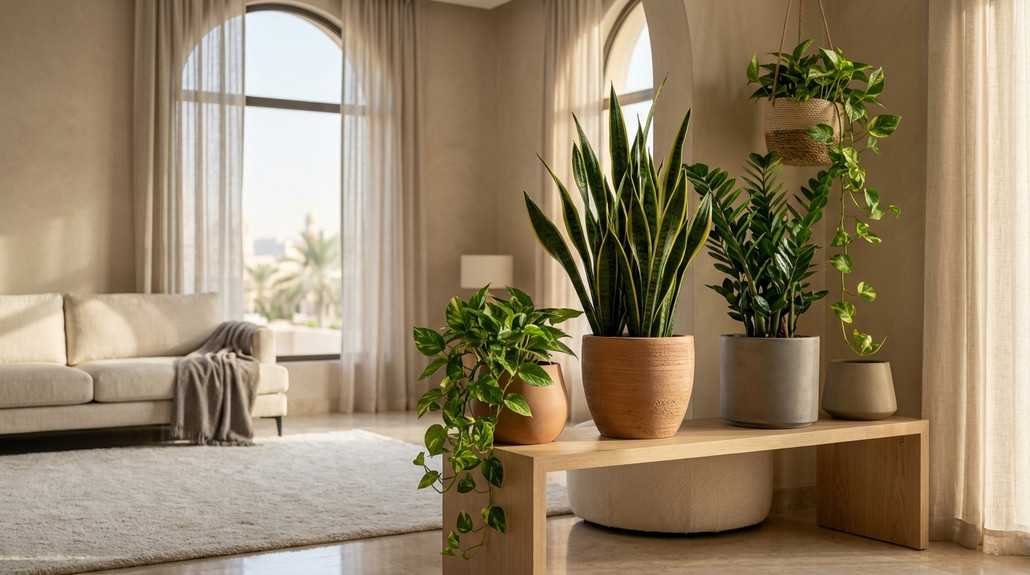
For those seeking greenery without the demanding schedule, a few species consistently prove their worth. These plants are selected not just for their aesthetic appeal but for their proven ability to tolerate neglect and thrive in the challenging indoor environments of Iraq. They are ideal starting points for anyone new to plant ownership or for individuals with limited time.
Sansevieria (Snake Plant)
The Snake Plant is perhaps the most indestructible of all houseplants. Its structural, upright leaves are excellent at storing water, allowing it to go for weeks, sometimes over a month, without irrigation. This is a significant advantage in a busy home. It is exceptionally tolerant of low light, making it perfect for corners, hallways, or offices that lack abundant natural sunlight. Furthermore, its stiff leaves are not easily damaged by the dry air produced by an AC unit. The Snake Plant also has a slow growth habit, meaning it will not require frequent repotting or pruning. It asks for almost nothing and provides a strong vertical design element in return.
Zamioculcas Zamiifolia (ZZ Plant)
The ZZ Plant is the definition of a neglect-tolerant plant. Its survival mechanism includes large, potato-like rhizomes beneath the soil that store water, making it extremely drought-resistant. It is better to forget to water a ZZ Plant than to water it too frequently. Its glossy, dark green leaves seem almost artificial in their perfection and are very efficient at photosynthesis, allowing the plant to do well in low to moderate light conditions. It is also a slow grower and is largely untroubled by pests. The waxy coating on its leaves helps it retain moisture, a valuable trait in air-conditioned rooms. For an office or home where care can be sporadic, the ZZ Plant is a reliable choice.
Epipremnum Aureum (Pothos)
Known for its trailing vines and heart-shaped leaves, the Pothos is both beautiful and forgiving. It is highly adaptable to a range of lighting situations, from bright, indirect light to much dimmer areas. While it appreciates consistent moisture more than the Snake Plant or ZZ Plant, it is remarkably resilient and will visually signal its needs. When it is thirsty, its leaves will begin to droop slightly, providing a clear and timely reminder to water. It recovers quickly once watered. Pothos is not particularly sensitive to low humidity and can handle the dry air of an AC-cooled room. Its fast-growing vines can be trimmed easily to encourage fuller growth or left to hang, making it one of the most versatile exceptionally hardy plants available.
The Impact of Constant Air Conditioning
Living with constant air conditioning is a necessity, but it is crucial to understand its direct effects on indoor plants. The primary function of an AC unit is to remove moisture from the air. This results in an environment with very low relative humidity, which is unnatural for the majority of tropical plants that constitute common houseplants. This dry air pulls moisture directly from the leaves, causing issues like brown, crispy leaf tips and edges. Another significant problem is the direct draft. Placing a plant in the direct path of cold air from an AC vent is highly stressful for it, potentially leading to leaf drop and stunted growth. The goal is to position your plants where they benefit from the cool room temperature but are shielded from the direct airflow. This might mean placing them on a shelf across the room from the unit rather than directly under it. You must also adjust your watering schedule. While the air is dry, the cooler temperature may mean the soil dries out more slowly than you would expect. Always check the soil moisture before watering instead of adhering to a rigid schedule.
A Minimalist Care Routine for Busy Lifestyles
The appeal of low maintenance indoor plants is that they do not require a complex or time-consuming routine. A simple, consistent approach is all that is needed for them to thrive. The foundation of this routine is observation, not a calendar. Instead of watering every Saturday, commit to checking your plants every 10 to 14 days. Do this by inserting your finger about two inches into the soil. If it feels dry at that depth, it is time to water. If there is any moisture, wait longer. When you do water, do so thoroughly until water drains from the bottom of the pot, then discard the excess. This encourages deep root growth. About once a month, use a damp cloth to wipe down the leaves. This removes the layer of dust that inevitably accumulates, allowing the plant to breathe and absorb light properly. This simple act can significantly improve its health. Beyond that, these resilient plants require little else. Fertilizing is only necessary once or twice during the main growing season, not year-round. You can find all the essential care tools to make this process straightforward.
Avoiding the Mistake of Too Much Attention
For beginners, the most common error is not neglect but over-caring. The desire to nurture a new plant often leads to excessive watering, which is the fastest way to cause problems. Hardy, drought-tolerant plants are especially susceptible to this. Their roots are not adapted to sit in constantly wet soil, which leads to root rot, a condition from which it is difficult to recover. The primary sign of overwatering is yellowing leaves, particularly lower ones, and a soft, mushy stem base. Another common mistake is excessive fertilizing. A low-maintenance plant does not need frequent feeding. Too much fertilizer can cause chemical burns to the roots, resulting in scorched-looking leaf edges. Repotting too often is also unnecessary. These plants prefer to be slightly root-bound and moving them into a pot that is too large can lead to the soil staying wet for too long. If you notice signs of distress, the first step should be to reduce care, not increase it. Let the soil dry out completely and hold off on fertilizer. You can find more detailed plant care guidance if you encounter specific issues.
Frequently Asked Questions for New Plant Owners
Addressing a few common questions can help build confidence for those new to keeping plants indoors.
How often should I truly water these plants?
There is no universal schedule. The correct frequency depends on light, temperature, pot size, and the time of year. For plants like the Snake Plant and ZZ Plant, you may only need to water every 3-6 weeks. For a Pothos, it might be every 10-14 days. The most reliable method is to ignore the calendar and check the soil. Only water when the top 5-7 cm of soil is completely dry to the touch.
Do I need special soil or fertilizer?
A high-quality, well-draining potting mix designed for indoor plants is sufficient. The key is drainage; the soil should not remain waterlogged. As for fertilizer, it is not a high priority for these plants. If you choose to fertilize, use a balanced, all-purpose liquid fertilizer diluted to half-strength, and apply it only once or twice during the spring and summer growing season. Over-fertilizing is a much greater risk than under-fertilizing.
What if my plant's leaves get dusty?
Dust is a reality in our environment. A thick layer of dust blocks sunlight and clogs the pores (stomata) on the leaf surface, hindering the plant's ability to photosynthesize and transpire. Once a month, or whenever you notice a visible layer, gently wipe the top and bottom of each leaf with a soft, damp cloth. For plants with many small leaves, a light shower in the sink or tub can also work, just be sure to let the plant drain fully afterward.