


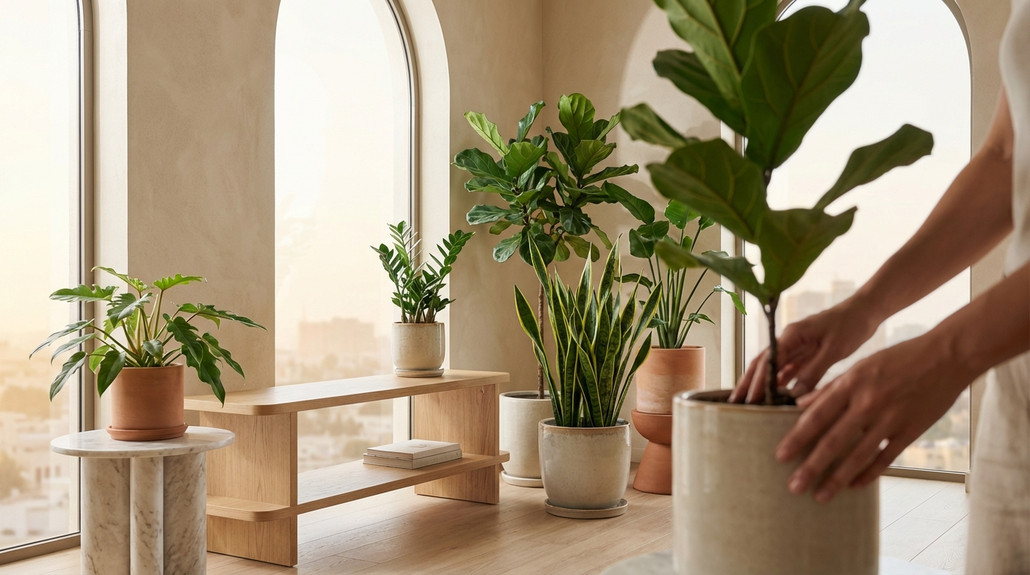
Why Indoor Plant Leaves Turn Yellow and What to Do in Iraq Homes
Posted by Mozher Experts on 20.02.26
Heat, AC Airflow, and Why Yellowing Happens Fast in Iraq
Yellow leaves are one of the most common indoor plant problems in Iraq homes. The change can look sudden. One week the plant appears stable, the next week several leaves fade to pale green, then yellow. In our climate, this shift is often tied to extreme outdoor heat combined with constant AC use indoors. Split units run for long hours, drying the air and creating cold drafts that stress foliage and roots at the same time.
Plants do not experience “room temperature” the way we do. A sofa may feel comfortable, but the air directly under an AC vent can drop quickly and strip moisture from leaves. Meanwhile, soil dries unevenly. The top layer may look dry, while the bottom stays wet. This mismatch triggers root stress, nutrient lockout, and eventually yellowing.
For many indoor plants Iraq residents keep, especially tropical varieties, stability matters more than perfection. Sudden light changes, overcorrection with water, or moving the pot daily makes things worse. The solution is not guesswork. It is diagnosis: observe the pattern of yellowing, check soil moisture properly, and review airflow. Once the cause is clear, recovery usually follows within two to four weeks, depending on severity.
Start With the Pattern: What the Yellow Leaves Are Telling You
Not all yellow leaves mean the same thing. The location, speed, and texture of the change provide important clues. When diagnosing indoor plant problems, I always begin with three questions: Which leaves are yellowing? How fast? And what does the soil feel like below the surface?
Lower Leaves Turning Yellow First
If only the oldest, bottom leaves are fading gradually, this may be normal aging. Plants redirect energy to new growth. However, if several lower leaves yellow at once and drop quickly, overwatering is more likely. In Iraq, this often happens when owners water on a schedule without checking soil depth.
Entire Plant Looks Pale
Uniform pale yellow across the plant suggests nutrient imbalance or poor root function. Roots stressed by compacted soil or lack of drainage cannot absorb nitrogen efficiently. This is common when decorative containers lack drainage holes or when heavy soil retains water too long.
Yellow With Brown Tips
Yellow edges followed by crispy brown tips usually indicate dry air and inconsistent watering. Continuous AC airflow accelerates moisture loss. Sensitive species placed directly under vents are especially vulnerable.
If you need a broader framework for symptom patterns beyond yellowing, review the structured guide on diagnosing common indoor plant problems. It helps separate root, light, and pest-related issues clearly.
Overwatering and Root Rot: The Most Frequent Cause
In Iraq homes, overwatering remains the primary trigger behind yellow leaves. It seems counterintuitive in a hot country, but indoor conditions are different from outdoor heat. AC reduces evaporation. Soil stays wet longer than expected.
When roots sit in saturated soil, oxygen levels drop. Roots suffocate and begin to decay. This condition, known as root rot, prevents nutrient uptake. Leaves then yellow, soften, and sometimes fall while the soil still feels damp.
How to Test Properly
Insert your finger or a wooden stick 5–7 cm into the soil. If it feels cool and moist, wait before watering. Do not rely on surface dryness alone. Lifting the pot also helps. A heavy pot usually indicates retained moisture.
Corrective Action
- Stop watering immediately.
- Ensure the pot has drainage holes.
- Remove severely affected yellow leaves.
- If soil smells sour, repot using fresh, well-draining mix.
Recovery time depends on damage. Mild cases improve in two weeks. Severe root rot may require four to six weeks and careful monitoring.
Underwatering and AC-Driven Dry Stress
While overwatering is common, underwatering also causes yellowing, especially in homes where AC runs continuously. Airflow increases transpiration. Plants placed near vents lose moisture faster than expected.
Signs differ slightly from overwatering. Leaves feel thin, sometimes curled. Soil pulls away from the pot edges. Yellowing may begin at tips before spreading inward.
Rehydration Strategy
Water thoroughly until excess drains out. Do not add small amounts daily. Deep watering encourages stronger root growth. Afterward, allow the top layer to dry before repeating.
Grouping plants together can moderate humidity slightly. Moving them away from direct AC airflow often prevents repeated stress. For species better suited to lower light and stable indoor corners, explore options under low-light tolerant indoor plants.
Light Mismatch Inside Bright Iraqi Homes
Iraq has intense sunlight outdoors, but indoor light can still be insufficient. Thick curtains, tinted windows, and deep rooms limit usable light. Yellow leaves sometimes reflect low photosynthesis rather than watering errors.
If a plant stretches toward the window and produces smaller leaves, light is likely inadequate. Conversely, harsh direct sun through glass can scorch leaves, causing yellow patches that later turn brown.
Simple Light Test
Stand where the plant sits at midday. If you can comfortably read without artificial light, conditions are moderate. If the corner feels dim, choose species adapted to such spaces or relocate the plant gradually.
Plants categorized under bright indirect light selections perform well near windows with filtered exposure. Matching species to actual light prevents recurring indoor plant problems.
Pests and Fungus Gnats: Hidden Stress Factors
Yellow leaves combined with sticky residue, speckles, or tiny flying insects indicate pest activity. Spider mites thrive in dry, AC-cooled rooms. Fungus gnats appear when soil stays consistently wet.
Inspect the underside of leaves. Fine webbing suggests mites. Small black flies around soil indicate gnat larvae feeding on roots.
Targeted Response
- Isolate affected plants.
- Rinse leaves gently to remove mites.
- Allow soil to dry more between waterings to reduce gnats.
- Remove heavily infested leaves.
Minor infestations resolve in two to three weeks with consistency. Avoid spraying random chemical mixtures indoors without proper identification.
Quick Diagnostic Table: Symptom to Action
| Symptom | Likely Cause | Soil Condition | Action | Typical Recovery |
|---|---|---|---|---|
| Lower leaves yellow, soft | Overwatering | Wet, heavy | Pause watering, improve drainage | 2–4 weeks |
| Yellow with crispy tips | Dry air / inconsistent watering | Very dry or uneven | Deep watering, move from AC vent | 1–3 weeks |
| Pale entire plant | Nutrient lockout / root stress | Compacted or soggy | Repot with fresh mix | 3–6 weeks |
| Yellow with speckles | Spider mites | Normal | Rinse leaves, isolate | 2–3 weeks |
What Not to Do When Leaves Turn Yellow
Most plant losses happen after panic. Owners change three variables at once: more water, new fertilizer, and a new location. This confuses the plant further.
- Do not fertilize a stressed plant immediately.
- Do not repot unless roots are clearly compromised.
- Do not cut every yellow leaf at once if many remain functional.
- Do not move the plant daily searching for a “perfect” spot.
Stability supports recovery. Make one adjustment, then observe for ten to fourteen days.
Prevention Habits That Work in Iraq Homes
Preventing indoor plant problems is easier than correcting them. Choose species suited to your actual environment, not just appearance. Explore climate-adapted options in the curated indoor plants collection and prioritize varieties rated under easy-care indoor selections if your schedule is busy.
Use pots with drainage and breathable soil. Water based on soil condition, not calendar dates. Keep plants away from direct AC airflow. Rotate them slightly every few weeks for balanced light exposure.
Expect gradual improvement, not instant greening. New healthy growth is the true sign of recovery. Once you see firm, green leaves emerging, your adjustments are working.
Frequently Asked Questions
Should I remove all yellow leaves immediately?
Remove fully yellow, limp leaves. If a leaf is partly green and firm, allow it to continue supporting the plant until it declines naturally. Sudden heavy pruning can slow recovery.
How long does it take for a plant to recover?
Mild watering issues often stabilize within two weeks. Root rot or severe pest damage may require four to six weeks. Look for healthy new growth rather than old leaves turning green again.
Can I fertilize to fix yellow leaves faster?
Not unless you are certain the cause is nutrient deficiency. Fertilizing a stressed or overwatered plant can worsen root damage. Correct watering and light first.
Are some species less prone to yellowing in Iraq?
Yes. Hardy varieties adapted to indoor conditions tolerate AC and light fluctuations better. Selecting climate-appropriate indoor plants Iraq homeowners rely on reduces repeated stress and long-term maintenance problems.