





Create a show-stopping display with the angelic White Bougainvillea 'Alba'. Draped in masses of brilliant white, paper-like blooms, this plant is pure elegance. It's not just beautiful; it's tough, thriving in the sun and heat while demanding little water. Whether you're designing a romantic garden archway, a vibrant privacy screen, or a stunning patio feature, 'Alba' delivers unparalleled impact. Easy to care for and endlessly rewarding, bring home this symbol of Mediterranean beauty today and let your garden shine.
Common Name: White Bougainvillea / Paper Flower
Botanical Name: Bougainvillea glabra 'Alba'
Arabic Name: جهنمي
Plant Color: White
Country of Origin: Spain (Cultivated / Native to Brazil)
Kingdom: Plantae
Order: Caryophyllales
Family: Nyctaginaceae
Genus: Bougainvillea
Species: Bougainvillea glabra
Originally native to Brazil and South America, the Bougainvillea glabra is now widely distributed across Mediterranean climates, particularly in Spain, Italy, and Greece, as well as tropical and subtropical regions globally.
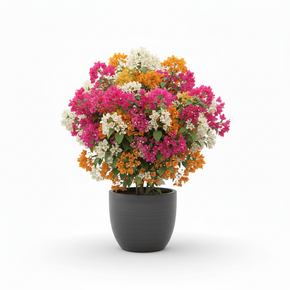
This evergreen woody vine features lush green, ovate leaves and sharp thorns. The 'Alba' variety is distinguished by its stunning, paper-like white bracts that surround tiny, inconspicuous creamy-white flowers. Its growth habit is scrambling and climbing.
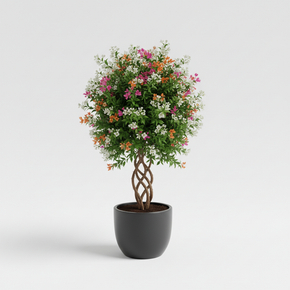
In outdoor environments, it can reach heights of 3 to 10 meters (10 to 30 feet) if given a structure to climb. When grown in pots or kept as a shrub, it is typically maintained at 1 to 2 meters in height.
Thrives in full sun. To produce the best white bract displays, it requires at least 6 to 8 hours of direct sunlight daily. It will survive in partial shade but flowering will be significantly reduced.
Bougainvilleas are drought-tolerant once established. Water deeply when the top 2-3 inches of soil feel dry. Overwatering should be strictly avoided as it can lead to root rot and fewer blooms.
Requires well-draining, gritty soil. A mix of peat moss, perlite, and sand is ideal. It prefers a slightly acidic soil pH between 5.5 and 6.5. It performs well in pots but requires excellent drainage holes.
Thrives in hot, dry, or humid conditions. It is frost-sensitive and performs best in temperatures above 15°C (60°F). It can tolerate high heat and is well-suited for arid rooftop gardens and sunny patios.
Apply a high-phosphate or "bloom booster" fertilizer every 4 weeks during the spring and summer growing season to encourage flowering. Avoid high-nitrogen fertilizers which promote foliage growth at the expense of blooms.
Low maintenance but requires regular pruning. Pruning after each flowering cycle helps maintain its shape and encourages new growth for the next bloom cycle. Be cautious of the sharp thorns when handling.
This is a fast-growing plant. Propagation is most successful via semi-hardwood cuttings or tip cuttings taken in early summer and kept in warm, humid conditions until rooted.
Susceptible to aphids, spider mites, and whiteflies. Overwatering can lead to leaf drop and root rot. Lack of sufficient sunlight is the most common reason for a failure to produce white bracts.
Primarily used as an ornamental plant for landscaping, privacy screens, and trellises. It is excellent for erosion control on slopes and is a popular choice for Mediterranean-style home décor and entrance styling.
The sap of the Bougainvillea can cause mild skin irritation or dermatitis in sensitive individuals. The thorns are sharp and can cause physical injury. Ingestion of the plant may cause mild gastrointestinal upset in humans and pets.
Create a show-stopping display with the angelic White Bougainvillea 'Alba'. Draped in masses of brilliant white, paper-like blooms, this plant is pure elegance. It's not just beautiful; it's tough, thriving in the sun and heat while demanding little water. Whether you're designing a romantic garden archway, a vibrant privacy screen, or a stunning patio feature, 'Alba' delivers unparalleled impact. Easy to care for and endlessly rewarding, bring home this symbol of Mediterranean beauty today and let your garden shine.
Common Name: White Bougainvillea / Paper Flower
Botanical Name: Bougainvillea glabra 'Alba'
Arabic Name: جهنمي
Plant Color: White
Country of Origin: Spain (Cultivated / Native to Brazil)
Kingdom: Plantae
Order: Caryophyllales
Family: Nyctaginaceae
Genus: Bougainvillea
Species: Bougainvillea glabra
Originally native to Brazil and South America, the Bougainvillea glabra is now widely distributed across Mediterranean climates, particularly in Spain, Italy, and Greece, as well as tropical and subtropical regions globally.
This evergreen woody vine features lush green, ovate leaves and sharp thorns. The 'Alba' variety is distinguished by its stunning, paper-like white bracts that surround tiny, inconspicuous creamy-white flowers. Its growth habit is scrambling and climbing.
In outdoor environments, it can reach heights of 3 to 10 meters (10 to 30 feet) if given a structure to climb. When grown in pots or kept as a shrub, it is typically maintained at 1 to 2 meters in height.
Thrives in full sun. To produce the best white bract displays, it requires at least 6 to 8 hours of direct sunlight daily. It will survive in partial shade but flowering will be significantly reduced.
Bougainvilleas are drought-tolerant once established. Water deeply when the top 2-3 inches of soil feel dry. Overwatering should be strictly avoided as it can lead to root rot and fewer blooms.
Requires well-draining, gritty soil. A mix of peat moss, perlite, and sand is ideal. It prefers a slightly acidic soil pH between 5.5 and 6.5. It performs well in pots but requires excellent drainage holes.
Thrives in hot, dry, or humid conditions. It is frost-sensitive and performs best in temperatures above 15°C (60°F). It can tolerate high heat and is well-suited for arid rooftop gardens and sunny patios.
Apply a high-phosphate or "bloom booster" fertilizer every 4 weeks during the spring and summer growing season to encourage flowering. Avoid high-nitrogen fertilizers which promote foliage growth at the expense of blooms.
Low maintenance but requires regular pruning. Pruning after each flowering cycle helps maintain its shape and encourages new growth for the next bloom cycle. Be cautious of the sharp thorns when handling.
This is a fast-growing plant. Propagation is most successful via semi-hardwood cuttings or tip cuttings taken in early summer and kept in warm, humid conditions until rooted.
Susceptible to aphids, spider mites, and whiteflies. Overwatering can lead to leaf drop and root rot. Lack of sufficient sunlight is the most common reason for a failure to produce white bracts.
Primarily used as an ornamental plant for landscaping, privacy screens, and trellises. It is excellent for erosion control on slopes and is a popular choice for Mediterranean-style home décor and entrance styling.
The sap of the Bougainvillea can cause mild skin irritation or dermatitis in sensitive individuals. The thorns are sharp and can cause physical injury. Ingestion of the plant may cause mild gastrointestinal upset in humans and pets.



Take 20% off your first order
Enter the code below at checkout to get 20% off your first order