


Bougainvillea 'Arched'
Transform your garden into a vibrant oasis with the Bougainvillea spectabilis! Known for its explosive, long-lasting color, this sun-loving vine is the ultimate statement piece. Perfect for covering a wall, arching over a doorway, or brightening a balcony, its brilliant hues create an instant tropical paradise. Low-water, high-impact – get ready for a season of non-stop color!
1. Basic Identification
Common Name: Bougainvillea, Great Bougainvillea, Paperflower, Arched Bougainvillea
Botanical Name: Bougainvillea spectabilis
Arabic Name: جهنمي
Variant: Arched
Color: Multicolor
Country of Origin: Spain
2. Taxonomy & Classification
Kingdom: Plantae
Clade: Tracheophytes
Order: Caryophyllales
Family: Nyctaginaceae
Genus: Bougainvillea
Species: B. spectabilis
3. Origin & Distribution
Native to Brazil, Bougainvillea spectabilis has been naturalized in many tropical, subtropical, and warm-temperate regions worldwide. It is particularly prominent in the Mediterranean basin (notably Spain), Southeast Asia, and parts of the United States like Florida and California.
4. Visual Characteristics
This is a woody, evergreen vine characterized by its vigorous growth and thorny stems. The "flowers" are actually large, colorful, papery bracts that surround the true, small, white tubular flowers. The leaves are dark green, ovate, and slightly hairy. The arched variant is specifically trained to grow over structures in a curved, ornamental shape.
5. Size & Dimensions
In its natural vine form, it can reach heights of 15 to 40 feet (4.5 to 12 meters). When maintained as an arched specimen, it is typically kept between 6 to 10 feet tall depending on the support structure provided.
6. Light Requirements
Requires full sun to thrive and bloom profusely. At least 6 hours of direct sunlight daily is necessary; otherwise, the plant will produce mostly green foliage and very few colorful bracts.
7. Watering Needs
Low to moderate. Once established, it is highly drought-tolerant. It prefers infrequent but deep watering. Allow the soil to dry out significantly between watering sessions, as "stressing" the plant slightly by withholding water can actually encourage more blooms.
8. Soil & Potting
Requires well-draining, gritty soil. A mix of peat, pine bark, and perlite or sand works well. It prefers slightly acidic soil (pH 5.5 to 6.5). It does not tolerate waterlogged soil, which leads to root rot.
9. Temperature & Humidity
Thrives in hot, sunny climates. It is hardy in USDA zones 9-11. It is sensitive to frost and will drop leaves if temperatures dip below 40°F (4°C). It handles various humidity levels well but prefers a tropical to semi-arid environment.
10. Fertilization
Feed every 4-6 weeks during the growing and blooming season. Use a balanced fertilizer or one specifically formulated for Bougainvillea or Hibiscus (high in potassium and micronutrients). Avoid high-nitrogen fertilizers, which promote foliage growth at the expense of bracts.
11. Maintenance & Care Level
Maintenance Level: Low to Medium. While the plant is hardy and easy to grow, it requires regular pruning after each flowering cycle to maintain the arched shape and stimulate the next flush of color.
12. Growth & Propagation
Fast-growing. Propagation is most successful through semi-hardwood cuttings or hardwood cuttings taken in spring or early summer. Use rooting hormone and maintain high humidity for cuttings.
13. Common Problems
Susceptible to root rot if overwatered. Common pests include aphids, mealybugs, and spider mites. Lack of flowering is usually caused by insufficient light, overwatering, or excessive nitrogen fertilization.
14. Benefits & Uses
Primarily used for ornamental purposes in landscaping. It is excellent for vertical gardening, covering fences, trellises, or creating decorative arches. It is also an effective privacy screen and attracts pollinators like bees and butterflies.
15. Toxicity & Safety
The sap can cause mild skin irritation or dermatitis in sensitive individuals. The thorns can cause physical injury. While not considered highly toxic, ingestion may cause mild gastrointestinal upset in pets or humans.

Bougainvillea 'Arched'
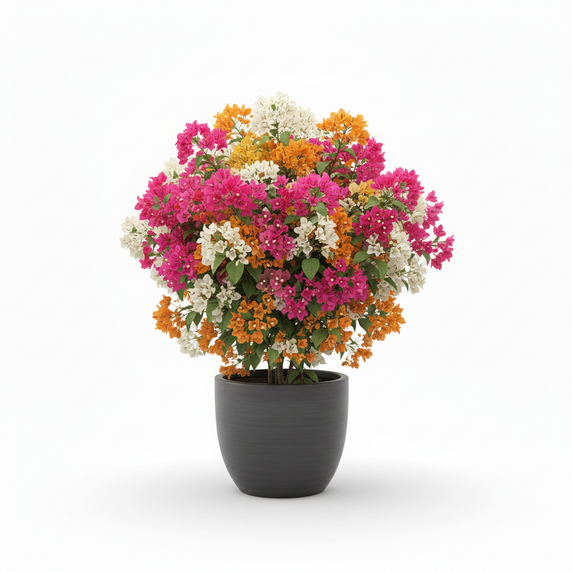
Transform your garden into a vibrant oasis with the Bougainvillea spectabilis! Known for its explosive, long-lasting color, this sun-loving vine is the ultimate statement piece. Perfect for covering a wall, arching over a doorway, or brightening a balcony, its brilliant hues create an instant tropical paradise. Low-water, high-impact – get ready for a season of non-stop color!
1. Basic Identification
Common Name: Bougainvillea, Great Bougainvillea, Paperflower, Arched Bougainvillea
Botanical Name: Bougainvillea spectabilis
Arabic Name: جهنمي
Variant: Arched
Color: Multicolor
Country of Origin: Spain
2. Taxonomy & Classification
Kingdom: Plantae
Clade: Tracheophytes
Order: Caryophyllales
Family: Nyctaginaceae
Genus: Bougainvillea
Species: B. spectabilis
3. Origin & Distribution
Native to Brazil, Bougainvillea spectabilis has been naturalized in many tropical, subtropical, and warm-temperate regions worldwide. It is particularly prominent in the Mediterranean basin (notably Spain), Southeast Asia, and parts of the United States like Florida and California.
4. Visual Characteristics
This is a woody, evergreen vine characterized by its vigorous growth and thorny stems. The "flowers" are actually large, colorful, papery bracts that surround the true, small, white tubular flowers. The leaves are dark green, ovate, and slightly hairy. The arched variant is specifically trained to grow over structures in a curved, ornamental shape.
5. Size & Dimensions
In its natural vine form, it can reach heights of 15 to 40 feet (4.5 to 12 meters). When maintained as an arched specimen, it is typically kept between 6 to 10 feet tall depending on the support structure provided.
6. Light Requirements
Requires full sun to thrive and bloom profusely. At least 6 hours of direct sunlight daily is necessary; otherwise, the plant will produce mostly green foliage and very few colorful bracts.
7. Watering Needs
Low to moderate. Once established, it is highly drought-tolerant. It prefers infrequent but deep watering. Allow the soil to dry out significantly between watering sessions, as "stressing" the plant slightly by withholding water can actually encourage more blooms.
8. Soil & Potting
Requires well-draining, gritty soil. A mix of peat, pine bark, and perlite or sand works well. It prefers slightly acidic soil (pH 5.5 to 6.5). It does not tolerate waterlogged soil, which leads to root rot.
9. Temperature & Humidity
Thrives in hot, sunny climates. It is hardy in USDA zones 9-11. It is sensitive to frost and will drop leaves if temperatures dip below 40°F (4°C). It handles various humidity levels well but prefers a tropical to semi-arid environment.
10. Fertilization
Feed every 4-6 weeks during the growing and blooming season. Use a balanced fertilizer or one specifically formulated for Bougainvillea or Hibiscus (high in potassium and micronutrients). Avoid high-nitrogen fertilizers, which promote foliage growth at the expense of bracts.
11. Maintenance & Care Level
Maintenance Level: Low to Medium. While the plant is hardy and easy to grow, it requires regular pruning after each flowering cycle to maintain the arched shape and stimulate the next flush of color.
12. Growth & Propagation
Fast-growing. Propagation is most successful through semi-hardwood cuttings or hardwood cuttings taken in spring or early summer. Use rooting hormone and maintain high humidity for cuttings.
13. Common Problems
Susceptible to root rot if overwatered. Common pests include aphids, mealybugs, and spider mites. Lack of flowering is usually caused by insufficient light, overwatering, or excessive nitrogen fertilization.
14. Benefits & Uses
Primarily used for ornamental purposes in landscaping. It is excellent for vertical gardening, covering fences, trellises, or creating decorative arches. It is also an effective privacy screen and attracts pollinators like bees and butterflies.
15. Toxicity & Safety
The sap can cause mild skin irritation or dermatitis in sensitive individuals. The thorns can cause physical injury. While not considered highly toxic, ingestion may cause mild gastrointestinal upset in pets or humans.