


Bougainvillea 'Tricolor'
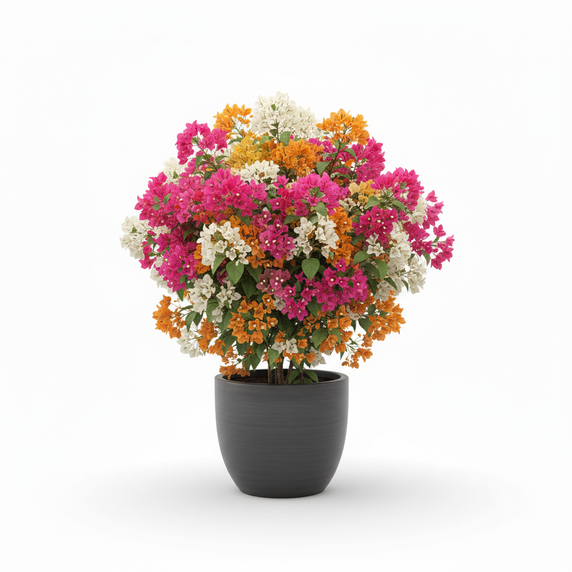
Transform your outdoor space into a vibrant Mediterranean paradise with our magnificent Tricolor Bougainvillea! Standing at an impressive 2 meters, this plant is a living masterpiece, showcasing a breathtaking medley of fiery pinks, pure whites, and rich magentas all on one plant. Perfect for sun-drenched balconies, patios, or garden walls, this hardy vine thrives in the heat and rewards you with a continuous explosion of color. It's not just a plant; it's a statement piece that brings drama, beauty, and life to your home. Easy to care for and incredibly rewarding, the Bougainvillea is your ticket to a stunning, low-effort garden.
1. Basic Identification
Common Name: Tricolor Bougainvillea, Paper Flower
Botanical Name: Bougainvillea spectabilis
Arabic Name: جهنمي (Jahannami)
Variant: Tricolor
Color: Multicolor (Pink, White, Magenta)
Plant Country: Turkey
2. Taxonomy & Classification
Kingdom: Plantae
Order: Caryophyllales
Family: Nyctaginaceae
Genus: Bougainvillea
Species: B. spectabilis
3. Origin & Distribution
Native to South America, specifically Brazil, Peru, and Argentina. It has been widely naturalized in tropical, subtropical, and Mediterranean climates across the globe, including the Middle East and Southern Europe.
4. Visual Characteristics
This specimen is a woody, evergreen climbing vine featuring sharp thorns. It is famous for its large, papery, heart-shaped bracts that surround tiny, inconspicuous white flowers. The Tricolor variant is unique for displaying three distinct bract colors—pink, white, and magenta—simultaneously on the same plant structure.
5. Size & Dimensions
Current Height: 2 meters. When mature and given support, it can reach heights of 6 to 12 meters and spread significantly. It can also be pruned to maintain a shrub-like appearance.
6. Light Requirements
Requires full sun. For maximum blooming, the plant needs at least 6 to 8 hours of direct, intense sunlight daily. Insufficient light will result in lush green foliage but few to no flowers.
7. Watering Needs
Low to moderate. Bougainvillea prefers to be watered deeply and then allowed to dry out significantly before the next watering. It is highly drought-tolerant once established. Overwatering can lead to root rot and leaf drop.
8. Soil & Potting
Prefers well-draining, gritty soil with a slightly acidic pH (5.5 to 6.0). It does not tolerate waterlogged soil. If kept in a pot, ensure it has excellent drainage holes and avoid frequently repotting as the plant prefers being slightly root-bound.
9. Temperature & Humidity
Thrives in hot, dry, or humid conditions. It is frost-sensitive and performs best in temperatures above 15°C (60°F). It is ideally suited for USDA Hardiness Zones 9-11.
10. Fertilization
Feed with a balanced, water-soluble fertilizer or a specialized "bloom booster" high in potassium every 4-6 weeks during the spring and summer growing season.
11. Maintenance & Care Level
Low Maintenance / Easy Care. Requires regular pruning after each flowering cycle to maintain its shape and encourage the next flush of blooms. Be cautious of the thorns during maintenance.
12. Growth & Propagation
A fast-growing species. Propagation is typically achieved through semi-hardwood cuttings taken in summer or through layering. The Tricolor effect is often achieved through professional grafting techniques.
13. Common Problems
Susceptible to root rot if overwatered. Common pests include aphids, mealybugs, and spider mites. Yellowing leaves may indicate overwatering or nutrient deficiencies.
14. Benefits & Uses
Primarily used as a dramatic ornamental statement piece. Excellent for vertical interest on trellises, fences, and walls. It is a popular choice for Mediterranean-style landscapes, rooftop gardens, and privacy screening.
15. Toxicity & Safety
Mildly toxic if ingested by humans or pets; the sap can cause skin irritation or rashes in sensitive individuals. The sharp thorns pose a physical hazard and can cause skin punctures.
Bougainvillea 'Tricolor'
Transform your outdoor space into a vibrant Mediterranean paradise with our magnificent Tricolor Bougainvillea! Standing at an impressive 2 meters, this plant is a living masterpiece, showcasing a breathtaking medley of fiery pinks, pure whites, and rich magentas all on one plant. Perfect for sun-drenched balconies, patios, or garden walls, this hardy vine thrives in the heat and rewards you with a continuous explosion of color. It's not just a plant; it's a statement piece that brings drama, beauty, and life to your home. Easy to care for and incredibly rewarding, the Bougainvillea is your ticket to a stunning, low-effort garden.
1. Basic Identification
Common Name: Tricolor Bougainvillea, Paper Flower
Botanical Name: Bougainvillea spectabilis
Arabic Name: جهنمي (Jahannami)
Variant: Tricolor
Color: Multicolor (Pink, White, Magenta)
Plant Country: Turkey
2. Taxonomy & Classification
Kingdom: Plantae
Order: Caryophyllales
Family: Nyctaginaceae
Genus: Bougainvillea
Species: B. spectabilis
3. Origin & Distribution
Native to South America, specifically Brazil, Peru, and Argentina. It has been widely naturalized in tropical, subtropical, and Mediterranean climates across the globe, including the Middle East and Southern Europe.
4. Visual Characteristics
This specimen is a woody, evergreen climbing vine featuring sharp thorns. It is famous for its large, papery, heart-shaped bracts that surround tiny, inconspicuous white flowers. The Tricolor variant is unique for displaying three distinct bract colors—pink, white, and magenta—simultaneously on the same plant structure.
5. Size & Dimensions
Current Height: 2 meters. When mature and given support, it can reach heights of 6 to 12 meters and spread significantly. It can also be pruned to maintain a shrub-like appearance.
6. Light Requirements
Requires full sun. For maximum blooming, the plant needs at least 6 to 8 hours of direct, intense sunlight daily. Insufficient light will result in lush green foliage but few to no flowers.
7. Watering Needs
Low to moderate. Bougainvillea prefers to be watered deeply and then allowed to dry out significantly before the next watering. It is highly drought-tolerant once established. Overwatering can lead to root rot and leaf drop.
8. Soil & Potting
Prefers well-draining, gritty soil with a slightly acidic pH (5.5 to 6.0). It does not tolerate waterlogged soil. If kept in a pot, ensure it has excellent drainage holes and avoid frequently repotting as the plant prefers being slightly root-bound.
9. Temperature & Humidity
Thrives in hot, dry, or humid conditions. It is frost-sensitive and performs best in temperatures above 15°C (60°F). It is ideally suited for USDA Hardiness Zones 9-11.
10. Fertilization
Feed with a balanced, water-soluble fertilizer or a specialized "bloom booster" high in potassium every 4-6 weeks during the spring and summer growing season.
11. Maintenance & Care Level
Low Maintenance / Easy Care. Requires regular pruning after each flowering cycle to maintain its shape and encourage the next flush of blooms. Be cautious of the thorns during maintenance.
12. Growth & Propagation
A fast-growing species. Propagation is typically achieved through semi-hardwood cuttings taken in summer or through layering. The Tricolor effect is often achieved through professional grafting techniques.
13. Common Problems
Susceptible to root rot if overwatered. Common pests include aphids, mealybugs, and spider mites. Yellowing leaves may indicate overwatering or nutrient deficiencies.
14. Benefits & Uses
Primarily used as a dramatic ornamental statement piece. Excellent for vertical interest on trellises, fences, and walls. It is a popular choice for Mediterranean-style landscapes, rooftop gardens, and privacy screening.
15. Toxicity & Safety
Mildly toxic if ingested by humans or pets; the sap can cause skin irritation or rashes in sensitive individuals. The sharp thorns pose a physical hazard and can cause skin punctures.