


Bougainvillea 'Triple Stem Standard'
Make a bold statement with the Bougainvillea Triple Stand. This is not just a plant; it's a living sculpture bursting with fiery, tropical color. Perfect for flanking an entryway or creating a focal point on your terrace, its hardy nature means you get maximum visual impact with minimal effort. It thrives in the sun and heat, delivering a non-stop flower show when other plants struggle. Elevate your outdoor living—bring home the passion and drama of the Bougainvillea today.
1. Basic Identification
Common Name: Bougainvillea / Lesser Bougainvillea / Paperflower
Botanical Name: Bougainvillea glabra
Variant: Triple Stem Standard
Plant Color: Multicolor (Typically pink, purple, or magenta bracts)
Plant Country: Turkey
Arabic Name: جهنمي
Family: Nyctaginaceae
2. Taxonomy & Classification
Kingdom: Plantae
Clade: Angiosperms
Order: Caryophyllales
Family: Nyctaginaceae
Genus: Bougainvillea
Species: B. glabra
3. Origin & Distribution
Bougainvillea glabra is native to Brazil. It has been widely introduced and naturalized in tropical, subtropical, and warm temperate regions globally, particularly in the Mediterranean, South Asia, and the southern United States.
4. Visual Characteristics
This "Triple Stem Standard" variant features three distinct woody stems trained into a tree-like upright form. It is characterized by glossy green, ovate leaves and small, inconspicuous white flowers surrounded by large, papery, brightly colored bracts. The stems typically possess sharp thorns.
5. Size & Dimensions
As a trained standard, it usually stands between 1.5 to 2.5 meters (5 to 8 feet) in height. The canopy width can be maintained between 60 to 100 cm through regular pruning.
6. Light Requirements
Requires full sun to thrive and bloom profusely. It needs at least 6 to 8 hours of direct sunlight daily. Inadequate light will lead to lush green foliage but very few or no colored bracts.
7. Watering Needs
Bougainvilleas are drought-tolerant once established. Water deeply when the top 2-3 inches of soil feel dry. Avoid overwatering or allowing the plant to sit in water, as it is highly susceptible to root rot.
8. Soil & Potting
Requires well-draining, gritty soil. A mix of peat moss, perlite, and sand is ideal. It prefers a slightly acidic soil pH between 5.5 and 6.0. It blooms better when slightly root-bound.
9. Temperature & Humidity
Thrives in hot climates with temperatures between 15°C and 38°C (60°F-100°F). It is frost-sensitive and should be protected if temperatures drop below 4°C (40°F). It performs well in low to moderate humidity.
10. Fertilization
Feed every 4-6 weeks during the growing season with a balanced, water-soluble fertilizer or one high in potassium (such as a hibiscus or bougainvillea-specific blend) to encourage blooming.
11. Maintenance & Care Level
Care Level: Easy to Moderate. The main tasks involve regular pruning to maintain the standard "tree" shape and removing spent blooms to encourage new growth cycles. Wear gloves when handling due to thorns.
12. Growth & Propagation
A fast-growing woody vine/shrub. Propagation is most successful via semi-hardwood cuttings or layering during the warmer months.
13. Common Problems
Susceptible to aphids, spider mites, and whiteflies. Overwatering can lead to leaf drop and root rot. Fungal leaf spots may occur in excessively humid or wet conditions with poor air circulation.
14. Benefits & Uses
Primarily used as a vibrant ornamental specimen. Ideal for entrances, patios, and terraces. Its drought tolerance makes it excellent for xeriscaping in warm climates. It is also highly attractive to pollinators like bees and butterflies.
15. Toxicity & Safety
The sap of the Bougainvillea can cause mild skin irritation or dermatitis in sensitive individuals. It is considered mildly toxic to pets if ingested in large quantities, causing gastrointestinal upset. The sharp thorns pose a physical puncture hazard.
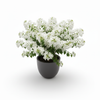
Bougainvillea 'Triple Stem Standard'

Make a bold statement with the Bougainvillea Triple Stand. This is not just a plant; it's a living sculpture bursting with fiery, tropical color. Perfect for flanking an entryway or creating a focal point on your terrace, its hardy nature means you get maximum visual impact with minimal effort. It thrives in the sun and heat, delivering a non-stop flower show when other plants struggle. Elevate your outdoor living—bring home the passion and drama of the Bougainvillea today.
1. Basic Identification
Common Name: Bougainvillea / Lesser Bougainvillea / Paperflower
Botanical Name: Bougainvillea glabra
Variant: Triple Stem Standard
Plant Color: Multicolor (Typically pink, purple, or magenta bracts)
Plant Country: Turkey
Arabic Name: جهنمي
Family: Nyctaginaceae
2. Taxonomy & Classification
Kingdom: Plantae
Clade: Angiosperms
Order: Caryophyllales
Family: Nyctaginaceae
Genus: Bougainvillea
Species: B. glabra
3. Origin & Distribution
Bougainvillea glabra is native to Brazil. It has been widely introduced and naturalized in tropical, subtropical, and warm temperate regions globally, particularly in the Mediterranean, South Asia, and the southern United States.
4. Visual Characteristics
This "Triple Stem Standard" variant features three distinct woody stems trained into a tree-like upright form. It is characterized by glossy green, ovate leaves and small, inconspicuous white flowers surrounded by large, papery, brightly colored bracts. The stems typically possess sharp thorns.
5. Size & Dimensions
As a trained standard, it usually stands between 1.5 to 2.5 meters (5 to 8 feet) in height. The canopy width can be maintained between 60 to 100 cm through regular pruning.
6. Light Requirements
Requires full sun to thrive and bloom profusely. It needs at least 6 to 8 hours of direct sunlight daily. Inadequate light will lead to lush green foliage but very few or no colored bracts.
7. Watering Needs
Bougainvilleas are drought-tolerant once established. Water deeply when the top 2-3 inches of soil feel dry. Avoid overwatering or allowing the plant to sit in water, as it is highly susceptible to root rot.
8. Soil & Potting
Requires well-draining, gritty soil. A mix of peat moss, perlite, and sand is ideal. It prefers a slightly acidic soil pH between 5.5 and 6.0. It blooms better when slightly root-bound.
9. Temperature & Humidity
Thrives in hot climates with temperatures between 15°C and 38°C (60°F-100°F). It is frost-sensitive and should be protected if temperatures drop below 4°C (40°F). It performs well in low to moderate humidity.
10. Fertilization
Feed every 4-6 weeks during the growing season with a balanced, water-soluble fertilizer or one high in potassium (such as a hibiscus or bougainvillea-specific blend) to encourage blooming.
11. Maintenance & Care Level
Care Level: Easy to Moderate. The main tasks involve regular pruning to maintain the standard "tree" shape and removing spent blooms to encourage new growth cycles. Wear gloves when handling due to thorns.
12. Growth & Propagation
A fast-growing woody vine/shrub. Propagation is most successful via semi-hardwood cuttings or layering during the warmer months.
13. Common Problems
Susceptible to aphids, spider mites, and whiteflies. Overwatering can lead to leaf drop and root rot. Fungal leaf spots may occur in excessively humid or wet conditions with poor air circulation.
14. Benefits & Uses
Primarily used as a vibrant ornamental specimen. Ideal for entrances, patios, and terraces. Its drought tolerance makes it excellent for xeriscaping in warm climates. It is also highly attractive to pollinators like bees and butterflies.
15. Toxicity & Safety
The sap of the Bougainvillea can cause mild skin irritation or dermatitis in sensitive individuals. It is considered mildly toxic to pets if ingested in large quantities, causing gastrointestinal upset. The sharp thorns pose a physical puncture hazard.