


Breynia disticha
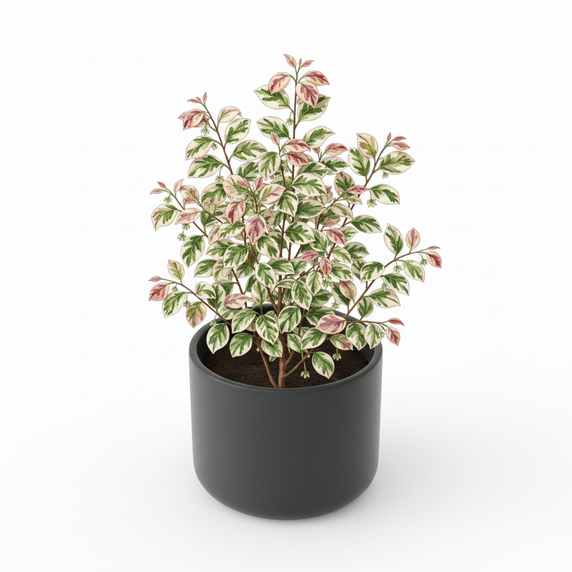
Transform your home into a tropical paradise with the Snow Bush! Each leaf is a unique masterpiece, splashed with green, white, and dazzling pink. Perfect for brightening up a living room or office, this plant’s vibrant energy is contagious. It’s not just a plant; it’s a living piece of art that grows with you. Demanding a bit of attention, it rewards dedicated plant parents with an unrivaled display of color. Bring the Snow Bush home today and let its cheerful foliage elevate your space!
1. Basic Identification
Common Name: Snow Bush
Botanical Name: Breynia disticha 'Roseopicta'
Former Name: Phyllanthus nivosus
Plant Type: Shrub, Houseplant
Plant Code / SKU: PLT-1733
Alternative Names:
Hawaiian Snow Bush
Ice Cream Bush
Confetti Bush
Pink Snow Bush
2. Taxonomy & Classification
Order: Malpighiales
Family: Phyllanthaceae
Genus: Breynia
3. Origin & Distribution
Native to: Pacific Islands, specifically New Caledonia and Vanuatu. It is now widely cultivated in tropical and subtropical regions worldwide.
4. Visual Characteristics
Leaves: Small, round to ovate leaves are arranged alternately on thin stems, resembling the foliage of a pea plant. The main attraction is the heavy mottling and splashing of white, green, and pink. New growth is often the most intensely colored, with a bright pink or reddish hue.
Flowers: The flowers are small, greenish-yellow, and inconspicuous, typically hidden under the leaves in the leaf axils. They are not ornamentally significant.
Stems: Stems are thin, wiry, and often red or purplish, creating a delicate, zig-zagging pattern as they grow.
Overall Habit: It grows as an upright, bushy shrub with a fine-textured, airy appearance and gracefully arching branches.
5. Size & Dimensions
Height: Indoors, typically maintained at 2-4 feet (60-120 cm). Outdoors in its ideal climate, it can reach up to 8 feet (2.4 m).
Spread: Typically grows to a spread of 2-4 feet (60-120 cm).
6. Light Requirements
Indoors: Requires bright, indirect light to maintain its vibrant variegation. Some direct morning sun can enhance the pink coloration, but harsh afternoon sun will scorch the delicate leaves.
Outdoors: Thrives in partial shade to full sun. More sun will produce better color, but the plant will require more frequent watering.
7. Watering Needs
Keep the soil consistently moist but not waterlogged. Water thoroughly when the top 1-2 inches of soil feel dry to the touch. This plant is sensitive to both overwatering and underwatering, often dropping leaves if its watering schedule is inconsistent.
8. Soil & Potting
Soil Type: A well-draining, rich, all-purpose potting mix. Amending the soil with perlite or coir can improve aeration and drainage.
pH: Prefers slightly acidic to neutral soil (pH 6.0-7.5).
Repotting: Repot in the spring every 1-2 years, or when the plant becomes root-bound. Choose a pot that is only one size larger.
9. Temperature & Humidity
Temperature: Prefers warm conditions, ideally between 65-80°F (18-27°C). It is not frost-tolerant and should be protected from temperatures below 50°F (10°C).
Humidity: High humidity is essential for this plant to thrive. Aim for 50% or higher. Grouping with other plants, using a humidifier, or placing the pot on a pebble tray with water can help increase ambient humidity.
10. Fertilization
Feed with a balanced liquid fertilizer diluted to half-strength every 2-4 weeks during the active growing season (spring and summer). Reduce feeding in the fall and winter months.
11. Maintenance & Care Level
Care Level: Medium to High. Its specific needs for high humidity, consistent watering, and bright light make it more demanding than many common houseplants.
Pruning: Prune as needed to maintain shape, control size, and encourage bushier growth. The best time to prune is in late winter or early spring before new growth begins.
12. Growth & Propagation
Growth Rate: Moderate to fast in ideal conditions.
Propagation: Easily propagated through softwood cuttings taken in spring or summer. Dip the cuttings in rooting hormone and place them in a moist medium with high humidity. It can also be propagated by separating root suckers that appear at the base of the plant.
13. Common Problems
Pests: Susceptible to spider mites, mealybugs, and whiteflies, especially in dry conditions. Regularly inspect the undersides of leaves.
Diseases: Root rot is a common issue caused by overwatering and poorly draining soil.
Common Issues: Leaf drop is a frequent complaint and can be caused by low humidity, underwatering, drafts, or sudden changes in temperature or light.
14. Benefits & Uses
Ornamental: Grown almost exclusively for its stunning, multi-colored foliage, which provides a vibrant splash of color.
Indoor/Outdoor: Excellent as a houseplant, in a mixed container, or as a landscape accent, border, or informal hedge in tropical and subtropical climates (USDA Zones 9-11).
15. Toxicity & Safety
Human Toxicity: All parts of the plant are considered toxic if ingested and may cause gastrointestinal upset. It is best to keep it away from children.
Pet Toxicity: Considered toxic to cats, dogs, and other pets if ingested. Consumption can lead to symptoms like vomiting and diarrhea.
Breynia disticha
Transform your home into a tropical paradise with the Snow Bush! Each leaf is a unique masterpiece, splashed with green, white, and dazzling pink. Perfect for brightening up a living room or office, this plant’s vibrant energy is contagious. It’s not just a plant; it’s a living piece of art that grows with you. Demanding a bit of attention, it rewards dedicated plant parents with an unrivaled display of color. Bring the Snow Bush home today and let its cheerful foliage elevate your space!
1. Basic Identification
Common Name: Snow Bush
Botanical Name: Breynia disticha 'Roseopicta'
Former Name: Phyllanthus nivosus
Plant Type: Shrub, Houseplant
Plant Code / SKU: PLT-1733
Alternative Names:
Hawaiian Snow Bush
Ice Cream Bush
Confetti Bush
Pink Snow Bush
2. Taxonomy & Classification
Order: Malpighiales
Family: Phyllanthaceae
Genus: Breynia
3. Origin & Distribution
Native to: Pacific Islands, specifically New Caledonia and Vanuatu. It is now widely cultivated in tropical and subtropical regions worldwide.
4. Visual Characteristics
Leaves: Small, round to ovate leaves are arranged alternately on thin stems, resembling the foliage of a pea plant. The main attraction is the heavy mottling and splashing of white, green, and pink. New growth is often the most intensely colored, with a bright pink or reddish hue.
Flowers: The flowers are small, greenish-yellow, and inconspicuous, typically hidden under the leaves in the leaf axils. They are not ornamentally significant.
Stems: Stems are thin, wiry, and often red or purplish, creating a delicate, zig-zagging pattern as they grow.
Overall Habit: It grows as an upright, bushy shrub with a fine-textured, airy appearance and gracefully arching branches.
5. Size & Dimensions
Height: Indoors, typically maintained at 2-4 feet (60-120 cm). Outdoors in its ideal climate, it can reach up to 8 feet (2.4 m).
Spread: Typically grows to a spread of 2-4 feet (60-120 cm).
6. Light Requirements
Indoors: Requires bright, indirect light to maintain its vibrant variegation. Some direct morning sun can enhance the pink coloration, but harsh afternoon sun will scorch the delicate leaves.
Outdoors: Thrives in partial shade to full sun. More sun will produce better color, but the plant will require more frequent watering.
7. Watering Needs
Keep the soil consistently moist but not waterlogged. Water thoroughly when the top 1-2 inches of soil feel dry to the touch. This plant is sensitive to both overwatering and underwatering, often dropping leaves if its watering schedule is inconsistent.
8. Soil & Potting
Soil Type: A well-draining, rich, all-purpose potting mix. Amending the soil with perlite or coir can improve aeration and drainage.
pH: Prefers slightly acidic to neutral soil (pH 6.0-7.5).
Repotting: Repot in the spring every 1-2 years, or when the plant becomes root-bound. Choose a pot that is only one size larger.
9. Temperature & Humidity
Temperature: Prefers warm conditions, ideally between 65-80°F (18-27°C). It is not frost-tolerant and should be protected from temperatures below 50°F (10°C).
Humidity: High humidity is essential for this plant to thrive. Aim for 50% or higher. Grouping with other plants, using a humidifier, or placing the pot on a pebble tray with water can help increase ambient humidity.
10. Fertilization
Feed with a balanced liquid fertilizer diluted to half-strength every 2-4 weeks during the active growing season (spring and summer). Reduce feeding in the fall and winter months.
11. Maintenance & Care Level
Care Level: Medium to High. Its specific needs for high humidity, consistent watering, and bright light make it more demanding than many common houseplants.
Pruning: Prune as needed to maintain shape, control size, and encourage bushier growth. The best time to prune is in late winter or early spring before new growth begins.
12. Growth & Propagation
Growth Rate: Moderate to fast in ideal conditions.
Propagation: Easily propagated through softwood cuttings taken in spring or summer. Dip the cuttings in rooting hormone and place them in a moist medium with high humidity. It can also be propagated by separating root suckers that appear at the base of the plant.
13. Common Problems
Pests: Susceptible to spider mites, mealybugs, and whiteflies, especially in dry conditions. Regularly inspect the undersides of leaves.
Diseases: Root rot is a common issue caused by overwatering and poorly draining soil.
Common Issues: Leaf drop is a frequent complaint and can be caused by low humidity, underwatering, drafts, or sudden changes in temperature or light.
14. Benefits & Uses
Ornamental: Grown almost exclusively for its stunning, multi-colored foliage, which provides a vibrant splash of color.
Indoor/Outdoor: Excellent as a houseplant, in a mixed container, or as a landscape accent, border, or informal hedge in tropical and subtropical climates (USDA Zones 9-11).
15. Toxicity & Safety
Human Toxicity: All parts of the plant are considered toxic if ingested and may cause gastrointestinal upset. It is best to keep it away from children.
Pet Toxicity: Considered toxic to cats, dogs, and other pets if ingested. Consumption can lead to symptoms like vomiting and diarrhea.