


Araceae
Caladium bicolor
Turn any corner into a tropical statement. This Caladium delivers dramatic red foliage with crisp green edging—perfect for bright indoor spaces, receptions, and stylish living rooms. Easy to refresh your décor fast, it rewards simple care: warmth, filtered light, and evenly moist soil. A bold, giftable plant that looks premium the moment it arrives.
1. Basic Identification
Common Name: Caladium
Botanical Name: Caladium bicolor
Former Name: Not available
Plant Type: Foliage houseplant
Plant Code / SKU: PLT-0257
Alternative Names:
Fancy-leaved caladium
Elephant Ear
Heart of Jesus
Red Fancy-Leaf Mix
2. Taxonomy & Classification
Order: Alismatales
Family: Araceae
Genus: Caladium
Species: C. bicolor
3. Origin & Distribution
Native to tropical South America, particularly Brazil and Colombia.
Cultivated globally in warm climates and widely grown as a decorative houseplant in temperate regions.
4. Visual Characteristics
Tuberous-rooted perennial with heart- to arrowhead-shaped leaves; foliage displays vivid combinations of red, pink, green, and white with contrasting veins and margins; leaf surface is semi-glossy.
5. Size & Dimensions
Typical height: 30–45 cm (12–18 in); spread: 30–60 cm (12–24 in); individual leaf length: 15–30 cm (6–12 in).
6. Light Requirements
Bright, indirect light is ideal; avoid direct sun exposure to prevent leaf scorch; tolerates light to medium shade.
7. Watering Needs
Maintain evenly moist soil—water when the top 2–3 cm of soil feels dry; do not allow the soil to dry out completely; reduce watering during winter dormancy.
8. Soil & Potting
Use a well-draining, rich, slightly acidic potting mix (peat moss or coco coir blended with perlite and compost); plant tubers just below the soil surface; ensure good drainage to prevent waterlogging.
9. Temperature & Humidity
Optimal temperature range: 18–27 °C (65–80 °F); avoid temperatures below 15 °C (59 °F); requires high humidity (60–80%) for best foliage quality.
10. Fertilization
Apply a balanced, water-soluble fertilizer (e.g., 10-10-10 or 20-20-20) at half to full strength every 4–6 weeks during active growth; withhold fertilization during dormancy.
11. Maintenance & Care Level
Moderate care level: monitor moisture and humidity; remove yellowing or damaged leaves to maintain appearance; minimal pruning required.
12. Growth & Propagation
Propagated by dividing tubers or offsets during dormancy or early spring before new growth appears; plant divisions 2–5 cm deep and keep evenly moist until shoots emerge.
13. Common Problems
Yellowing leaves from overwatering or inadequate light; brown leaf tips from low humidity or underwatering; root rot in poorly drained soil; pests include spider mites, aphids, and mealybugs; leaf spot diseases in overly wet conditions.
14. Benefits & Uses
Highly ornamental foliage plant ideal for indoor decor, shaded patios, and container gardens; adds vibrant tropical color; leaves can be used as cut foliage in floral arrangements.
15. Toxicity & Safety
All plant parts contain insoluble calcium oxalate crystals and are toxic if ingested, causing oral irritation, drooling, vomiting, and difficulty swallowing; keep out of reach of children and pets.

Caladium bicolor
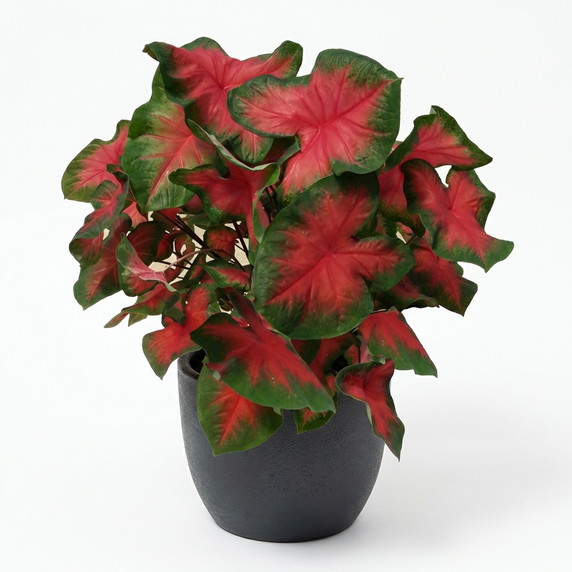
Turn any corner into a tropical statement. This Caladium delivers dramatic red foliage with crisp green edging—perfect for bright indoor spaces, receptions, and stylish living rooms. Easy to refresh your décor fast, it rewards simple care: warmth, filtered light, and evenly moist soil. A bold, giftable plant that looks premium the moment it arrives.
1. Basic Identification
Common Name: Caladium
Botanical Name: Caladium bicolor
Former Name: Not available
Plant Type: Foliage houseplant
Plant Code / SKU: PLT-0257
Alternative Names:
Fancy-leaved caladium
Elephant Ear
Heart of Jesus
Red Fancy-Leaf Mix
2. Taxonomy & Classification
Order: Alismatales
Family: Araceae
Genus: Caladium
Species: C. bicolor
3. Origin & Distribution
Native to tropical South America, particularly Brazil and Colombia.
Cultivated globally in warm climates and widely grown as a decorative houseplant in temperate regions.
4. Visual Characteristics
Tuberous-rooted perennial with heart- to arrowhead-shaped leaves; foliage displays vivid combinations of red, pink, green, and white with contrasting veins and margins; leaf surface is semi-glossy.
5. Size & Dimensions
Typical height: 30–45 cm (12–18 in); spread: 30–60 cm (12–24 in); individual leaf length: 15–30 cm (6–12 in).
6. Light Requirements
Bright, indirect light is ideal; avoid direct sun exposure to prevent leaf scorch; tolerates light to medium shade.
7. Watering Needs
Maintain evenly moist soil—water when the top 2–3 cm of soil feels dry; do not allow the soil to dry out completely; reduce watering during winter dormancy.
8. Soil & Potting
Use a well-draining, rich, slightly acidic potting mix (peat moss or coco coir blended with perlite and compost); plant tubers just below the soil surface; ensure good drainage to prevent waterlogging.
9. Temperature & Humidity
Optimal temperature range: 18–27 °C (65–80 °F); avoid temperatures below 15 °C (59 °F); requires high humidity (60–80%) for best foliage quality.
10. Fertilization
Apply a balanced, water-soluble fertilizer (e.g., 10-10-10 or 20-20-20) at half to full strength every 4–6 weeks during active growth; withhold fertilization during dormancy.
11. Maintenance & Care Level
Moderate care level: monitor moisture and humidity; remove yellowing or damaged leaves to maintain appearance; minimal pruning required.
12. Growth & Propagation
Propagated by dividing tubers or offsets during dormancy or early spring before new growth appears; plant divisions 2–5 cm deep and keep evenly moist until shoots emerge.
13. Common Problems
Yellowing leaves from overwatering or inadequate light; brown leaf tips from low humidity or underwatering; root rot in poorly drained soil; pests include spider mites, aphids, and mealybugs; leaf spot diseases in overly wet conditions.
14. Benefits & Uses
Highly ornamental foliage plant ideal for indoor decor, shaded patios, and container gardens; adds vibrant tropical color; leaves can be used as cut foliage in floral arrangements.
15. Toxicity & Safety
All plant parts contain insoluble calcium oxalate crystals and are toxic if ingested, causing oral irritation, drooling, vomiting, and difficulty swallowing; keep out of reach of children and pets.