

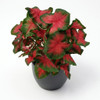




Turn any corner into a tropical statement. This Caladium delivers dramatic red foliage with crisp green edging—perfect for bright indoor spaces, receptions, and stylish living rooms. Easy to refresh your décor fast, it rewards simple care: warmth, filtered light, and evenly moist soil. A bold, giftable plant that looks premium the moment it arrives.
Common Name: Caladium / Angel Wings
Botanical Name: Caladium bicolor
Variety: Red Fancy-Leaf Mix
Arabic Name: كراسولا
Family: Araceae
Caladium bicolor belongs to the kingdom Plantae, order Alismatales, and the family Araceae (Aroids). It is part of the genus Caladium, which is renowned for its spectacular, colorful foliage rather than its flowers.
Native to the tropical rainforests of South and Central America, particularly the Amazon basin in Brazil and neighboring countries. They thrive in the warm, humid understory of these tropical regions.
This variety features large, heart-shaped (cordate) leaves with a thin, paper-like texture. The centers are dominated by a vibrant, dramatic red hue that bleeds into the veins, surrounded by a contrasting deep green border. Some leaves may show white speckling or pink gradients depending on maturity.
Typically reaches a height of 12 to 30 inches (30–75 cm) with a similar spread. As a tuberous perennial, its size is often dictated by the size of the container and the age of the tuber.
Prefers bright, indirect, or filtered light. Direct afternoon sunlight can easily scorch the delicate, thin leaves. In lower light, the colors may become less vibrant or the stems may become "leggy."
Requires consistently moist soil during the active growing season. Do not allow the soil to dry out completely, but ensure it is never waterlogged, as this can cause tuber rot. Reduce watering significantly during the winter dormancy period.
Thrives in rich, well-draining, slightly acidic soil. A peat-based potting mix with added perlite or pine bark is ideal to retain moisture while providing adequate drainage (pH 5.5 to 6.5).
Prefers warm temperatures between 18°C and 30°C. It is very sensitive to cold and will begin to go dormant if temperatures drop below 15°C. High humidity (above 50%) is essential for keeping the leaf edges from browning.
Feed every 2–4 weeks during the spring and summer with a balanced liquid fertilizer diluted to half-strength. Avoid over-fertilizing, which can damage the sensitive root system.
Maintenance Level: Easy to Moderate. The plant requires regular removal of yellowing or dead leaves to maintain its appearance. It is important to remember that this plant naturally goes dormant in the winter, where the foliage will die back.
Grows from underground tubers. Propagation is most successful by dividing the tubers in the early spring before new growth begins, ensuring each piece has at least one growing "eye."
Susceptible to tuber rot if overwatered. Common pests include spider mites and aphids, particularly in dry conditions. Leaf spot can occur if water sits on the foliage for too long.
Highly valued as an ornamental focal point in interior design. It is excellent for adding pops of tropical color to indoor spaces, offices, and shaded patios where traditional flowering plants might struggle.
Caladium bicolor is toxic to both humans and pets (cats and dogs). All parts of the plant contain calcium oxalate crystals, which cause severe irritation of the mouth, throat, and digestive tract if ingested. The sap can also cause skin irritation in sensitive individuals.
Turn any corner into a tropical statement. This Caladium delivers dramatic red foliage with crisp green edging—perfect for bright indoor spaces, receptions, and stylish living rooms. Easy to refresh your décor fast, it rewards simple care: warmth, filtered light, and evenly moist soil. A bold, giftable plant that looks premium the moment it arrives.
Common Name: Caladium / Angel Wings
Botanical Name: Caladium bicolor
Variety: Red Fancy-Leaf Mix
Arabic Name: كراسولا
Family: Araceae
Caladium bicolor belongs to the kingdom Plantae, order Alismatales, and the family Araceae (Aroids). It is part of the genus Caladium, which is renowned for its spectacular, colorful foliage rather than its flowers.
Native to the tropical rainforests of South and Central America, particularly the Amazon basin in Brazil and neighboring countries. They thrive in the warm, humid understory of these tropical regions.
This variety features large, heart-shaped (cordate) leaves with a thin, paper-like texture. The centers are dominated by a vibrant, dramatic red hue that bleeds into the veins, surrounded by a contrasting deep green border. Some leaves may show white speckling or pink gradients depending on maturity.
Typically reaches a height of 12 to 30 inches (30–75 cm) with a similar spread. As a tuberous perennial, its size is often dictated by the size of the container and the age of the tuber.
Prefers bright, indirect, or filtered light. Direct afternoon sunlight can easily scorch the delicate, thin leaves. In lower light, the colors may become less vibrant or the stems may become "leggy."
Requires consistently moist soil during the active growing season. Do not allow the soil to dry out completely, but ensure it is never waterlogged, as this can cause tuber rot. Reduce watering significantly during the winter dormancy period.
Thrives in rich, well-draining, slightly acidic soil. A peat-based potting mix with added perlite or pine bark is ideal to retain moisture while providing adequate drainage (pH 5.5 to 6.5).
Prefers warm temperatures between 18°C and 30°C. It is very sensitive to cold and will begin to go dormant if temperatures drop below 15°C. High humidity (above 50%) is essential for keeping the leaf edges from browning.
Feed every 2–4 weeks during the spring and summer with a balanced liquid fertilizer diluted to half-strength. Avoid over-fertilizing, which can damage the sensitive root system.
Maintenance Level: Easy to Moderate. The plant requires regular removal of yellowing or dead leaves to maintain its appearance. It is important to remember that this plant naturally goes dormant in the winter, where the foliage will die back.
Grows from underground tubers. Propagation is most successful by dividing the tubers in the early spring before new growth begins, ensuring each piece has at least one growing "eye."
Susceptible to tuber rot if overwatered. Common pests include spider mites and aphids, particularly in dry conditions. Leaf spot can occur if water sits on the foliage for too long.
Highly valued as an ornamental focal point in interior design. It is excellent for adding pops of tropical color to indoor spaces, offices, and shaded patios where traditional flowering plants might struggle.
Caladium bicolor is toxic to both humans and pets (cats and dogs). All parts of the plant contain calcium oxalate crystals, which cause severe irritation of the mouth, throat, and digestive tract if ingested. The sap can also cause skin irritation in sensitive individuals.



Take 20% off your first order
Enter the code below at checkout to get 20% off your first order


