


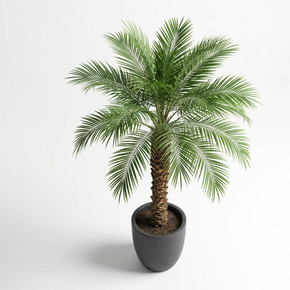



Bring instant resort vibes to your space with the Canary Island Date Palm. Its dramatic feather fronds and strong trunk make it the perfect centerpiece for entrances, patios, and bright atriums. Tough, heat-tolerant, and easy to care for, this palm delivers a premium look with minimal effort—just give it sun, good drainage, and deep watering.
Common Name: Canary Island Date Palm
Botanical Name: Phoenix canariensis
Arabic Name: نخيل ملكي
Plant Varient: Standard
Plant Color: Natural
Plant Country: Unknown
Stems: 1
Family: Arecaceae
The Canary Island Date Palm belongs to the Kingdom Plantae, Order Arecales, and the Family Arecaceae (Palmae). It is a member of the genus Phoenix, which contains approximately 14 species of palms, including the edible date palm (Phoenix dactylifera).
Native specifically to the Canary Islands off the coast of North Africa. Due to its ornamental beauty and hardiness, it has been introduced and naturalized in Mediterranean-style climates around the world, including parts of the United States (California, Florida), Australia, and southern Europe.
This palm is known for its massive, stout, solitary trunk that features a diamond-shaped pattern of leaf scars. The crown consists of a dense canopy of 80 to 100 or more arching, deep green pinnate fronds (feather-like). Each frond can grow several meters long and contains narrow leaflets.
In outdoor landscapes, it can reach heights of 10 to 20 meters (33 to 66 feet). As a container-grown specimen or indoor atrium plant, its growth is significantly slower and limited by pot size, typically reaching heights of 2 to 4 meters over many years.
This palm thrives in full sun to very bright indirect light. While it can tolerate partial shade, it requires high light levels to maintain its dense crown. Indoors, it should be placed in the sunniest spot available, such as a south-facing window or a glass-roofed atrium.
Once established, it is moderately drought-tolerant. It prefers deep watering followed by a period where the top 50% of the soil is allowed to dry out. During the growing season, it needs more frequent water, but it is essential to avoid "wet feet" or waterlogged soil which leads to root rot.
Requires well-draining soil. A high-quality potting mix amended with sand or perlite to improve drainage is ideal. It is adaptable to various soil pH levels but performs best in fertile, well-aerated mediums.
Extremely hardy for a palm, it can tolerate temperatures as low as -8°C (18°F) for short durations. It thrives in warm temperatures and is very heat-tolerant. It performs well in both low and high humidity environments, making it versatile for indoor climate-controlled spaces.
Feed with a specialized palm fertilizer that includes micronutrients like magnesium, manganese, and potassium during the spring and summer months. Lack of potassium can often lead to yellowing or spotting on older fronds.
Care level is considered easy to moderate. Maintenance primarily involves pruning dead or dying lower fronds to keep the trunk clean. Caution must be taken during maintenance due to the long, sharp spines located at the base of the leaf stalks.
The growth rate is relatively slow, especially when young. Propagation is primarily done through seeds, which can take 2 to 3 months to germinate under warm, moist conditions. It does not produce offshoots or "pups."
Susceptible to scale insects, spider mites, and mealybugs. Overwatering is the most common cause of decline, leading to root rot. Nutrient deficiencies (potassium or magnesium) are common in poor soils and manifest as yellowing of the foliage.
Highly valued for its architectural impact in landscaping and large interior designs. It acts as an effective air purifier in large indoor spaces. Its "resort-style" aesthetic makes it a popular choice for high-end residential and commercial projects.
The plant is generally considered non-toxic to humans and pets if ingested. However, the base of each frond features extremely sharp, needle-like spines that can cause painful puncture wounds. It should be placed away from narrow walkways or areas where children and pets play.
Bring instant resort vibes to your space with the Canary Island Date Palm. Its dramatic feather fronds and strong trunk make it the perfect centerpiece for entrances, patios, and bright atriums. Tough, heat-tolerant, and easy to care for, this palm delivers a premium look with minimal effort—just give it sun, good drainage, and deep watering.
Common Name: Canary Island Date Palm
Botanical Name: Phoenix canariensis
Arabic Name: نخيل ملكي
Plant Varient: Standard
Plant Color: Natural
Plant Country: Unknown
Stems: 1
Family: Arecaceae
The Canary Island Date Palm belongs to the Kingdom Plantae, Order Arecales, and the Family Arecaceae (Palmae). It is a member of the genus Phoenix, which contains approximately 14 species of palms, including the edible date palm (Phoenix dactylifera).
Native specifically to the Canary Islands off the coast of North Africa. Due to its ornamental beauty and hardiness, it has been introduced and naturalized in Mediterranean-style climates around the world, including parts of the United States (California, Florida), Australia, and southern Europe.
This palm is known for its massive, stout, solitary trunk that features a diamond-shaped pattern of leaf scars. The crown consists of a dense canopy of 80 to 100 or more arching, deep green pinnate fronds (feather-like). Each frond can grow several meters long and contains narrow leaflets.
In outdoor landscapes, it can reach heights of 10 to 20 meters (33 to 66 feet). As a container-grown specimen or indoor atrium plant, its growth is significantly slower and limited by pot size, typically reaching heights of 2 to 4 meters over many years.
This palm thrives in full sun to very bright indirect light. While it can tolerate partial shade, it requires high light levels to maintain its dense crown. Indoors, it should be placed in the sunniest spot available, such as a south-facing window or a glass-roofed atrium.
Once established, it is moderately drought-tolerant. It prefers deep watering followed by a period where the top 50% of the soil is allowed to dry out. During the growing season, it needs more frequent water, but it is essential to avoid "wet feet" or waterlogged soil which leads to root rot.
Requires well-draining soil. A high-quality potting mix amended with sand or perlite to improve drainage is ideal. It is adaptable to various soil pH levels but performs best in fertile, well-aerated mediums.
Extremely hardy for a palm, it can tolerate temperatures as low as -8°C (18°F) for short durations. It thrives in warm temperatures and is very heat-tolerant. It performs well in both low and high humidity environments, making it versatile for indoor climate-controlled spaces.
Feed with a specialized palm fertilizer that includes micronutrients like magnesium, manganese, and potassium during the spring and summer months. Lack of potassium can often lead to yellowing or spotting on older fronds.
Care level is considered easy to moderate. Maintenance primarily involves pruning dead or dying lower fronds to keep the trunk clean. Caution must be taken during maintenance due to the long, sharp spines located at the base of the leaf stalks.
The growth rate is relatively slow, especially when young. Propagation is primarily done through seeds, which can take 2 to 3 months to germinate under warm, moist conditions. It does not produce offshoots or "pups."
Susceptible to scale insects, spider mites, and mealybugs. Overwatering is the most common cause of decline, leading to root rot. Nutrient deficiencies (potassium or magnesium) are common in poor soils and manifest as yellowing of the foliage.
Highly valued for its architectural impact in landscaping and large interior designs. It acts as an effective air purifier in large indoor spaces. Its "resort-style" aesthetic makes it a popular choice for high-end residential and commercial projects.
The plant is generally considered non-toxic to humans and pets if ingested. However, the base of each frond features extremely sharp, needle-like spines that can cause painful puncture wounds. It should be placed away from narrow walkways or areas where children and pets play.




Take 20% off your first order
Enter the code below at checkout to get 20% off your first order