


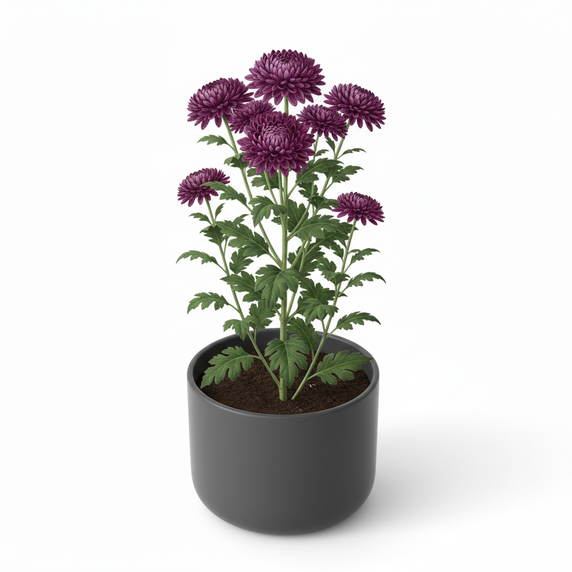




Elevate your space with the regal beauty of the Purple Chrysanthemum. Bursting with rich, velvety purple petals, this plant is more than just a pretty face—it's a natural air-purifying hero ready to brighten your home or office. Perfect as a thoughtful gift or a treat for yourself, its stunning blooms provide a long-lasting display of color and cheer. Add this low-maintenance burst of joy to your cart today and let nature's artistry flourish in your life!
Common Name: Purple Chrysanthemum (Mum)
Botanical Name: Chrysanthemum morifolium
Arabic Name: داودي
Family: Asteraceae
Variant: Purple
Color: Purple
Country of Origin: Netherlands
Stems: Not available
Chrysanthemum morifolium, often called the Florist's Daisy, belongs to the family Asteraceae (the daisy family). It is an herbaceous perennial that has been cultivated for centuries, particularly in East Asia, resulting in thousands of diverse cultivars classified by flower shape and arrangement.
The Chrysanthemum is native to East Asia, primarily China, where it has been cultivated since the 15th century BC. It was later introduced to Japan and eventually reached Europe and the Americas, where it is now one of the most popular ornamental flowers globally.
This variety features striking, multi-layered petals in deep, velvety purple shades. The flower heads are dense and rounded. Its foliage consists of deeply lobed, aromatic, dark green leaves that have a slightly fuzzy texture, providing a lush backdrop for the vibrant blooms.
When grown as an indoor potted plant, it typically reaches a height and spread of 30 to 50 cm (12 to 20 inches), making it an ideal size for tabletops, desks, and windowsills.
Purple Chrysanthemums thrive in bright, indirect light. They need significant light to maintain their bloom color, but direct midday sun can scorch the petals. A spot near an east or west-facing window is usually ideal.
Keep the soil consistently moist but never waterlogged. Water when the top 1 cm of soil feels dry to the touch. It is important to avoid letting the plant sit in standing water, as this can lead to root rot.
Use a high-quality, well-draining potting mix rich in organic matter. A peat-based mix with perlite or vermiculite is recommended to ensure proper drainage while retaining necessary moisture.
Chrysanthemums prefer cooler temperatures, ideally between 15°C and 22°C (60°F–72°F). High temperatures can cause the blooms to fade quickly. They appreciate moderate humidity levels, which can be maintained by occasional misting or using a humidity tray.
Feed the plant every two weeks during the growing and blooming season with a balanced liquid fertilizer or a high-potassium fertilizer to support flower production. Do not fertilize once the blooming has finished for the season.
The care level is moderate. To prolong the flowering period, "deadhead" the plant by removing spent or withered blooms. This encourages the plant to direct its energy toward remaining buds.
They are relatively fast growers during their active season. Propagation is most successful via stem cuttings taken in the spring or by dividing the root ball of established plants.
Watch out for common pests such as aphids, spider mites, and leaf miners. Overwatering can lead to powdery mildew or root rot. Ensure good air circulation around the foliage to prevent fungal issues.
Beyond its aesthetic appeal, Chrysanthemum morifolium is a powerful air purifier. According to NASA studies, it is highly effective at removing toxins like ammonia, benzene, and formaldehyde from indoor air. It is widely used for home decor, gifting, and office beautification.
The plant is toxic to pets, including dogs, cats, and horses, as it contains pyrethrins which can cause vomiting and incoordination. In humans, contact with the foliage may cause skin irritation or allergic dermatitis in sensitive individuals.
Elevate your space with the regal beauty of the Purple Chrysanthemum. Bursting with rich, velvety purple petals, this plant is more than just a pretty face—it's a natural air-purifying hero ready to brighten your home or office. Perfect as a thoughtful gift or a treat for yourself, its stunning blooms provide a long-lasting display of color and cheer. Add this low-maintenance burst of joy to your cart today and let nature's artistry flourish in your life!
Common Name: Purple Chrysanthemum (Mum)
Botanical Name: Chrysanthemum morifolium
Arabic Name: داودي
Family: Asteraceae
Variant: Purple
Color: Purple
Country of Origin: Netherlands
Stems: Not available
Chrysanthemum morifolium, often called the Florist's Daisy, belongs to the family Asteraceae (the daisy family). It is an herbaceous perennial that has been cultivated for centuries, particularly in East Asia, resulting in thousands of diverse cultivars classified by flower shape and arrangement.
The Chrysanthemum is native to East Asia, primarily China, where it has been cultivated since the 15th century BC. It was later introduced to Japan and eventually reached Europe and the Americas, where it is now one of the most popular ornamental flowers globally.
This variety features striking, multi-layered petals in deep, velvety purple shades. The flower heads are dense and rounded. Its foliage consists of deeply lobed, aromatic, dark green leaves that have a slightly fuzzy texture, providing a lush backdrop for the vibrant blooms.
When grown as an indoor potted plant, it typically reaches a height and spread of 30 to 50 cm (12 to 20 inches), making it an ideal size for tabletops, desks, and windowsills.
Purple Chrysanthemums thrive in bright, indirect light. They need significant light to maintain their bloom color, but direct midday sun can scorch the petals. A spot near an east or west-facing window is usually ideal.
Keep the soil consistently moist but never waterlogged. Water when the top 1 cm of soil feels dry to the touch. It is important to avoid letting the plant sit in standing water, as this can lead to root rot.
Use a high-quality, well-draining potting mix rich in organic matter. A peat-based mix with perlite or vermiculite is recommended to ensure proper drainage while retaining necessary moisture.
Chrysanthemums prefer cooler temperatures, ideally between 15°C and 22°C (60°F–72°F). High temperatures can cause the blooms to fade quickly. They appreciate moderate humidity levels, which can be maintained by occasional misting or using a humidity tray.
Feed the plant every two weeks during the growing and blooming season with a balanced liquid fertilizer or a high-potassium fertilizer to support flower production. Do not fertilize once the blooming has finished for the season.
The care level is moderate. To prolong the flowering period, "deadhead" the plant by removing spent or withered blooms. This encourages the plant to direct its energy toward remaining buds.
They are relatively fast growers during their active season. Propagation is most successful via stem cuttings taken in the spring or by dividing the root ball of established plants.
Watch out for common pests such as aphids, spider mites, and leaf miners. Overwatering can lead to powdery mildew or root rot. Ensure good air circulation around the foliage to prevent fungal issues.
Beyond its aesthetic appeal, Chrysanthemum morifolium is a powerful air purifier. According to NASA studies, it is highly effective at removing toxins like ammonia, benzene, and formaldehyde from indoor air. It is widely used for home decor, gifting, and office beautification.
The plant is toxic to pets, including dogs, cats, and horses, as it contains pyrethrins which can cause vomiting and incoordination. In humans, contact with the foliage may cause skin irritation or allergic dermatitis in sensitive individuals.
Take 20% off your first order
Enter the code below at checkout to get 20% off your first order