


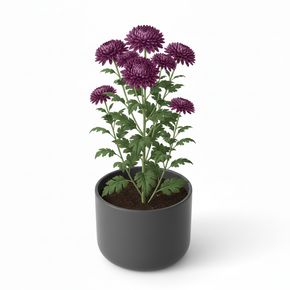




Transform your space with the breathtaking beauty of the Spider Chrysanthemum! Known as 'Dawoodi', this isn't your ordinary flower. Its unique, cascading petals create a stunning visual masterpiece, adding a touch of elegance and drama to any room. Not only is it a feast for the eyes, but it also works to purify your air. It's the perfect statement piece for your living room or a thoughtful gift that truly stands out. Order now and experience the allure of this living art.
Common Name: Spider Chrysanthemum (Dawoodi)
Botanical Name: Chrysanthemum × morifolium
Variant: Spider
Color: Multicolor
Country of Origin: Netherlands
Arabic Name: داودي
Family: Asteraceae
Chrysanthemum × morifolium is a perennial flowering plant in the family Asteraceae. The 'Spider' variant is a specific horticultural classification within the Chrysanthemum genus, characterized by its distinct floral morphology. It belongs to the order Asterales and is a complex hybrid with a long history of cultivation.
While the product is sourced from the Netherlands, Chrysanthemums originally hail from East Asia, particularly China, where they have been cultivated since the 15th century BC. They were later introduced to Japan and eventually Europe in the 17th century. They are now distributed globally as one of the most popular ornamental flowers.
The Spider Chrysanthemum is famous for its long, tubular, ray florets that radiate in all directions, resembling spider legs. These petals often coil or hook at the tips. The foliage consists of deeply lobed, dark green leaves that provide a lush backdrop for the vibrant, multi-colored blooms.
Typically, these plants reach a height of 1 to 3 feet (30–90 cm) and a spread of about 1 to 2 feet. As a "Medium Plant," it is well-suited for floor containers or large tabletop displays.
Spider Chrysanthemums thrive in bright, indirect light when kept indoors. Too much direct afternoon sun can scorch the delicate petals, while too little light will result in leggy growth and fewer blooms.
The soil should be kept consistently moist but never waterlogged. It is best to water the plant when the top inch of soil feels dry to the touch. Avoid getting water on the foliage or flowers to prevent fungal issues.
A well-draining, fertile potting mix is essential. A mix containing peat moss, perlite, and organic compost provides the necessary aeration and moisture retention required for healthy root development.
They prefer cool to moderate temperatures, ideally between 15°C and 21°C (60-70°F). High humidity is beneficial, though they can tolerate average indoor humidity if the environment is not excessively dry.
Apply a balanced liquid fertilizer every 2-4 weeks during the growing and blooming season. Once the plant has finished flowering, fertilization should be reduced or stopped until new growth appears in the spring.
Moderate care level. Regular "deadheading" (removing spent flowers) is required to encourage prolonged blooming. Pinching back the stems in early summer can help create a bushier plant with more flower heads.
These plants are moderate growers. They can be propagated through stem cuttings taken in the spring or by dividing the root ball of established plants. Commercial varieties are often grown from tissue culture to ensure specific floral traits.
Susceptible to aphids, spider mites, and leaf miners. Overwatering can lead to root rot, while poor air circulation may cause powdery mildew or botrytis blight on the petals.
Apart from its high ornamental value, it is recognized for its air-purifying qualities; it was famously cited in the NASA Clean Air Study for its ability to remove benzene, formaldehyde, and ammonia from the air. It is widely used in home decor, corporate gifting, and as a centerpiece in receptions.
Chrysanthemums are toxic to dogs, cats, and horses if ingested. They contain pyrethrins and other irritants that can cause gastrointestinal upset, drooling, and skin irritation. They are also considered unsafe for human consumption.
Transform your space with the breathtaking beauty of the Spider Chrysanthemum! Known as 'Dawoodi', this isn't your ordinary flower. Its unique, cascading petals create a stunning visual masterpiece, adding a touch of elegance and drama to any room. Not only is it a feast for the eyes, but it also works to purify your air. It's the perfect statement piece for your living room or a thoughtful gift that truly stands out. Order now and experience the allure of this living art.
Common Name: Spider Chrysanthemum (Dawoodi)
Botanical Name: Chrysanthemum × morifolium
Variant: Spider
Color: Multicolor
Country of Origin: Netherlands
Arabic Name: داودي
Family: Asteraceae
Chrysanthemum × morifolium is a perennial flowering plant in the family Asteraceae. The 'Spider' variant is a specific horticultural classification within the Chrysanthemum genus, characterized by its distinct floral morphology. It belongs to the order Asterales and is a complex hybrid with a long history of cultivation.
While the product is sourced from the Netherlands, Chrysanthemums originally hail from East Asia, particularly China, where they have been cultivated since the 15th century BC. They were later introduced to Japan and eventually Europe in the 17th century. They are now distributed globally as one of the most popular ornamental flowers.
The Spider Chrysanthemum is famous for its long, tubular, ray florets that radiate in all directions, resembling spider legs. These petals often coil or hook at the tips. The foliage consists of deeply lobed, dark green leaves that provide a lush backdrop for the vibrant, multi-colored blooms.
Typically, these plants reach a height of 1 to 3 feet (30–90 cm) and a spread of about 1 to 2 feet. As a "Medium Plant," it is well-suited for floor containers or large tabletop displays.
Spider Chrysanthemums thrive in bright, indirect light when kept indoors. Too much direct afternoon sun can scorch the delicate petals, while too little light will result in leggy growth and fewer blooms.
The soil should be kept consistently moist but never waterlogged. It is best to water the plant when the top inch of soil feels dry to the touch. Avoid getting water on the foliage or flowers to prevent fungal issues.
A well-draining, fertile potting mix is essential. A mix containing peat moss, perlite, and organic compost provides the necessary aeration and moisture retention required for healthy root development.
They prefer cool to moderate temperatures, ideally between 15°C and 21°C (60-70°F). High humidity is beneficial, though they can tolerate average indoor humidity if the environment is not excessively dry.
Apply a balanced liquid fertilizer every 2-4 weeks during the growing and blooming season. Once the plant has finished flowering, fertilization should be reduced or stopped until new growth appears in the spring.
Moderate care level. Regular "deadheading" (removing spent flowers) is required to encourage prolonged blooming. Pinching back the stems in early summer can help create a bushier plant with more flower heads.
These plants are moderate growers. They can be propagated through stem cuttings taken in the spring or by dividing the root ball of established plants. Commercial varieties are often grown from tissue culture to ensure specific floral traits.
Susceptible to aphids, spider mites, and leaf miners. Overwatering can lead to root rot, while poor air circulation may cause powdery mildew or botrytis blight on the petals.
Apart from its high ornamental value, it is recognized for its air-purifying qualities; it was famously cited in the NASA Clean Air Study for its ability to remove benzene, formaldehyde, and ammonia from the air. It is widely used in home decor, corporate gifting, and as a centerpiece in receptions.
Chrysanthemums are toxic to dogs, cats, and horses if ingested. They contain pyrethrins and other irritants that can cause gastrointestinal upset, drooling, and skin irritation. They are also considered unsafe for human consumption.
Take 20% off your first order
Enter the code below at checkout to get 20% off your first order