


Citrus Tree (Standard)
Bring the Mediterranean sunshine to your space with our magnificent Standard Citrus Tree. Expertly trained into an elegant topiary form, this 2-meter statement plant features lush, glossy green leaves and produces incredibly fragrant white blossoms. Perfect for a bright entryway, sunny living room, or outdoor patio, it not only adds a touch of natural sophistication but also holds the promise of bearing its own delicious fruit. It's a living piece of art that delights the senses.
1. Basic Identification
Common Name: Standard Citrus Tree / Lemon Tree
Botanical Name: Citrus × limon
Arabic Name: حمضيات
Family: Rutaceae
Plant Variant: Standard
Plant Color: Green
Country of Origin: Spain
2. Taxonomy & Classification
The Citrus limon belongs to the Rutaceae family, commonly known as the rue or citrus family. It is a hybrid species, likely a cross between the citron (Citrus medica) and bitter orange (Citrus × aurantium).
3. Origin & Distribution
While originally native to South Asia (primarily Northeast India, Northern Myanmar, and China), Citrus trees have been cultivated in the Mediterranean for centuries. This specific specimen originates from Spain, a region world-renowned for high-quality citrus production.
4. Visual Characteristics
This tree features an upright, woody trunk topped with a rounded canopy of dense, evergreen foliage. The leaves are ovate, glossy, and a vibrant dark green. During bloom, it produces clusters of small, five-petaled white flowers that are highly fragrant, followed by the development of ellipsoidal green fruits that ripen to a bright yellow.
5. Size & Dimensions
This specific product is a 'Standard' tree form, reaching approximately 2 meters in height. In a container, its width is typically maintained between 60-90 cm through pruning, though it can grow larger if planted in the ground.
6. Light Requirements
Citrus trees require high light intensity. For indoor placement, they need a very bright spot, ideally near a south-facing window with 6 to 8 hours of direct sunlight. Outdoors, they thrive in full sun.
7. Watering Needs
Keep the soil consistently moist but never waterlogged. Water thoroughly when the top 2-3 cm of soil feels dry. Ensure excellent drainage to prevent root rot. During winter, reduce watering frequency as growth slows.
8. Soil & Potting
Requires a well-draining, slightly acidic soil mix (pH 5.5 to 6.5). A specialized citrus potting mix or a blend of peat moss, perlite, and pine bark is ideal for maintaining the necessary aeration and drainage.
9. Temperature & Humidity
Citrus trees prefer warm temperatures between 18°C and 30°C. They are sensitive to frost and should be brought indoors if temperatures drop below 5°C. They thrive in moderate to high humidity; if kept indoors, regular misting or a humidifier may be beneficial.
10. Fertilization
Feed with a high-nitrogen citrus-specific fertilizer every 4-6 weeks during the growing season (spring and summer). Reduce fertilization in autumn and pause during winter.
11. Maintenance & Care Level
The maintenance level is Moderate. Regular pruning is required to maintain the "Standard" topiary shape and to remove any suckers growing from the trunk. Monitoring for pests and ensuring proper light are key to its health.
12. Growth & Propagation
Citrus limon is a moderate grower. Commercial specimens like this are typically propagated via grafting onto hardy rootstocks to ensure disease resistance and fruit quality. They can also be grown from semi-hardwood cuttings or seeds.
13. Common Problems
Watch for pests such as spider mites, scale insects, and aphids, especially when kept indoors. Yellowing leaves (chlorosis) can indicate a nutrient deficiency or overwatering. Leaf drop may occur if the plant is moved suddenly or experiences a dramatic change in light or temperature.
14. Benefits & Uses
Beyond its aesthetic value as a luxury decor piece, the tree bears edible fruit rich in Vitamin C. The blossoms provide natural aromatherapy with their sweet scent. It is highly valued in landscaping and interior design for its architectural "Standard" form.
15. Toxicity & Safety
Citrus limon is considered toxic to dogs, cats, and horses. The leaves and fruit skins contain essential oils (limonene and linalool) and psoralens, which can cause gastrointestinal upset or photosensitivity if ingested.
Citrus Tree (Standard)
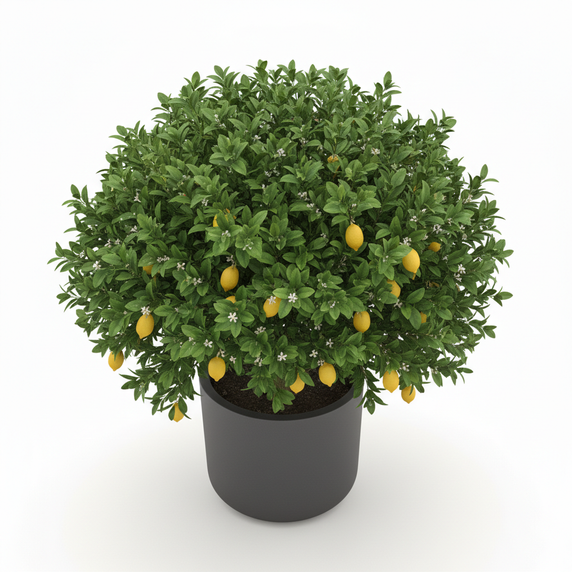
Bring the Mediterranean sunshine to your space with our magnificent Standard Citrus Tree. Expertly trained into an elegant topiary form, this 2-meter statement plant features lush, glossy green leaves and produces incredibly fragrant white blossoms. Perfect for a bright entryway, sunny living room, or outdoor patio, it not only adds a touch of natural sophistication but also holds the promise of bearing its own delicious fruit. It's a living piece of art that delights the senses.
1. Basic Identification
Common Name: Standard Citrus Tree / Lemon Tree
Botanical Name: Citrus × limon
Arabic Name: حمضيات
Family: Rutaceae
Plant Variant: Standard
Plant Color: Green
Country of Origin: Spain
2. Taxonomy & Classification
The Citrus limon belongs to the Rutaceae family, commonly known as the rue or citrus family. It is a hybrid species, likely a cross between the citron (Citrus medica) and bitter orange (Citrus × aurantium).
3. Origin & Distribution
While originally native to South Asia (primarily Northeast India, Northern Myanmar, and China), Citrus trees have been cultivated in the Mediterranean for centuries. This specific specimen originates from Spain, a region world-renowned for high-quality citrus production.
4. Visual Characteristics
This tree features an upright, woody trunk topped with a rounded canopy of dense, evergreen foliage. The leaves are ovate, glossy, and a vibrant dark green. During bloom, it produces clusters of small, five-petaled white flowers that are highly fragrant, followed by the development of ellipsoidal green fruits that ripen to a bright yellow.
5. Size & Dimensions
This specific product is a 'Standard' tree form, reaching approximately 2 meters in height. In a container, its width is typically maintained between 60-90 cm through pruning, though it can grow larger if planted in the ground.
6. Light Requirements
Citrus trees require high light intensity. For indoor placement, they need a very bright spot, ideally near a south-facing window with 6 to 8 hours of direct sunlight. Outdoors, they thrive in full sun.
7. Watering Needs
Keep the soil consistently moist but never waterlogged. Water thoroughly when the top 2-3 cm of soil feels dry. Ensure excellent drainage to prevent root rot. During winter, reduce watering frequency as growth slows.
8. Soil & Potting
Requires a well-draining, slightly acidic soil mix (pH 5.5 to 6.5). A specialized citrus potting mix or a blend of peat moss, perlite, and pine bark is ideal for maintaining the necessary aeration and drainage.
9. Temperature & Humidity
Citrus trees prefer warm temperatures between 18°C and 30°C. They are sensitive to frost and should be brought indoors if temperatures drop below 5°C. They thrive in moderate to high humidity; if kept indoors, regular misting or a humidifier may be beneficial.
10. Fertilization
Feed with a high-nitrogen citrus-specific fertilizer every 4-6 weeks during the growing season (spring and summer). Reduce fertilization in autumn and pause during winter.
11. Maintenance & Care Level
The maintenance level is Moderate. Regular pruning is required to maintain the "Standard" topiary shape and to remove any suckers growing from the trunk. Monitoring for pests and ensuring proper light are key to its health.
12. Growth & Propagation
Citrus limon is a moderate grower. Commercial specimens like this are typically propagated via grafting onto hardy rootstocks to ensure disease resistance and fruit quality. They can also be grown from semi-hardwood cuttings or seeds.
13. Common Problems
Watch for pests such as spider mites, scale insects, and aphids, especially when kept indoors. Yellowing leaves (chlorosis) can indicate a nutrient deficiency or overwatering. Leaf drop may occur if the plant is moved suddenly or experiences a dramatic change in light or temperature.
14. Benefits & Uses
Beyond its aesthetic value as a luxury decor piece, the tree bears edible fruit rich in Vitamin C. The blossoms provide natural aromatherapy with their sweet scent. It is highly valued in landscaping and interior design for its architectural "Standard" form.
15. Toxicity & Safety
Citrus limon is considered toxic to dogs, cats, and horses. The leaves and fruit skins contain essential oils (limonene and linalool) and psoralens, which can cause gastrointestinal upset or photosensitivity if ingested.