


Amaryllidaceae
Clivia miniata
Bring a premium, evergreen look to your space with Clivia—bold strap leaves today, and spectacular flower clusters when mature. It thrives in bright indoor light, needs only moderate watering, and stays attractive year-round. Ideal for reception areas, living rooms, and thoughtful gifting—just place it well, water wisely, and let it reward you season after season.
1. Basic Identification
Common Name: Natal Lily, Bush Lily, Clivia
Botanical Name: Clivia miniata
Arabic Name: يوغا
Variety: Standard
Color: Natural
2. Taxonomy & Classification
Kingdom: Plantae
Clade: Tracheophytes
Order: Asparagales
Family: Amaryllidaceae
Genus: Clivia
Species: C. miniata
3. Origin & Distribution
The Clivia miniata is native to the subtropical woodland regions of South Africa, particularly in the Eastern Cape and KwaZulu-Natal provinces, where it grows in the shade of forest canopies.
4. Visual Characteristics
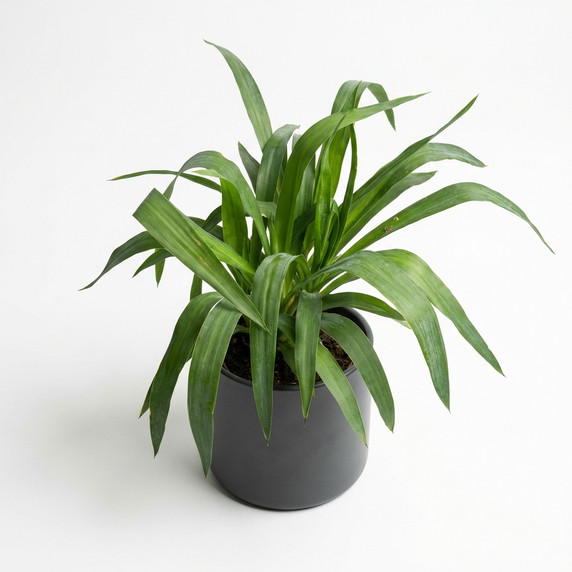
It features dense, arching, strap-shaped leaves that are dark green and leathery. When mature, it produces an upright flower stalk topped with a large umbel of 10 to 20 trumpet-shaped, vibrant orange to reddish-orange flowers with yellow centers. These are often followed by ornamental red berries.
5. Size & Dimensions
In indoor environments, Clivia typically reaches a height of 18 to 24 inches (45–60 cm) and spreads approximately 24 inches wide as it produces offsets over time.
6. Light Requirements
Prefers bright, indirect light. It is sensitive to direct sunlight, which can quickly scorch and bleach the foliage. It can tolerate lower light levels but may not bloom as reliably.
7. Watering Needs
Water moderately during the active growing season (spring and summer), allowing the top half of the soil to dry out before watering again. In late autumn and winter, significantly reduce watering to provide a necessary dry rest period.
8. Soil & Potting
Requires a very well-draining, loose potting medium. A mix containing orchid bark, coarse sand, or perlite combined with rich organic compost is ideal to prevent waterlogging.
9. Temperature & Humidity
Prefers temperatures between 60°F and 75°F (15°C–24°C). To trigger blooming, it requires a "cool period" in winter with temperatures around 50°F (10°C) for about 6 to 8 weeks. It adapts well to average household humidity.
10. Fertilization
Feed with a balanced, water-soluble fertilizer once a month from early spring through mid-summer. Stop fertilizing during the winter rest period.
11. Maintenance & Care Level
Maintenance is low to moderate. Keep leaves clean by wiping them with a damp cloth. Remove spent flower stalks at the base once the blooms fade to encourage the plant to focus energy on foliage and root growth.
12. Growth & Propagation
Growth is relatively slow. Propagation is most successful by dividing the offsets (pups) from the parent plant after they have developed their own root systems, usually after the flowering season.
13. Common Problems
The most common issue is root rot caused by overwatering. It can also be susceptible to mealybugs and scale insects. Leaf tips may turn brown if the air is excessively dry or if the water has high mineral content.
14. Benefits & Uses
Highly valued for its striking architectural foliage and brilliant flowers. It is an excellent choice for low-light indoor spaces, offices, and hallways where other flowering plants might struggle.
15. Toxicity & Safety
Toxic to both humans and pets (cats and dogs) if ingested. It contains lycorine and other alkaloids which can cause vomiting, salivation, and in large quantities, more severe symptoms. Use caution around curious pets and children.
Clivia miniata
Bring a premium, evergreen look to your space with Clivia—bold strap leaves today, and spectacular flower clusters when mature. It thrives in bright indoor light, needs only moderate watering, and stays attractive year-round. Ideal for reception areas, living rooms, and thoughtful gifting—just place it well, water wisely, and let it reward you season after season.
1. Basic Identification
Common Name: Natal Lily, Bush Lily, Clivia
Botanical Name: Clivia miniata
Arabic Name: يوغا
Variety: Standard
Color: Natural
2. Taxonomy & Classification
Kingdom: Plantae
Clade: Tracheophytes
Order: Asparagales
Family: Amaryllidaceae
Genus: Clivia
Species: C. miniata
3. Origin & Distribution
The Clivia miniata is native to the subtropical woodland regions of South Africa, particularly in the Eastern Cape and KwaZulu-Natal provinces, where it grows in the shade of forest canopies.
4. Visual Characteristics
It features dense, arching, strap-shaped leaves that are dark green and leathery. When mature, it produces an upright flower stalk topped with a large umbel of 10 to 20 trumpet-shaped, vibrant orange to reddish-orange flowers with yellow centers. These are often followed by ornamental red berries.
5. Size & Dimensions
In indoor environments, Clivia typically reaches a height of 18 to 24 inches (45–60 cm) and spreads approximately 24 inches wide as it produces offsets over time.
6. Light Requirements
Prefers bright, indirect light. It is sensitive to direct sunlight, which can quickly scorch and bleach the foliage. It can tolerate lower light levels but may not bloom as reliably.
7. Watering Needs
Water moderately during the active growing season (spring and summer), allowing the top half of the soil to dry out before watering again. In late autumn and winter, significantly reduce watering to provide a necessary dry rest period.
8. Soil & Potting
Requires a very well-draining, loose potting medium. A mix containing orchid bark, coarse sand, or perlite combined with rich organic compost is ideal to prevent waterlogging.
9. Temperature & Humidity
Prefers temperatures between 60°F and 75°F (15°C–24°C). To trigger blooming, it requires a "cool period" in winter with temperatures around 50°F (10°C) for about 6 to 8 weeks. It adapts well to average household humidity.
10. Fertilization
Feed with a balanced, water-soluble fertilizer once a month from early spring through mid-summer. Stop fertilizing during the winter rest period.
11. Maintenance & Care Level
Maintenance is low to moderate. Keep leaves clean by wiping them with a damp cloth. Remove spent flower stalks at the base once the blooms fade to encourage the plant to focus energy on foliage and root growth.
12. Growth & Propagation
Growth is relatively slow. Propagation is most successful by dividing the offsets (pups) from the parent plant after they have developed their own root systems, usually after the flowering season.
13. Common Problems
The most common issue is root rot caused by overwatering. It can also be susceptible to mealybugs and scale insects. Leaf tips may turn brown if the air is excessively dry or if the water has high mineral content.
14. Benefits & Uses
Highly valued for its striking architectural foliage and brilliant flowers. It is an excellent choice for low-light indoor spaces, offices, and hallways where other flowering plants might struggle.
15. Toxicity & Safety
Toxic to both humans and pets (cats and dogs) if ingested. It contains lycorine and other alkaloids which can cause vomiting, salivation, and in large quantities, more severe symptoms. Use caution around curious pets and children.