

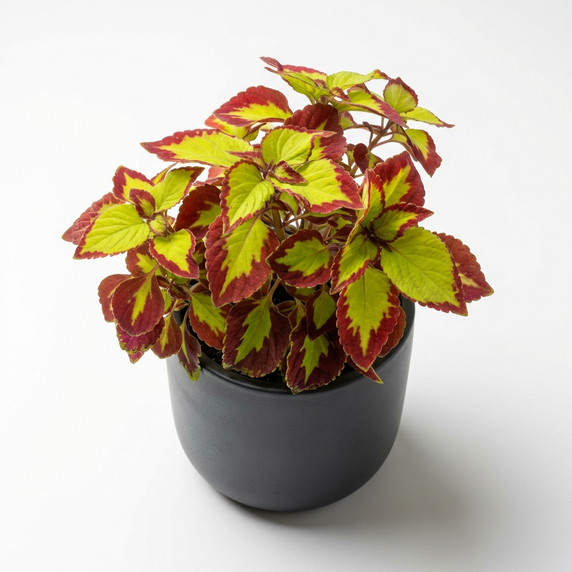

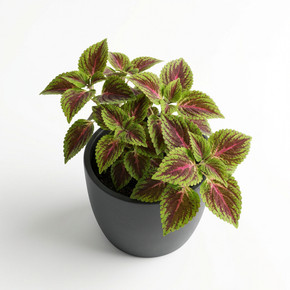


Bring a burst of living color to your space with Coleus. Its striking green-and-burgundy foliage looks like a painted masterpiece and stays beautiful with simple, beginner-friendly care. Perfect for bright rooms, shaded balconies, and mixed planters—just pinch the tips for a fuller, show-stopping shape. A top choice for gifts and décor upgrades all year round.
Common Name: Coleus
Botanical Name: Coleus scutellarioides
Former Name: Solenostemon scutellarioides
Plant Type: Foliage ornamental annual
Plant Code / SKU: PLT-0462
Alternative Names:
Painted nettle
Flame nettle
Plectranthus scutellarioides
كوليوس
Order: Lamiales
Family: Lamiaceae
Genus: Coleus
Coleus scutellarioides is native to tropical regions of Southeast Asia, including Malaysia, Indonesia, the Philippines, and New Guinea. It has been widely cultivated and naturalized in tropical and subtropical areas worldwide as an ornamental bedding and houseplant.
This species is prized for its vibrant, variegated foliage. Leaves are ovate to cordate with serrated margins, ranging from 2–6 inches long. Color patterns include combinations of green, burgundy, purple, pink, yellow, and cream, often with contrasting veins or margins. Stems are square in cross-section, typical of the mint family.
Height: 15–90 cm (6–36 inches), depending on variety and conditions.
Spread: 15–60 cm (6–24 inches).
Container-grown plants typically remain more compact (15–30 cm tall).
Thrives in bright indirect light to partial shade. Varieties with darker foliage tolerate more sun; lighter or more delicate patterns prefer filtered light. Avoid harsh midday sun to prevent leaf scorch.
Maintain evenly moist soil but avoid waterlogging. Water when the top 1–2 cm of soil feels dry. During hot weather, water more frequently; reduce slightly in cooler months.
Use a well-draining, fertile potting mix rich in organic matter. Ideal pH is 6.0–7.0. Amend with perlite or coarse sand for improved drainage. Repot annually or when rootbound.
Optimal temperature range is 18–27 °C (65–80 °F). Sensitive to temperatures below 10 °C (50 °F). Prefers high humidity (50 %–70 %); mist foliage or use a humidity tray in dry indoor environments.
Feed with a balanced, water-soluble fertilizer (e.g., 10-10-10 NPK) every 2–4 weeks during the growing season (spring through early autumn). Reduce feeding in winter when growth slows.
Easy to moderate. Pinch back growing tips regularly to promote bushiness and prevent legginess. Remove flower spikes promptly to focus energy on foliage. Monitor for consistent moisture and light.
Fast-growing annual in most climates. Propagate easily from 5–8 cm stem cuttings: remove lower leaves, place in water or moist potting mix, and root within 1–2 weeks. Pinch tips to encourage branching.
Pests: aphids, whiteflies, spider mites, mealybugs. Diseases: powdery mildew, downy mildew, root rot from overwatering. Symptoms: yellowing leaves, wilting, leggy growth in low light.
Ornamental: vibrant foliage for containers, borders, hanging baskets, and mixed plantings. Excellent as a houseplant or gift. Some varieties used in culinary applications for color, though flavor is mild.
Leaves contain essential oils that can cause mild gastrointestinal upset if ingested by pets (dogs, cats) or humans. Considered mildly toxic; keep out of reach of children and animals.
Bring a burst of living color to your space with Coleus. Its striking green-and-burgundy foliage looks like a painted masterpiece and stays beautiful with simple, beginner-friendly care. Perfect for bright rooms, shaded balconies, and mixed planters—just pinch the tips for a fuller, show-stopping shape. A top choice for gifts and décor upgrades all year round.
Common Name: Coleus
Botanical Name: Coleus scutellarioides
Former Name: Solenostemon scutellarioides
Plant Type: Foliage ornamental annual
Plant Code / SKU: PLT-0462
Alternative Names:
Painted nettle
Flame nettle
Plectranthus scutellarioides
كوليوس
Order: Lamiales
Family: Lamiaceae
Genus: Coleus
Coleus scutellarioides is native to tropical regions of Southeast Asia, including Malaysia, Indonesia, the Philippines, and New Guinea. It has been widely cultivated and naturalized in tropical and subtropical areas worldwide as an ornamental bedding and houseplant.
This species is prized for its vibrant, variegated foliage. Leaves are ovate to cordate with serrated margins, ranging from 2–6 inches long. Color patterns include combinations of green, burgundy, purple, pink, yellow, and cream, often with contrasting veins or margins. Stems are square in cross-section, typical of the mint family.
Height: 15–90 cm (6–36 inches), depending on variety and conditions.
Spread: 15–60 cm (6–24 inches).
Container-grown plants typically remain more compact (15–30 cm tall).
Thrives in bright indirect light to partial shade. Varieties with darker foliage tolerate more sun; lighter or more delicate patterns prefer filtered light. Avoid harsh midday sun to prevent leaf scorch.
Maintain evenly moist soil but avoid waterlogging. Water when the top 1–2 cm of soil feels dry. During hot weather, water more frequently; reduce slightly in cooler months.
Use a well-draining, fertile potting mix rich in organic matter. Ideal pH is 6.0–7.0. Amend with perlite or coarse sand for improved drainage. Repot annually or when rootbound.
Optimal temperature range is 18–27 °C (65–80 °F). Sensitive to temperatures below 10 °C (50 °F). Prefers high humidity (50 %–70 %); mist foliage or use a humidity tray in dry indoor environments.
Feed with a balanced, water-soluble fertilizer (e.g., 10-10-10 NPK) every 2–4 weeks during the growing season (spring through early autumn). Reduce feeding in winter when growth slows.
Easy to moderate. Pinch back growing tips regularly to promote bushiness and prevent legginess. Remove flower spikes promptly to focus energy on foliage. Monitor for consistent moisture and light.
Fast-growing annual in most climates. Propagate easily from 5–8 cm stem cuttings: remove lower leaves, place in water or moist potting mix, and root within 1–2 weeks. Pinch tips to encourage branching.
Pests: aphids, whiteflies, spider mites, mealybugs. Diseases: powdery mildew, downy mildew, root rot from overwatering. Symptoms: yellowing leaves, wilting, leggy growth in low light.
Ornamental: vibrant foliage for containers, borders, hanging baskets, and mixed plantings. Excellent as a houseplant or gift. Some varieties used in culinary applications for color, though flavor is mild.
Leaves contain essential oils that can cause mild gastrointestinal upset if ingested by pets (dogs, cats) or humans. Considered mildly toxic; keep out of reach of children and animals.

Take 20% off your first order
Enter the code below at checkout to get 20% off your first order