


Columnar Arborvitae 'Columnar'
Transform your landscape with the timeless elegance of the Columnar Arborvitae. Its slender, graceful silhouette and dense, emerald-green foliage provide a sophisticated, living wall for privacy or a stunning vertical element. Exceptionally resilient and easy to care for, this is the perfect 'plant-and-forget' solution for a beautiful, year-round green space. Create the garden you've always dreamed of—add this architectural beauty to your cart today!
1. Basic Identification
Common Name: Columnar Arborvitae / American Arborvitae
Botanical Name: Thuja occidentalis
Arabic Name: ثويا
Plant Variant: Columnar
Plant Color: Green
Plant Country: Netherlands
2. Taxonomy & Classification
Kingdom: Plantae
Clade: Tracheophytes
Division: Pinophyta
Class: Pinopsida
Order: Pinales
Family: Cupressaceae
Genus: Thuja
Species: Thuja occidentalis
3. Origin & Distribution
Thuja occidentalis is native to eastern Canada and the north-central and northeastern United States. It is widely cultivated globally as an ornamental plant due to its hardiness and evergreen nature.
4. Visual Characteristics
This cultivar features a narrow, upright, and columnar growth habit. The foliage consists of dense, flat, scale-like sprays of emerald-green leaves that remain vibrant throughout the year, though they may take on a slight bronze tint in very cold winters.
5. Size & Dimensions
Height: Typically reaches 10 to 20 feet (3-6 meters) at maturity.
Width: Maintains a slim profile of 3 to 5 feet (0.9-1.5 meters).
Growth Rate: Moderate.
6. Light Requirements
Prefers full sun (at least 6 hours of direct sunlight per day) to partial shade. In hotter climates, some afternoon shade can help prevent foliage scorch.
7. Watering Needs
Requires regular watering, especially when young, to keep the soil consistently moist but not waterlogged. Once established, it has moderate drought tolerance, though it performs best with deep weekly watering during dry spells.
8. Soil & Potting
Thrives in moist, well-drained, loamy soils with a neutral to alkaline pH. While it prefers moist conditions, it is adaptable to various soil types, including clay, provided there is adequate drainage.
9. Temperature & Humidity
Extremely hardy and cold-tolerant (USDA Zones 3-7). It prefers cool, moist climates and can struggle in regions with extreme, dry heat or very high nighttime temperatures.
10. Fertilization
Apply a balanced, slow-release evergreen fertilizer in early spring before new growth begins. Avoid over-fertilizing, which can lead to weak, leggy growth.
11. Maintenance & Care Level
Level: Easy / Low Maintenance. It naturally maintains its columnar shape, so pruning is rarely necessary except to remove dead or damaged branches or to maintain a specific height in a hedge.
12. Growth & Propagation
Propagated primarily through semi-hardwood cuttings taken in late summer or fall. It is often used in nurseries to create living fences or privacy screens.
13. Common Problems
Relatively pest-resistant but can occasionally be affected by bagworms, spider mites, or leaf miners. In poorly drained soils, root rot may occur. It is also a favorite of deer in some regions.
14. Benefits & Uses
Perfect for use as a vertical accent, narrow hedge, or privacy screen. It is an excellent choice for windbreaks and helps in noise reduction. As an evergreen, it provides year-round structure and air-purifying benefits to the landscape.
15. Toxicity & Safety
The foliage contains thujone, which can be toxic to dogs, cats, and horses if ingested in large quantities. It may also cause mild skin irritation in some individuals upon contact.
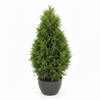
Columnar Arborvitae 'Columnar'

Transform your landscape with the timeless elegance of the Columnar Arborvitae. Its slender, graceful silhouette and dense, emerald-green foliage provide a sophisticated, living wall for privacy or a stunning vertical element. Exceptionally resilient and easy to care for, this is the perfect 'plant-and-forget' solution for a beautiful, year-round green space. Create the garden you've always dreamed of—add this architectural beauty to your cart today!
1. Basic Identification
Common Name: Columnar Arborvitae / American Arborvitae
Botanical Name: Thuja occidentalis
Arabic Name: ثويا
Plant Variant: Columnar
Plant Color: Green
Plant Country: Netherlands
2. Taxonomy & Classification
Kingdom: Plantae
Clade: Tracheophytes
Division: Pinophyta
Class: Pinopsida
Order: Pinales
Family: Cupressaceae
Genus: Thuja
Species: Thuja occidentalis
3. Origin & Distribution
Thuja occidentalis is native to eastern Canada and the north-central and northeastern United States. It is widely cultivated globally as an ornamental plant due to its hardiness and evergreen nature.
4. Visual Characteristics
This cultivar features a narrow, upright, and columnar growth habit. The foliage consists of dense, flat, scale-like sprays of emerald-green leaves that remain vibrant throughout the year, though they may take on a slight bronze tint in very cold winters.
5. Size & Dimensions
Height: Typically reaches 10 to 20 feet (3-6 meters) at maturity.
Width: Maintains a slim profile of 3 to 5 feet (0.9-1.5 meters).
Growth Rate: Moderate.
6. Light Requirements
Prefers full sun (at least 6 hours of direct sunlight per day) to partial shade. In hotter climates, some afternoon shade can help prevent foliage scorch.
7. Watering Needs
Requires regular watering, especially when young, to keep the soil consistently moist but not waterlogged. Once established, it has moderate drought tolerance, though it performs best with deep weekly watering during dry spells.
8. Soil & Potting
Thrives in moist, well-drained, loamy soils with a neutral to alkaline pH. While it prefers moist conditions, it is adaptable to various soil types, including clay, provided there is adequate drainage.
9. Temperature & Humidity
Extremely hardy and cold-tolerant (USDA Zones 3-7). It prefers cool, moist climates and can struggle in regions with extreme, dry heat or very high nighttime temperatures.
10. Fertilization
Apply a balanced, slow-release evergreen fertilizer in early spring before new growth begins. Avoid over-fertilizing, which can lead to weak, leggy growth.
11. Maintenance & Care Level
Level: Easy / Low Maintenance. It naturally maintains its columnar shape, so pruning is rarely necessary except to remove dead or damaged branches or to maintain a specific height in a hedge.
12. Growth & Propagation
Propagated primarily through semi-hardwood cuttings taken in late summer or fall. It is often used in nurseries to create living fences or privacy screens.
13. Common Problems
Relatively pest-resistant but can occasionally be affected by bagworms, spider mites, or leaf miners. In poorly drained soils, root rot may occur. It is also a favorite of deer in some regions.
14. Benefits & Uses
Perfect for use as a vertical accent, narrow hedge, or privacy screen. It is an excellent choice for windbreaks and helps in noise reduction. As an evergreen, it provides year-round structure and air-purifying benefits to the landscape.
15. Toxicity & Safety
The foliage contains thujone, which can be toxic to dogs, cats, and horses if ingested in large quantities. It may also cause mild skin irritation in some individuals upon contact.