

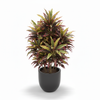

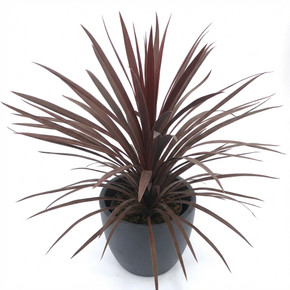




Ready to make a statement? The Cordyline fruticosa isn't just a plant; it's a centerpiece. With its electric colors and graceful, arching leaves, the Ti Plant commands attention and brings an exotic, resort-like feel right into your home. Perfect for brightening a dull corner or adding a pop of natural color to your decor. Easy to care for and impossible to ignore. Add this tropical masterpiece to your cart today and let your style bloom!
Common Name: Ti Plant, Good Luck Plant, Cordyline
Botanical Name: Cordyline fruticosa
Arabic Name: قرديلة
Variant: Standard
Color: Multicolor (often featuring shades of green, pink, red, or burgundy)
Kingdom: Plantae
Order: Asparagales
Family: Asparagaceae
Genus: Cordyline
Species: Cordyline fruticosa
The Ti Plant is native to Southeast Asia, Papua New Guinea, Melanesia, northeastern Australia, the Indian Ocean, and parts of Polynesia. It was historically spread across the Pacific by Polynesian settlers due to its cultural and practical significance.
This evergreen shrub features a woody stem topped with a cluster of lance-shaped or sword-like leaves. The foliage is the main attraction, displaying vibrant hues ranging from deep forest green to bright magenta, rose pink, and creamy variegation. In its natural habitat, it can produce small, scented yellowish to reddish flowers followed by red berries.
When grown indoors, the Cordyline fruticosa typically reaches a height of 3 to 6 feet with a spread of 2 to 3 feet. In outdoor tropical environments, it can grow much taller, sometimes reaching up to 10-15 feet.
Prefers bright, indirect light to maintain its vivid leaf coloration. While it can tolerate some direct morning sun, harsh afternoon sun can scorch the leaves. Low light levels will cause the vibrant colors to fade to dull green.
Keep the soil consistently moist but never waterlogged. Water when the top inch of soil feels dry to the touch. It is sensitive to fluoride and chlorine often found in tap water, which can cause leaf tip burn; using filtered or distilled water is recommended.
Requires a well-draining, peat-based potting mix with a slightly acidic pH (6.0 to 6.5). Ensure the pot has adequate drainage holes to prevent root rot.
Thrives in warm temperatures between 18°C and 27°C (65°F to 80°F). It is highly sensitive to cold drafts and temperatures below 15°C (60°F). High humidity is essential; use a humidifier, pebble tray, or regular misting to mimic its tropical origin.
Feed monthly during the active growing season (spring and summer) with a balanced liquid fertilizer diluted to half strength. Avoid fertilizing during the winter months when growth slows down.
Care Level: Moderate. The plant requires consistent moisture, high humidity, and protection from chemicals in tap water to thrive and maintain its appearance.
It is a slow to moderate grower. Propagation is typically achieved through stem cuttings (canes) or air layering. Cuttings can be rooted in water or directly in moist soil.
Susceptible to spider mites, mealybugs, and scale. Common physiological issues include leaf tip browning due to low humidity or fluoride toxicity, and leaf spotting if the foliage remains wet in poorly ventilated areas.
Primarily used as an ornamental centerpiece in interior design and tropical landscaping. It is listed as an air-purifying plant capable of filtering indoor toxins. Culturally, it is often planted near homes in many Pacific cultures to bring good luck.
Contains saponins and is considered toxic to dogs and cats if ingested, potentially causing vomiting, drooling, and loss of appetite. It is generally considered non-toxic to humans but may cause mild stomach upset if consumed.
Ready to make a statement? The Cordyline fruticosa isn't just a plant; it's a centerpiece. With its electric colors and graceful, arching leaves, the Ti Plant commands attention and brings an exotic, resort-like feel right into your home. Perfect for brightening a dull corner or adding a pop of natural color to your decor. Easy to care for and impossible to ignore. Add this tropical masterpiece to your cart today and let your style bloom!
Common Name: Ti Plant, Good Luck Plant, Cordyline
Botanical Name: Cordyline fruticosa
Arabic Name: قرديلة
Variant: Standard
Color: Multicolor (often featuring shades of green, pink, red, or burgundy)
Kingdom: Plantae
Order: Asparagales
Family: Asparagaceae
Genus: Cordyline
Species: Cordyline fruticosa
The Ti Plant is native to Southeast Asia, Papua New Guinea, Melanesia, northeastern Australia, the Indian Ocean, and parts of Polynesia. It was historically spread across the Pacific by Polynesian settlers due to its cultural and practical significance.
This evergreen shrub features a woody stem topped with a cluster of lance-shaped or sword-like leaves. The foliage is the main attraction, displaying vibrant hues ranging from deep forest green to bright magenta, rose pink, and creamy variegation. In its natural habitat, it can produce small, scented yellowish to reddish flowers followed by red berries.
When grown indoors, the Cordyline fruticosa typically reaches a height of 3 to 6 feet with a spread of 2 to 3 feet. In outdoor tropical environments, it can grow much taller, sometimes reaching up to 10-15 feet.
Prefers bright, indirect light to maintain its vivid leaf coloration. While it can tolerate some direct morning sun, harsh afternoon sun can scorch the leaves. Low light levels will cause the vibrant colors to fade to dull green.
Keep the soil consistently moist but never waterlogged. Water when the top inch of soil feels dry to the touch. It is sensitive to fluoride and chlorine often found in tap water, which can cause leaf tip burn; using filtered or distilled water is recommended.
Requires a well-draining, peat-based potting mix with a slightly acidic pH (6.0 to 6.5). Ensure the pot has adequate drainage holes to prevent root rot.
Thrives in warm temperatures between 18°C and 27°C (65°F to 80°F). It is highly sensitive to cold drafts and temperatures below 15°C (60°F). High humidity is essential; use a humidifier, pebble tray, or regular misting to mimic its tropical origin.
Feed monthly during the active growing season (spring and summer) with a balanced liquid fertilizer diluted to half strength. Avoid fertilizing during the winter months when growth slows down.
Care Level: Moderate. The plant requires consistent moisture, high humidity, and protection from chemicals in tap water to thrive and maintain its appearance.
It is a slow to moderate grower. Propagation is typically achieved through stem cuttings (canes) or air layering. Cuttings can be rooted in water or directly in moist soil.
Susceptible to spider mites, mealybugs, and scale. Common physiological issues include leaf tip browning due to low humidity or fluoride toxicity, and leaf spotting if the foliage remains wet in poorly ventilated areas.
Primarily used as an ornamental centerpiece in interior design and tropical landscaping. It is listed as an air-purifying plant capable of filtering indoor toxins. Culturally, it is often planted near homes in many Pacific cultures to bring good luck.
Contains saponins and is considered toxic to dogs and cats if ingested, potentially causing vomiting, drooling, and loss of appetite. It is generally considered non-toxic to humans but may cause mild stomach upset if consumed.
Take 20% off your first order
Enter the code below at checkout to get 20% off your first order