

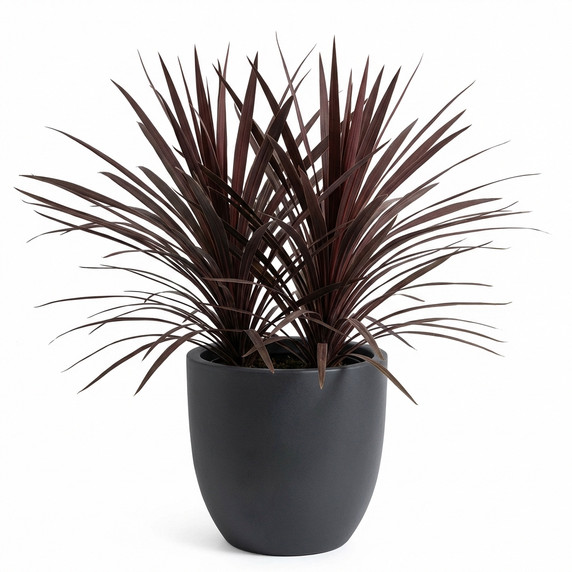

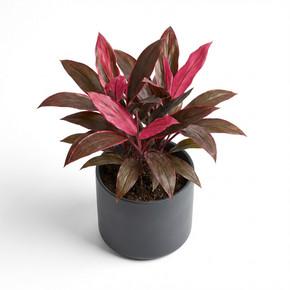


Make any space look instantly modern and premium with Cordyline Red Star. Its deep burgundy blades create a clean, sculptural silhouette that elevates living rooms, lobbies, and patios. With simple watering and bright light, it stays vibrant and upright—an effortless statement plant that delivers maximum impact with minimal maintenance.
Common Name: Cordyline Red Star
Botanical Name: Cordyline australis 'Red Star'
Former Name: Not available
Plant Type: Ornamental foliage plant
Plant Code / SKU: PLT-0256
Alternative Names:
كورديلين
Order: Asparagales
Family: Asparagaceae
Genus: Cordyline
Species: Cordyline australis
Native to New Zealand; widely cultivated as an ornamental in temperate to tropical regions worldwide. Naturalized in parts of Australia, Europe and North America.
Erect, cane‐like trunk topped with a rosette of arching, linear‐lanceolate leaves 30–100 cm long and 5–10 cm wide. Leaves emerge deep burgundy‐red that intensifies in bright light; new growth may display crimson hues. The dense crown of narrow blades creates a dramatic, architectural form.
Indoor height: 1.2–1.8 m (4–6 ft)
Outdoor height: up to 6 m (20 ft)
Spread: 0.6–1.2 m (2–4 ft)
Prefers bright, indirect light; tolerates some direct morning or late afternoon sun. Intense midday sun may scorch leaves, while low light reduces leaf‐color vibrancy.
Keep soil evenly moist but not waterlogged. Water when the top 2–3 cm of soil dries out. Reduce frequency during cooler months; avoid prolonged drought or standing water.
Use a well‐draining, fertile potting mix rich in organic matter (for example, peat‐based mix with perlite or coarse sand). Ideal soil pH: 6.0–7.5. Ensure containers have adequate drainage holes.
Optimal temperature range: 18–29 °C (65–85 °F). Minimum: around 10 °C (50 °F); sensitive to frost. Prefers moderate to high humidity; benefits from occasional misting in dry indoor environments.
Feed with a balanced liquid fertilizer (e.g., 10‐10‐10) every 4–6 weeks during the active growing season (spring and summer). Suspend feeding in fall and winter.
Low maintenance. Remove dead or yellowing leaves as needed. Wipe foliage occasionally to remove dust and maintain air exchange. Rotate plant periodically for even growth.
Propagate by hardwood or semi‐hardwood stem cuttings: take 10–15 cm cuttings, allow the cut end to callus, then insert into moist, well‐draining medium. Roots form in 4–6 weeks. Also propagates by air layering or division of basal suckers.
Pests: susceptible to scale insects, mealybugs and spider mites. Diseases: root rot from overwatering; leaf tip browning due to low humidity or salt buildup. Symptoms include yellowing leaves, brown margins and sticky residue from pests.
Valued as an architectural accent in containers, landscapes and interior settings; adds bold color contrast and vertical interest. Known to improve indoor air quality by filtering pollutants such as formaldehyde.
Contains saponins and dracaenins; mildly toxic if ingested, causing vomiting and diarrhea in humans and pets. Keep out of reach of children and animals and handle with care.
Make any space look instantly modern and premium with Cordyline Red Star. Its deep burgundy blades create a clean, sculptural silhouette that elevates living rooms, lobbies, and patios. With simple watering and bright light, it stays vibrant and upright—an effortless statement plant that delivers maximum impact with minimal maintenance.
Common Name: Cordyline Red Star
Botanical Name: Cordyline australis 'Red Star'
Former Name: Not available
Plant Type: Ornamental foliage plant
Plant Code / SKU: PLT-0256
Alternative Names:
كورديلين
Order: Asparagales
Family: Asparagaceae
Genus: Cordyline
Species: Cordyline australis
Native to New Zealand; widely cultivated as an ornamental in temperate to tropical regions worldwide. Naturalized in parts of Australia, Europe and North America.
Erect, cane‐like trunk topped with a rosette of arching, linear‐lanceolate leaves 30–100 cm long and 5–10 cm wide. Leaves emerge deep burgundy‐red that intensifies in bright light; new growth may display crimson hues. The dense crown of narrow blades creates a dramatic, architectural form.
Indoor height: 1.2–1.8 m (4–6 ft)
Outdoor height: up to 6 m (20 ft)
Spread: 0.6–1.2 m (2–4 ft)
Prefers bright, indirect light; tolerates some direct morning or late afternoon sun. Intense midday sun may scorch leaves, while low light reduces leaf‐color vibrancy.
Keep soil evenly moist but not waterlogged. Water when the top 2–3 cm of soil dries out. Reduce frequency during cooler months; avoid prolonged drought or standing water.
Use a well‐draining, fertile potting mix rich in organic matter (for example, peat‐based mix with perlite or coarse sand). Ideal soil pH: 6.0–7.5. Ensure containers have adequate drainage holes.
Optimal temperature range: 18–29 °C (65–85 °F). Minimum: around 10 °C (50 °F); sensitive to frost. Prefers moderate to high humidity; benefits from occasional misting in dry indoor environments.
Feed with a balanced liquid fertilizer (e.g., 10‐10‐10) every 4–6 weeks during the active growing season (spring and summer). Suspend feeding in fall and winter.
Low maintenance. Remove dead or yellowing leaves as needed. Wipe foliage occasionally to remove dust and maintain air exchange. Rotate plant periodically for even growth.
Propagate by hardwood or semi‐hardwood stem cuttings: take 10–15 cm cuttings, allow the cut end to callus, then insert into moist, well‐draining medium. Roots form in 4–6 weeks. Also propagates by air layering or division of basal suckers.
Pests: susceptible to scale insects, mealybugs and spider mites. Diseases: root rot from overwatering; leaf tip browning due to low humidity or salt buildup. Symptoms include yellowing leaves, brown margins and sticky residue from pests.
Valued as an architectural accent in containers, landscapes and interior settings; adds bold color contrast and vertical interest. Known to improve indoor air quality by filtering pollutants such as formaldehyde.
Contains saponins and dracaenins; mildly toxic if ingested, causing vomiting and diarrhea in humans and pets. Keep out of reach of children and animals and handle with care.

Take 20% off your first order
Enter the code below at checkout to get 20% off your first order