

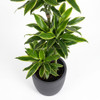





Transform your space with the electrifying colors of the Dracaena 'Lemon Lime'. Its brilliant, striped foliage doesn't just look incredible—it actively purifies your air. Forget complicated routines; this plant thrives on simple care, making it perfect for both plant novices and seasoned collectors. Add a touch of the tropics and a breath of fresh air to your home or office today!
Common Name: Lemon Lime Dracaena, Corn Plant
Botanical Name: Dracaena fragrans 'Lemon Lime'
Arabic Name: دراسينيا
Plant Color: Multicolor
Plant Country: Netherlands
Family: Asparagaceae
Genus: Dracaena
Species: Dracaena fragrans
The Dracaena fragrans species is native to tropical regions of Africa, specifically from Ethiopia south to Mozambique and west to Côte d'Ivoire. The 'Lemon Lime' cultivar was developed for the nursery trade to enhance its vibrant variegated features.
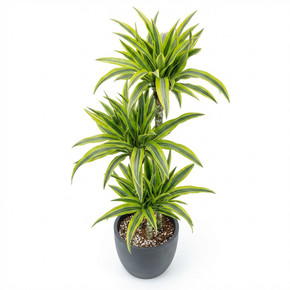
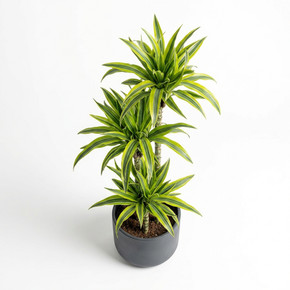
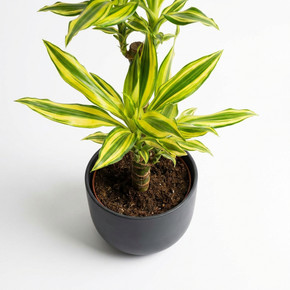
The 'Lemon Lime' cultivar features sword-shaped, arching leaves with a unique neon-yellow (chartreuse) margin, a dark green center, and thin white stripes separating the two colors. The leaves grow in a rosette pattern from a central woody stem.
Indoors, this plant typically reaches a height of 4 to 6 feet, though when kept as a desk plant, it can be maintained at a smaller size. Its spread usually ranges from 1 to 3 feet depending on maturity.
Prefers bright, indirect light to maintain its vibrant variegation. It can tolerate lower light levels, though the colors may fade. Direct sunlight should be avoided as it can scorch the leaves.
Allow the top 50% of the soil to dry out before watering again. It is sensitive to fluoride and minerals commonly found in tap water, which can cause brown tips; using filtered or rainwater is recommended.
Requires a well-draining, loose potting mix. A standard indoor plant soil with added perlite or peat moss for aeration and moisture retention is ideal.
Thrives in temperatures between 65°F and 75°F (18°C–24°C). It enjoys moderate to high humidity but adapts well to typical indoor humidity levels.
Feed monthly during the spring and summer growing seasons using a balanced, water-soluble liquid fertilizer diluted to half strength. Do not fertilize in the winter.
Low Maintenance. Care involves wiping the leaves with a damp cloth to remove dust and occasionally pruning the lower leaves as they naturally age and yellow.
It is a slow to moderate grower. Propagation is most successful via stem cuttings or air layering during the active growing season.
Common issues include brown leaf tips due to low humidity or water quality, root rot from overwatering, and occasional pests such as spider mites or mealybugs.
Highly valued for its air-purifying qualities; it is known to remove toxins like formaldehyde, benzene, and trichloroethylene from the air. It is an excellent choice for home décor, offices, and lobby spaces.
Toxic to pets. If ingested by cats or dogs, it can cause vomiting, salivation, and dilated pupils due to the presence of saponins.
Transform your space with the electrifying colors of the Dracaena 'Lemon Lime'. Its brilliant, striped foliage doesn't just look incredible—it actively purifies your air. Forget complicated routines; this plant thrives on simple care, making it perfect for both plant novices and seasoned collectors. Add a touch of the tropics and a breath of fresh air to your home or office today!
Common Name: Lemon Lime Dracaena, Corn Plant
Botanical Name: Dracaena fragrans 'Lemon Lime'
Arabic Name: دراسينيا
Plant Color: Multicolor
Plant Country: Netherlands
Family: Asparagaceae
Genus: Dracaena
Species: Dracaena fragrans
The Dracaena fragrans species is native to tropical regions of Africa, specifically from Ethiopia south to Mozambique and west to Côte d'Ivoire. The 'Lemon Lime' cultivar was developed for the nursery trade to enhance its vibrant variegated features.
The 'Lemon Lime' cultivar features sword-shaped, arching leaves with a unique neon-yellow (chartreuse) margin, a dark green center, and thin white stripes separating the two colors. The leaves grow in a rosette pattern from a central woody stem.
Indoors, this plant typically reaches a height of 4 to 6 feet, though when kept as a desk plant, it can be maintained at a smaller size. Its spread usually ranges from 1 to 3 feet depending on maturity.
Prefers bright, indirect light to maintain its vibrant variegation. It can tolerate lower light levels, though the colors may fade. Direct sunlight should be avoided as it can scorch the leaves.
Allow the top 50% of the soil to dry out before watering again. It is sensitive to fluoride and minerals commonly found in tap water, which can cause brown tips; using filtered or rainwater is recommended.
Requires a well-draining, loose potting mix. A standard indoor plant soil with added perlite or peat moss for aeration and moisture retention is ideal.
Thrives in temperatures between 65°F and 75°F (18°C–24°C). It enjoys moderate to high humidity but adapts well to typical indoor humidity levels.
Feed monthly during the spring and summer growing seasons using a balanced, water-soluble liquid fertilizer diluted to half strength. Do not fertilize in the winter.
Low Maintenance. Care involves wiping the leaves with a damp cloth to remove dust and occasionally pruning the lower leaves as they naturally age and yellow.
It is a slow to moderate grower. Propagation is most successful via stem cuttings or air layering during the active growing season.
Common issues include brown leaf tips due to low humidity or water quality, root rot from overwatering, and occasional pests such as spider mites or mealybugs.
Highly valued for its air-purifying qualities; it is known to remove toxins like formaldehyde, benzene, and trichloroethylene from the air. It is an excellent choice for home décor, offices, and lobby spaces.
Toxic to pets. If ingested by cats or dogs, it can cause vomiting, salivation, and dilated pupils due to the presence of saponins.



Take 20% off your first order
Enter the code below at checkout to get 20% off your first order