


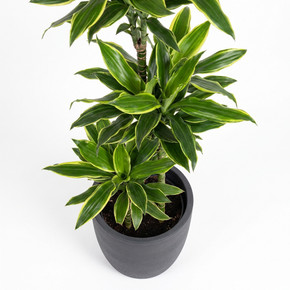




Elevate your space instantly with the Dracaena Fragrans, or Corn Plant. A living sculpture, its tiered canes and vibrant, striped leaves bring a touch of the tropics indoors without the fuss. Famous for its air-purifying prowess and forgiving nature, this plant is the perfect green companion for modern living. Make a statement in your home or office with this effortlessly elegant and resilient indoor tree.
Common Name: Corn Plant, Dracaena Fragrans, Mass Cane
Botanical Name: Dracaena fragrans
Variety: Massangeana
Arabic Name: دراسينيا
Plant Color: Multicolor (Green with yellow/lime variegation)
Kingdom: Plantae
Clade: Tracheophytes
Order: Asparagales
Family: Asparagaceae
Genus: Dracaena
Species: D. fragrans
Dracaena fragrans is native to tropical Africa, ranging from Sudan south to Mozambique and west to Côte d'Ivoire and Angola. It has been widely cultivated globally as an ornamental houseplant since the mid-1800s.
The 'Massangeana' variety is characterized by its thick, woody canes (stems) from which rosettes of long, arching, sword-shaped leaves grow. The leaves are glossy green with a distinct, broad central stripe of yellow or lime green. In its natural habitat, it can produce highly fragrant white flowers, though this is rare indoors.
Indoors, the plant typically reaches a height of 4 to 6 feet when grown in pots. In its native outdoor environment, it can grow up to 15 feet or more. The leaves can grow up to 2-3 feet long and several inches wide.
This plant thrives in bright, indirect sunlight. It can tolerate lower light conditions, but its growth will slow and the vibrant yellow variegation on the leaves may fade. Avoid direct, harsh sunlight, which can scorch the foliage.
Water when the top 1-2 inches of soil feel dry to the touch. Dracaena fragrans is somewhat drought-tolerant; it is better to underwater than to overwater, as it is susceptible to root rot. Use filtered water if possible, as they are sensitive to fluoride often found in tap water.
Use a well-draining, loose potting mix rich in organic matter. A standard peat-based potting soil with added perlite or bark for aeration is ideal. Ensure the pot has adequate drainage holes.
Prefers temperatures between 60°F and 75°F (15°C to 24°C). Protect it from cold drafts and temperatures below 50°F. It enjoys moderate humidity but adapts well to average household humidity levels.
Apply a balanced, water-soluble liquid fertilizer every 4-6 weeks during the growing season (spring and summer). Reduce fertilization in autumn and stop entirely during the winter dormant period.
Care Level: Easy/Low Maintenance. Tasks include wiping the broad leaves with a damp cloth to remove dust and improve photosynthesis, and trimming any brown leaf tips with sterilized shears.
The Corn Plant is a slow-growing evergreen. Propagation is most successful via stem cuttings (top cuttings or cane sections) rooted in water or moist soil. It can also be propagated through air layering.
Brown leaf tips are common and usually caused by low humidity, fluoride in water, or irregular watering. Watch for pests like spider mites, mealybugs, and scale. Yellowing lower leaves are often a sign of overwatering.
Renowned for its air-purifying qualities, it was featured in NASA’s Clean Air Study for its ability to remove indoor toxins such as formaldehyde, xylene, and toluene. It is an excellent architectural plant for home décor and office environments.
Toxic to pets. Dracaena species contain saponins which, if ingested by cats or dogs, can cause vomiting (sometimes with blood), drooling, and dilated pupils. It is generally considered non-toxic to humans but may cause mild stomach upset if ingested.
Elevate your space instantly with the Dracaena Fragrans, or Corn Plant. A living sculpture, its tiered canes and vibrant, striped leaves bring a touch of the tropics indoors without the fuss. Famous for its air-purifying prowess and forgiving nature, this plant is the perfect green companion for modern living. Make a statement in your home or office with this effortlessly elegant and resilient indoor tree.
Common Name: Corn Plant, Dracaena Fragrans, Mass Cane
Botanical Name: Dracaena fragrans
Variety: Massangeana
Arabic Name: دراسينيا
Plant Color: Multicolor (Green with yellow/lime variegation)
Kingdom: Plantae
Clade: Tracheophytes
Order: Asparagales
Family: Asparagaceae
Genus: Dracaena
Species: D. fragrans
Dracaena fragrans is native to tropical Africa, ranging from Sudan south to Mozambique and west to Côte d'Ivoire and Angola. It has been widely cultivated globally as an ornamental houseplant since the mid-1800s.
The 'Massangeana' variety is characterized by its thick, woody canes (stems) from which rosettes of long, arching, sword-shaped leaves grow. The leaves are glossy green with a distinct, broad central stripe of yellow or lime green. In its natural habitat, it can produce highly fragrant white flowers, though this is rare indoors.
Indoors, the plant typically reaches a height of 4 to 6 feet when grown in pots. In its native outdoor environment, it can grow up to 15 feet or more. The leaves can grow up to 2-3 feet long and several inches wide.
This plant thrives in bright, indirect sunlight. It can tolerate lower light conditions, but its growth will slow and the vibrant yellow variegation on the leaves may fade. Avoid direct, harsh sunlight, which can scorch the foliage.
Water when the top 1-2 inches of soil feel dry to the touch. Dracaena fragrans is somewhat drought-tolerant; it is better to underwater than to overwater, as it is susceptible to root rot. Use filtered water if possible, as they are sensitive to fluoride often found in tap water.
Use a well-draining, loose potting mix rich in organic matter. A standard peat-based potting soil with added perlite or bark for aeration is ideal. Ensure the pot has adequate drainage holes.
Prefers temperatures between 60°F and 75°F (15°C to 24°C). Protect it from cold drafts and temperatures below 50°F. It enjoys moderate humidity but adapts well to average household humidity levels.
Apply a balanced, water-soluble liquid fertilizer every 4-6 weeks during the growing season (spring and summer). Reduce fertilization in autumn and stop entirely during the winter dormant period.
Care Level: Easy/Low Maintenance. Tasks include wiping the broad leaves with a damp cloth to remove dust and improve photosynthesis, and trimming any brown leaf tips with sterilized shears.
The Corn Plant is a slow-growing evergreen. Propagation is most successful via stem cuttings (top cuttings or cane sections) rooted in water or moist soil. It can also be propagated through air layering.
Brown leaf tips are common and usually caused by low humidity, fluoride in water, or irregular watering. Watch for pests like spider mites, mealybugs, and scale. Yellowing lower leaves are often a sign of overwatering.
Renowned for its air-purifying qualities, it was featured in NASA’s Clean Air Study for its ability to remove indoor toxins such as formaldehyde, xylene, and toluene. It is an excellent architectural plant for home décor and office environments.
Toxic to pets. Dracaena species contain saponins which, if ingested by cats or dogs, can cause vomiting (sometimes with blood), drooling, and dilated pupils. It is generally considered non-toxic to humans but may cause mild stomach upset if ingested.


Take 20% off your first order
Enter the code below at checkout to get 20% off your first order