

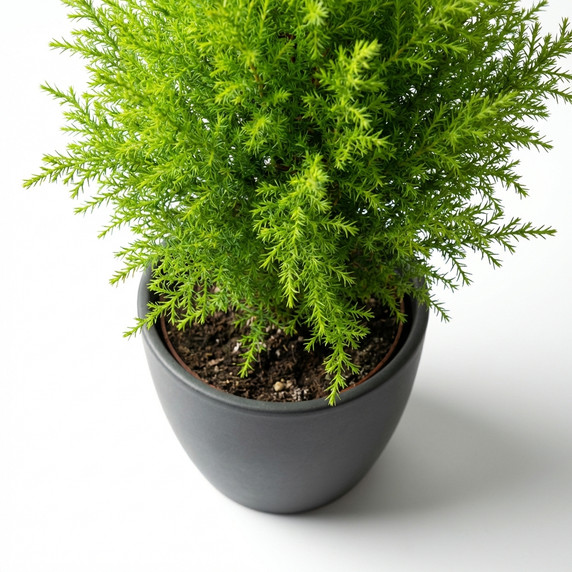





Bring instant freshness to your space with Lemon Cypress ‘Goldcrest’—a vivid evergreen with soft, feathery foliage and a clean lemony aroma. Its naturally neat, conical form looks premium on office desks, reception counters, balconies, and entryways. Give it bright light and steady moisture, and it will stay dense, colorful, and beautifully sculpted all season.
Common Name: Lemon Cypress, Goldcrest Cypress, Monterey Cypress
Botanical Name: Cupressus macrocarpa 'Goldcrest'
Arabic Name: سنوبه
Plant Color: Green / Chartreuse
Plant Variant: Lemon-scented cultivar
Kingdom: Plantae
Order: Pinales
Family: Cupressaceae
Genus: Cupressus
Species: C. macrocarpa
The parent species is native to the Monterey Bay region on the Central Coast of California. The 'Goldcrest' cultivar was originally developed in the United Kingdom and has since become a popular ornamental plant worldwide due to its vibrant color and scent.
This plant features a distinct narrow, upright conical habit. Its foliage consists of fine, needle-like scales that maintain a bright yellow-green or chartreuse color year-round. When the foliage is brushed or crushed, it emits a powerful, refreshing lemon fragrance.
When grown indoors or in containers, it typically reaches heights of 2 to 3 feet. In outdoor garden settings, if left unpruned, it can eventually grow into a small tree reaching 10 to 15 feet tall.
Prefers bright, direct light. Indoors, it should be placed near a south or west-facing window to receive at least 5-6 hours of sunlight daily. It can tolerate bright indirect light but may lose its vibrant yellow hue in low-light conditions.
Requires consistent moisture. The soil should be kept damp but never waterlogged. Do not allow the root ball to dry out completely, as the needles will quickly turn brown and brittle, and the plant may not recover.
Thrives in well-draining, high-quality potting soil. A mix containing peat moss, perlite, and sand is ideal to ensure drainage while retaining necessary moisture. Ensure the pot has adequate drainage holes.
Prefers cool to moderate temperatures, ideally between 10°C and 25°C. It appreciates moderate humidity levels; if kept indoors during winter, keep it away from drying heaters or vents and consider occasional misting.
Feed with a balanced, water-soluble fertilizer once a month during the active growing season (spring and summer). Do not fertilize during the winter dormant period.
Care Level: Moderate. While generally easy to maintain, its strict watering requirements and need for high light levels make it slightly more demanding than typical low-light houseplants. Pruning can be done to maintain its conical shape.
Slow to moderate growth rate. It is primarily propagated via semi-hardwood cuttings taken in late summer or fall, though it can be challenging for beginners to root successfully.
The most common issue is needle browning due to underwatering or very low humidity. It can also be susceptible to spider mites in dry indoor environments and root rot if left in standing water.
Primarily used as an ornamental decorative plant. It is noted for its air-purifying qualities and its pleasant citrus scent, which acts as a natural mood booster. It is excellent for office desks, holiday decor, and as a container plant for balconies.
Not considered pet-safe or human-safe for ingestion. Eating the foliage can cause stomach upset in cats, dogs, and humans. The sap may also cause mild skin irritation in sensitive individuals.
Bring instant freshness to your space with Lemon Cypress ‘Goldcrest’—a vivid evergreen with soft, feathery foliage and a clean lemony aroma. Its naturally neat, conical form looks premium on office desks, reception counters, balconies, and entryways. Give it bright light and steady moisture, and it will stay dense, colorful, and beautifully sculpted all season.
Common Name: Lemon Cypress, Goldcrest Cypress, Monterey Cypress
Botanical Name: Cupressus macrocarpa 'Goldcrest'
Arabic Name: سنوبه
Plant Color: Green / Chartreuse
Plant Variant: Lemon-scented cultivar
Kingdom: Plantae
Order: Pinales
Family: Cupressaceae
Genus: Cupressus
Species: C. macrocarpa
The parent species is native to the Monterey Bay region on the Central Coast of California. The 'Goldcrest' cultivar was originally developed in the United Kingdom and has since become a popular ornamental plant worldwide due to its vibrant color and scent.
This plant features a distinct narrow, upright conical habit. Its foliage consists of fine, needle-like scales that maintain a bright yellow-green or chartreuse color year-round. When the foliage is brushed or crushed, it emits a powerful, refreshing lemon fragrance.
When grown indoors or in containers, it typically reaches heights of 2 to 3 feet. In outdoor garden settings, if left unpruned, it can eventually grow into a small tree reaching 10 to 15 feet tall.
Prefers bright, direct light. Indoors, it should be placed near a south or west-facing window to receive at least 5-6 hours of sunlight daily. It can tolerate bright indirect light but may lose its vibrant yellow hue in low-light conditions.
Requires consistent moisture. The soil should be kept damp but never waterlogged. Do not allow the root ball to dry out completely, as the needles will quickly turn brown and brittle, and the plant may not recover.
Thrives in well-draining, high-quality potting soil. A mix containing peat moss, perlite, and sand is ideal to ensure drainage while retaining necessary moisture. Ensure the pot has adequate drainage holes.
Prefers cool to moderate temperatures, ideally between 10°C and 25°C. It appreciates moderate humidity levels; if kept indoors during winter, keep it away from drying heaters or vents and consider occasional misting.
Feed with a balanced, water-soluble fertilizer once a month during the active growing season (spring and summer). Do not fertilize during the winter dormant period.
Care Level: Moderate. While generally easy to maintain, its strict watering requirements and need for high light levels make it slightly more demanding than typical low-light houseplants. Pruning can be done to maintain its conical shape.
Slow to moderate growth rate. It is primarily propagated via semi-hardwood cuttings taken in late summer or fall, though it can be challenging for beginners to root successfully.
The most common issue is needle browning due to underwatering or very low humidity. It can also be susceptible to spider mites in dry indoor environments and root rot if left in standing water.
Primarily used as an ornamental decorative plant. It is noted for its air-purifying qualities and its pleasant citrus scent, which acts as a natural mood booster. It is excellent for office desks, holiday decor, and as a container plant for balconies.
Not considered pet-safe or human-safe for ingestion. Eating the foliage can cause stomach upset in cats, dogs, and humans. The sap may also cause mild skin irritation in sensitive individuals.
Take 20% off your first order
Enter the code below at checkout to get 20% off your first order