




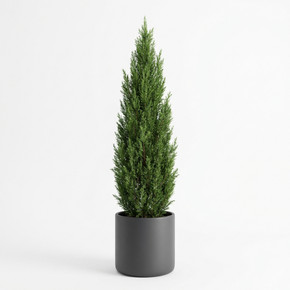
Create a luxury, resort-style look with Italian Cypress. Its slim, upright shape delivers instant structure without taking up space—perfect for lining paths, framing entrances, or building a clean privacy screen. Tough, sun-loving, and easy to maintain, it’s a top choice for modern villas and commercial landscapes alike.
Common Name: Italian Cypress
Botanical Name: Cupressus sempervirens
Former Name: Not available
Plant Type: Coniferous evergreen tree
Plant Code / SKU: PLT-0113
Alternative Names:
Mediterranean cypress
Tuscan cypress
سرو
Totem Columnar
Order: Pinales
Family: Cupressaceae
Genus: Cupressus
Species: C. sempervirens
Native to the eastern Mediterranean region, including southern Europe (Italy, Greece), Turkey, Cyprus, and western Asia. Widely cultivated and naturalized in North America, Australia, South Africa, and parts of South America for ornamental and screening purposes.
Evergreen conifer with a very narrow, columnar habit. Foliage consists of dense, scale-like leaves arranged along slender shoots, forming a deep green, feathery texture. Bark is thin, fibrous and grey-brown. Totem Columnar variety maintains an especially tight, upright form.
Mature height typically 40–60 ft (12–18 m) with a spread of 3–6 ft (1–2 m). The Totem Columnar cultivar generally reaches 15–20 ft (4.5–6 m) tall and 2–3 ft (0.6–0.9 m) wide at maturity, making it ideal for narrow screens.
Requires full sun for best growth and form. Needs at least 6 hours of direct sunlight daily; will tolerate light afternoon shade but may become leggy in low light.
Drought tolerant once established. Water deeply and infrequently: keep soil moist but not waterlogged during establishment (first 1–2 years), then water only during extended dry periods. Overwatering can lead to root rot.
Thrives in well-draining soils, including sandy, loamy, or rocky substrates. Prefers neutral to slightly alkaline pH (6.5–8.0). Avoid heavy clay soils unless amended with coarse sand or gravel for drainage.
Hardy in USDA zones 7–11. Tolerates winter lows to –10 °C (14 °F). Prefers hot, dry summers and mild winters. Poor tolerance of prolonged high humidity and poor air circulation may increase disease incidence.
Low fertilizer requirements. Apply a balanced slow-release granular fertilizer (e.g., 10-10-10) in early spring. Avoid excessive nitrogen. Supplement with micronutrients (iron, manganese) if chlorosis develops.
Low maintenance. Minimal pruning needed—remove dead, damaged, or crossing branches in late winter or early spring. Maintain a clear base by mulching and removing debris around the trunk.
Moderate growth rate of 12–24 inches (30–60 cm) per year. Propagate by seed (requires cold stratification) or semi-hardwood cuttings taken in midsummer with rooting hormone. Grafting onto rootstocks ensures true-to-type characteristics for named cultivars.
Susceptible to cypress canker (Seiridium spp.) causing branch dieback and resin exudation. Overwatering can lead to root rot (Phytophthora spp.). Arachnid pests (spider mites) and bagworms may defoliate foliage. Needle browning can occur in high humidity or poor circulation.
Excellent for formal hedges, narrow privacy screens, windbreaks, and accent plantings. Provides strong vertical lines in Mediterranean, resort-style, and modern landscapes. Low pollen allergenicity compared to other conifers.
Generally non-toxic to humans and pets. Low risk of ingestion issues; however, fallen needles can create slippery surfaces. Pollen may cause mild allergic reactions in sensitive individuals.
Create a luxury, resort-style look with Italian Cypress. Its slim, upright shape delivers instant structure without taking up space—perfect for lining paths, framing entrances, or building a clean privacy screen. Tough, sun-loving, and easy to maintain, it’s a top choice for modern villas and commercial landscapes alike.
Common Name: Italian Cypress
Botanical Name: Cupressus sempervirens
Former Name: Not available
Plant Type: Coniferous evergreen tree
Plant Code / SKU: PLT-0113
Alternative Names:
Mediterranean cypress
Tuscan cypress
سرو
Totem Columnar
Order: Pinales
Family: Cupressaceae
Genus: Cupressus
Species: C. sempervirens
Native to the eastern Mediterranean region, including southern Europe (Italy, Greece), Turkey, Cyprus, and western Asia. Widely cultivated and naturalized in North America, Australia, South Africa, and parts of South America for ornamental and screening purposes.
Evergreen conifer with a very narrow, columnar habit. Foliage consists of dense, scale-like leaves arranged along slender shoots, forming a deep green, feathery texture. Bark is thin, fibrous and grey-brown. Totem Columnar variety maintains an especially tight, upright form.
Mature height typically 40–60 ft (12–18 m) with a spread of 3–6 ft (1–2 m). The Totem Columnar cultivar generally reaches 15–20 ft (4.5–6 m) tall and 2–3 ft (0.6–0.9 m) wide at maturity, making it ideal for narrow screens.
Requires full sun for best growth and form. Needs at least 6 hours of direct sunlight daily; will tolerate light afternoon shade but may become leggy in low light.
Drought tolerant once established. Water deeply and infrequently: keep soil moist but not waterlogged during establishment (first 1–2 years), then water only during extended dry periods. Overwatering can lead to root rot.
Thrives in well-draining soils, including sandy, loamy, or rocky substrates. Prefers neutral to slightly alkaline pH (6.5–8.0). Avoid heavy clay soils unless amended with coarse sand or gravel for drainage.
Hardy in USDA zones 7–11. Tolerates winter lows to –10 °C (14 °F). Prefers hot, dry summers and mild winters. Poor tolerance of prolonged high humidity and poor air circulation may increase disease incidence.
Low fertilizer requirements. Apply a balanced slow-release granular fertilizer (e.g., 10-10-10) in early spring. Avoid excessive nitrogen. Supplement with micronutrients (iron, manganese) if chlorosis develops.
Low maintenance. Minimal pruning needed—remove dead, damaged, or crossing branches in late winter or early spring. Maintain a clear base by mulching and removing debris around the trunk.
Moderate growth rate of 12–24 inches (30–60 cm) per year. Propagate by seed (requires cold stratification) or semi-hardwood cuttings taken in midsummer with rooting hormone. Grafting onto rootstocks ensures true-to-type characteristics for named cultivars.
Susceptible to cypress canker (Seiridium spp.) causing branch dieback and resin exudation. Overwatering can lead to root rot (Phytophthora spp.). Arachnid pests (spider mites) and bagworms may defoliate foliage. Needle browning can occur in high humidity or poor circulation.
Excellent for formal hedges, narrow privacy screens, windbreaks, and accent plantings. Provides strong vertical lines in Mediterranean, resort-style, and modern landscapes. Low pollen allergenicity compared to other conifers.
Generally non-toxic to humans and pets. Low risk of ingestion issues; however, fallen needles can create slippery surfaces. Pollen may cause mild allergic reactions in sensitive individuals.





Take 20% off your first order
Enter the code below at checkout to get 20% off your first order