


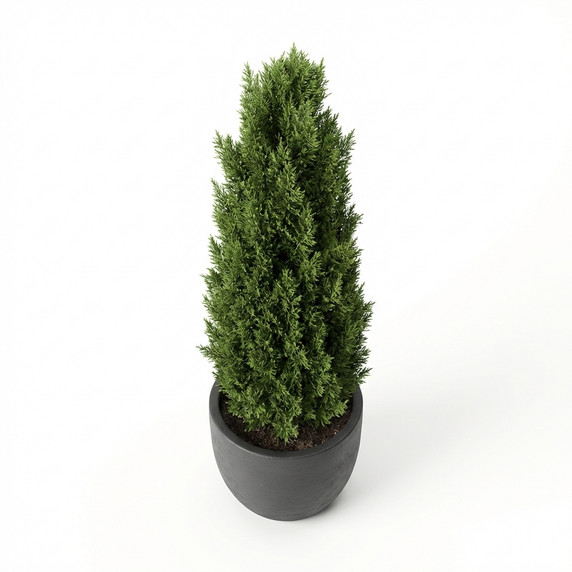
Cupressus sempervirens 'Totem Columnar'
Create a luxury, resort-style look with Italian Cypress. Its slim, upright shape delivers instant structure without taking up space—perfect for lining paths, framing entrances, or building a clean privacy screen. Tough, sun-loving, and easy to maintain, it’s a top choice for modern villas and commercial landscapes alike.
1. Basic Identification
Common Name: Italian Cypress / Mediterranean Cypress / سرو (Saro)
Botanical Name: Cupressus sempervirens
Arabic Name: سرو
Variety: Totem Columnar
Origin Country: Turkey
2. Taxonomy & Classification
Kingdom: Plantae
Division: Pinophyta
Class: Pinopsida
Order: Pinales
Family: Cupressaceae
Genus: Cupressus
Species: C. sempervirens
3. Origin & Distribution
Native to the Mediterranean region, spanning Southern Europe, North Africa, and Western Asia. It is widely cultivated across temperate and subtropical regions globally for its architectural form.
4. Visual Characteristics
The 'Totem' variety is a non-fruiting (cone-free) selection that maintains a tight, perfectly vertical silhouette. It features dense, fine-textured, scale-like foliage in a deep, rich green color that remains consistent throughout the seasons.
5. Size & Dimensions
Height: Typically reaches 4–8 meters (13–26 ft) in cultivation, though can grow taller over many years.
Width: Extremely narrow and compact, usually remaining between 0.4–0.6 meters (1.3–2 ft) wide.
6. Light Requirements
Full Sun. Thrives in direct, bright sunlight. It requires at least 6 to 8 hours of direct sun daily to maintain its dense foliage and prevent the plant from thinning out.
7. Watering Needs
Drought-tolerant once established. It requires regular watering during its first few growing seasons to establish a deep root system. Once mature, it is very resilient but prefers occasional deep watering during extended dry periods.
8. Soil & Potting
Prefers well-drained soil. It is adaptable to various soil types, including chalk, loam, and sand, and can tolerate both acidic and alkaline pH levels. Excellent drainage is essential to prevent root issues.
9. Temperature & Humidity
Highly heat and drought tolerant. It is hardy in USDA zones 7–10 and thrives in Mediterranean-style climates with low to moderate humidity. It can tolerate moderate frost once established.
10. Fertilization
Generally requires little fertilization. A balanced, slow-release fertilizer can be applied in early spring to support vigorous new growth, particularly for younger plants or those grown in containers.
11. Maintenance & Care Level
Low Maintenance. Naturally maintains its narrow columnar shape without the need for regular pruning. It is a hardy, resilient plant that requires minimal intervention once established.
12. Growth & Propagation
Moderate growth rate. Cultivars like 'Totem' are typically propagated through semi-hardwood cuttings or grafting to ensure the specific narrow, non-fruiting characteristics are preserved.
13. Common Problems
Generally pest-free but can occasionally be affected by spider mites in extremely dry conditions. Seiridium canker can be an issue in high-humidity areas. Avoid waterlogged soil to prevent root rot.
14. Benefits & Uses
Ideal for architectural accents, formal garden designs, and creating vertical interest in narrow spaces. Frequently used for framing entrances, lining driveways, or as a sophisticated privacy screen for villas and commercial properties.
15. Toxicity & Safety
Toxicity & Safety: Not available (Generally considered non-toxic to humans, though the pollen is a known allergen for many. Ingestion of foliage may cause mild gastrointestinal distress in pets; however, specific safety data for this cultivar is limited).
Cupressus sempervirens 'Totem Columnar'
Create a luxury, resort-style look with Italian Cypress. Its slim, upright shape delivers instant structure without taking up space—perfect for lining paths, framing entrances, or building a clean privacy screen. Tough, sun-loving, and easy to maintain, it’s a top choice for modern villas and commercial landscapes alike.
1. Basic Identification
Common Name: Italian Cypress / Mediterranean Cypress / سرو (Saro)
Botanical Name: Cupressus sempervirens
Arabic Name: سرو
Variety: Totem Columnar
Origin Country: Turkey
2. Taxonomy & Classification
Kingdom: Plantae
Division: Pinophyta
Class: Pinopsida
Order: Pinales
Family: Cupressaceae
Genus: Cupressus
Species: C. sempervirens
3. Origin & Distribution
Native to the Mediterranean region, spanning Southern Europe, North Africa, and Western Asia. It is widely cultivated across temperate and subtropical regions globally for its architectural form.
4. Visual Characteristics
The 'Totem' variety is a non-fruiting (cone-free) selection that maintains a tight, perfectly vertical silhouette. It features dense, fine-textured, scale-like foliage in a deep, rich green color that remains consistent throughout the seasons.
5. Size & Dimensions
Height: Typically reaches 4–8 meters (13–26 ft) in cultivation, though can grow taller over many years.
Width: Extremely narrow and compact, usually remaining between 0.4–0.6 meters (1.3–2 ft) wide.
6. Light Requirements
Full Sun. Thrives in direct, bright sunlight. It requires at least 6 to 8 hours of direct sun daily to maintain its dense foliage and prevent the plant from thinning out.
7. Watering Needs
Drought-tolerant once established. It requires regular watering during its first few growing seasons to establish a deep root system. Once mature, it is very resilient but prefers occasional deep watering during extended dry periods.
8. Soil & Potting
Prefers well-drained soil. It is adaptable to various soil types, including chalk, loam, and sand, and can tolerate both acidic and alkaline pH levels. Excellent drainage is essential to prevent root issues.
9. Temperature & Humidity
Highly heat and drought tolerant. It is hardy in USDA zones 7–10 and thrives in Mediterranean-style climates with low to moderate humidity. It can tolerate moderate frost once established.
10. Fertilization
Generally requires little fertilization. A balanced, slow-release fertilizer can be applied in early spring to support vigorous new growth, particularly for younger plants or those grown in containers.
11. Maintenance & Care Level
Low Maintenance. Naturally maintains its narrow columnar shape without the need for regular pruning. It is a hardy, resilient plant that requires minimal intervention once established.
12. Growth & Propagation
Moderate growth rate. Cultivars like 'Totem' are typically propagated through semi-hardwood cuttings or grafting to ensure the specific narrow, non-fruiting characteristics are preserved.
13. Common Problems
Generally pest-free but can occasionally be affected by spider mites in extremely dry conditions. Seiridium canker can be an issue in high-humidity areas. Avoid waterlogged soil to prevent root rot.
14. Benefits & Uses
Ideal for architectural accents, formal garden designs, and creating vertical interest in narrow spaces. Frequently used for framing entrances, lining driveways, or as a sophisticated privacy screen for villas and commercial properties.
15. Toxicity & Safety
Toxicity & Safety: Not available (Generally considered non-toxic to humans, though the pollen is a known allergen for many. Ingestion of foliage may cause mild gastrointestinal distress in pets; however, specific safety data for this cultivar is limited).