


Desert Rose
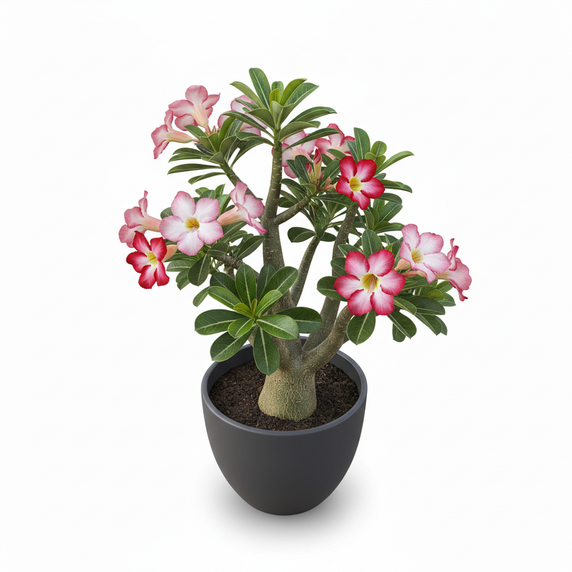
Transform your space with the exotic beauty of the Desert Rose. This stunning Adenium obesum boasts a dramatic, swollen trunk (caudex) reminiscent of a natural bonsai, crowned with lush leaves and spectacular, trumpet-shaped flowers. A true survivor, it thrives on sunlight and minimal water, making it the perfect statement piece for busy plant lovers or anyone seeking a touch of the extraordinary. Bring home this living sculpture and watch it bloom with magnificent color.
1. Basic Identification
Common Name: Desert Rose
Botanical Name: Adenium obesum
Arabic Name: ادينيوم
Plant Variant: Standard
Plant Color: Natural
Plant Country: Thailand
2. Taxonomy & Classification
Kingdom: Plantae
Division: Angiosperms
Class: Eudicots
Order: Gentianales
Family: Apocynaceae
Genus: Adenium
Species: Adenium obesum
3. Origin & Distribution
Native to the semi-arid regions of sub-Saharan Africa, from Mauritania to Sudan and down to South Africa, as well as the Arabian Peninsula. It is widely naturalized and cultivated in tropical regions globally, particularly in Thailand and Vietnam.
4. Visual Characteristics
Characterized by a succulent, often twisted, swollen woody stem or caudex that stores water. The leaves are leathery, spirally arranged, and clustered at the tips of the branches. The flowers are striking, trumpet-shaped, and usually feature five petals in vibrant shades of pink, red, or white.
5. Size & Dimensions
When grown as a houseplant or in containers, it typically reaches 1 to 3 feet in height. In its natural outdoor habitat, it can grow into a large shrub or small tree reaching up to 10 feet tall. It is a relatively slow-growing species.
6. Light Requirements
Requires high light levels to thrive and bloom. It prefers direct full sun for at least 6 hours daily. If kept indoors, it must be placed in a very bright, south-facing window to prevent the plant from becoming leggy.
7. Watering Needs
Drought-tolerant due to its water-storing caudex. During the growing season (spring and summer), water when the soil feels dry to the touch. In the winter dormancy period, watering should be reduced significantly, only providing enough to keep the caudex from shriveling.
8. Soil & Potting
Requires extremely well-draining soil. A specialized cactus or succulent potting mix is ideal. Adding perlite, coarse sand, or pumice can further improve drainage and prevent root rot.
9. Temperature & Humidity
Thrives in hot, dry climates with temperatures between 70°F and 90°F (21°C - 32°C). It is not cold-hardy and will suffer damage if temperatures drop below 50°F (10°C). It prefers low to moderate humidity levels.
10. Fertilization
Apply a balanced, water-soluble fertilizer at half-strength once a month during the spring and summer. Using a phosphorus-rich "bloom booster" can help encourage the production of its signature flowers.
11. Maintenance & Care Level
Low maintenance and easy to care for provided its light and drainage needs are met. Periodic pruning can help maintain a desired shape and encourage fuller growth. Always wear gloves when pruning as the sap is irritating.
12. Growth & Propagation
Grown primarily from seeds or stem cuttings. Seed-grown plants are preferred for bonsai as they develop the characteristic swollen caudex more reliably than plants grown from cuttings.
13. Common Problems
The most common issue is root rot caused by overwatering or poorly draining soil. It can also be susceptible to pests such as spider mites, mealybugs, and aphids, especially when grown indoors.
14. Benefits & Uses
Primarily used as an ornamental specimen for home decor, patios, and xeriscaping. It is highly prized in the bonsai community for its unique trunk shape and beautiful blooms.
15. Toxicity & Safety
Highly toxic to humans and pets. All parts of the plant contain cardiac glycosides. If ingested, it can cause severe symptoms. The milky sap can also cause skin irritation upon contact; handle with caution.
Desert Rose
Transform your space with the exotic beauty of the Desert Rose. This stunning Adenium obesum boasts a dramatic, swollen trunk (caudex) reminiscent of a natural bonsai, crowned with lush leaves and spectacular, trumpet-shaped flowers. A true survivor, it thrives on sunlight and minimal water, making it the perfect statement piece for busy plant lovers or anyone seeking a touch of the extraordinary. Bring home this living sculpture and watch it bloom with magnificent color.
1. Basic Identification
Common Name: Desert Rose
Botanical Name: Adenium obesum
Arabic Name: ادينيوم
Plant Variant: Standard
Plant Color: Natural
Plant Country: Thailand
2. Taxonomy & Classification
Kingdom: Plantae
Division: Angiosperms
Class: Eudicots
Order: Gentianales
Family: Apocynaceae
Genus: Adenium
Species: Adenium obesum
3. Origin & Distribution
Native to the semi-arid regions of sub-Saharan Africa, from Mauritania to Sudan and down to South Africa, as well as the Arabian Peninsula. It is widely naturalized and cultivated in tropical regions globally, particularly in Thailand and Vietnam.
4. Visual Characteristics
Characterized by a succulent, often twisted, swollen woody stem or caudex that stores water. The leaves are leathery, spirally arranged, and clustered at the tips of the branches. The flowers are striking, trumpet-shaped, and usually feature five petals in vibrant shades of pink, red, or white.
5. Size & Dimensions
When grown as a houseplant or in containers, it typically reaches 1 to 3 feet in height. In its natural outdoor habitat, it can grow into a large shrub or small tree reaching up to 10 feet tall. It is a relatively slow-growing species.
6. Light Requirements
Requires high light levels to thrive and bloom. It prefers direct full sun for at least 6 hours daily. If kept indoors, it must be placed in a very bright, south-facing window to prevent the plant from becoming leggy.
7. Watering Needs
Drought-tolerant due to its water-storing caudex. During the growing season (spring and summer), water when the soil feels dry to the touch. In the winter dormancy period, watering should be reduced significantly, only providing enough to keep the caudex from shriveling.
8. Soil & Potting
Requires extremely well-draining soil. A specialized cactus or succulent potting mix is ideal. Adding perlite, coarse sand, or pumice can further improve drainage and prevent root rot.
9. Temperature & Humidity
Thrives in hot, dry climates with temperatures between 70°F and 90°F (21°C - 32°C). It is not cold-hardy and will suffer damage if temperatures drop below 50°F (10°C). It prefers low to moderate humidity levels.
10. Fertilization
Apply a balanced, water-soluble fertilizer at half-strength once a month during the spring and summer. Using a phosphorus-rich "bloom booster" can help encourage the production of its signature flowers.
11. Maintenance & Care Level
Low maintenance and easy to care for provided its light and drainage needs are met. Periodic pruning can help maintain a desired shape and encourage fuller growth. Always wear gloves when pruning as the sap is irritating.
12. Growth & Propagation
Grown primarily from seeds or stem cuttings. Seed-grown plants are preferred for bonsai as they develop the characteristic swollen caudex more reliably than plants grown from cuttings.
13. Common Problems
The most common issue is root rot caused by overwatering or poorly draining soil. It can also be susceptible to pests such as spider mites, mealybugs, and aphids, especially when grown indoors.
14. Benefits & Uses
Primarily used as an ornamental specimen for home decor, patios, and xeriscaping. It is highly prized in the bonsai community for its unique trunk shape and beautiful blooms.
15. Toxicity & Safety
Highly toxic to humans and pets. All parts of the plant contain cardiac glycosides. If ingested, it can cause severe symptoms. The milky sap can also cause skin irritation upon contact; handle with caution.