


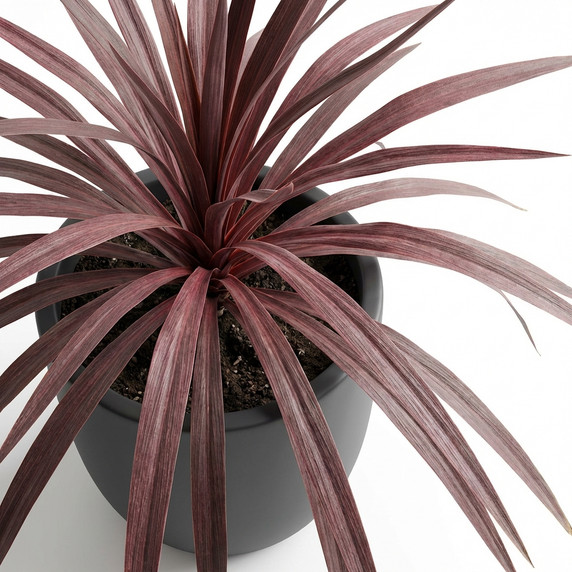



Bring a bold, architectural statement to your space with Red Dracaena. Its sleek, fountain-like leaves and rich red tones instantly elevate living rooms, entryways, and office receptions—without demanding constant care. Place it in medium light, water when partly dry, and enjoy a durable, designer look all year round.
Common Name: Red Dracaena
Botanical Name: Dracaena marginata
Former Name: Not available
Plant Type: Foliage houseplant (ornamental indoor plant)
Plant Code / SKU: PLT-0153
Alternative Names:
Red-edged dracaena
Madagascar dragon tree
Arabic: دراسينيا
Order: Asparagales
Family: Asparagaceae
Genus: Dracaena
Dracaena marginata is native to the island of Madagascar. It has been introduced as an ornamental plant throughout tropical and subtropical regions worldwide and is commonly grown as a houseplant in temperate climates.
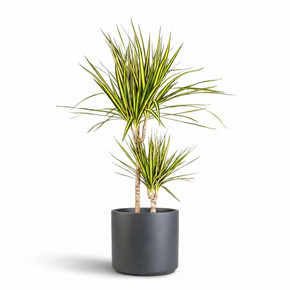
This species features slender, cane-like stems topped with rosettes of arching, narrow lanceolate leaves. Leaves are deep green with distinctive red or burgundy margins, giving the plant its characteristic “red-edged” appearance. Mature plants often branch, creating a multi-trunked, tree-like form.
Height: 4–10 ft (1.2–3 m) indoors
Spread: 2–3 ft (0.6–0.9 m)
Trunk diameter: 1–2 in (2.5–5 cm)
Growth rate: Slow to moderate
Prefers bright, indirect light. Tolerates medium to low light levels but may exhibit slower growth and less vibrant leaf coloration. Avoid direct midday sun to prevent leaf scorch.
Allow the top 2–3 cm of soil to dry out between waterings. Water thoroughly, then let excess drain away. Overwatering can lead to root rot; underwatering may cause brown leaf tips.
Use a well-draining potting mix (e.g., peat-based mix amended with perlite or coarse sand). Ideal soil pH: 6.0–6.5. Repot every 2–3 years or when root-bound, choosing a container only slightly larger than the current one to prevent waterlogging.
Optimal temperature: 65–85 °F (18–29 °C). Minimum: 60 °F (15 °C). Sensitive to cold drafts and temperatures below 55 °F (13 °C). Prefers moderate to high humidity; average indoor humidity (~40–50%) is generally sufficient. Increase humidity with a pebble tray or occasional misting.
Feed with a balanced, water-soluble fertilizer (e.g., 20-20-20) at half strength every 4–6 weeks during the active growing season (spring and summer). Reduce or stop fertilizing in fall and winter.
Low maintenance. Wipe leaves periodically to remove dust. Prune leggy or overgrown stems to maintain shape and encourage branching. Remove yellow or damaged leaves as needed.
Propagation is commonly achieved via stem cuttings. Cut a 10–15 cm section of stem, allow the cut end to callous for a few hours, then root in water or moist potting mix. Air layering can also be used to produce rooted sections before cutting.
Brown leaf tips: often caused by low humidity, fluoride or salts in water, or irregular watering. Yellowing leaves: typically due to overwatering or poor drainage. Pests: spider mites, mealybugs, scale insects. Root rot may occur if soil remains constantly wet.
Recognized as an effective air-purifying plant, removing formaldehyde, benzene and trichloroethylene from indoor air. Its striking form and coloration make it a popular accent in homes, offices, hotels and commercial spaces. Ideal for low-care landscaping and interior design.
Contains saponins that are toxic if ingested by pets (cats, dogs) and humans. Symptoms include vomiting, drooling and loss of appetite. Keep out of reach of children and animals.
Bring a bold, architectural statement to your space with Red Dracaena. Its sleek, fountain-like leaves and rich red tones instantly elevate living rooms, entryways, and office receptions—without demanding constant care. Place it in medium light, water when partly dry, and enjoy a durable, designer look all year round.
Common Name: Red Dracaena
Botanical Name: Dracaena marginata
Former Name: Not available
Plant Type: Foliage houseplant (ornamental indoor plant)
Plant Code / SKU: PLT-0153
Alternative Names:
Red-edged dracaena
Madagascar dragon tree
Arabic: دراسينيا
Order: Asparagales
Family: Asparagaceae
Genus: Dracaena
Dracaena marginata is native to the island of Madagascar. It has been introduced as an ornamental plant throughout tropical and subtropical regions worldwide and is commonly grown as a houseplant in temperate climates.
This species features slender, cane-like stems topped with rosettes of arching, narrow lanceolate leaves. Leaves are deep green with distinctive red or burgundy margins, giving the plant its characteristic “red-edged” appearance. Mature plants often branch, creating a multi-trunked, tree-like form.
Height: 4–10 ft (1.2–3 m) indoors
Spread: 2–3 ft (0.6–0.9 m)
Trunk diameter: 1–2 in (2.5–5 cm)
Growth rate: Slow to moderate
Prefers bright, indirect light. Tolerates medium to low light levels but may exhibit slower growth and less vibrant leaf coloration. Avoid direct midday sun to prevent leaf scorch.
Allow the top 2–3 cm of soil to dry out between waterings. Water thoroughly, then let excess drain away. Overwatering can lead to root rot; underwatering may cause brown leaf tips.
Use a well-draining potting mix (e.g., peat-based mix amended with perlite or coarse sand). Ideal soil pH: 6.0–6.5. Repot every 2–3 years or when root-bound, choosing a container only slightly larger than the current one to prevent waterlogging.
Optimal temperature: 65–85 °F (18–29 °C). Minimum: 60 °F (15 °C). Sensitive to cold drafts and temperatures below 55 °F (13 °C). Prefers moderate to high humidity; average indoor humidity (~40–50%) is generally sufficient. Increase humidity with a pebble tray or occasional misting.
Feed with a balanced, water-soluble fertilizer (e.g., 20-20-20) at half strength every 4–6 weeks during the active growing season (spring and summer). Reduce or stop fertilizing in fall and winter.
Low maintenance. Wipe leaves periodically to remove dust. Prune leggy or overgrown stems to maintain shape and encourage branching. Remove yellow or damaged leaves as needed.
Propagation is commonly achieved via stem cuttings. Cut a 10–15 cm section of stem, allow the cut end to callous for a few hours, then root in water or moist potting mix. Air layering can also be used to produce rooted sections before cutting.
Brown leaf tips: often caused by low humidity, fluoride or salts in water, or irregular watering. Yellowing leaves: typically due to overwatering or poor drainage. Pests: spider mites, mealybugs, scale insects. Root rot may occur if soil remains constantly wet.
Recognized as an effective air-purifying plant, removing formaldehyde, benzene and trichloroethylene from indoor air. Its striking form and coloration make it a popular accent in homes, offices, hotels and commercial spaces. Ideal for low-care landscaping and interior design.
Contains saponins that are toxic if ingested by pets (cats, dogs) and humans. Symptoms include vomiting, drooling and loss of appetite. Keep out of reach of children and animals.



Take 20% off your first order
Enter the code below at checkout to get 20% off your first order